


Confusing Directions At Check-In

I arrived at the surgery center early, clutching my paperwork and trying to stay calm. The check-in desk was busy, and the staff called out my name several times. Then I heard something odd—they kept mentioning "left knee" and "right knee" back and forth. One nurse at the counter asked, "Mark, is your left knee the one we're operating on?" Then another just said "right knee." I corrected them silently, but the confusion stayed with me. The room smelled like antiseptic cleaner and fresh paper masks lay folded on the counter. It wasn’t supposed to be this way. The alternating sides echoed in my head, planting a seed of doubt about whether my case was even labeled right. I tried to shake it off, but the voices kept overlapping in my mind as they called me again from the waiting area.
A Nurse Covered Up My Allergy Band

In the pre-op room, the atmosphere felt rushed. A float nurse, someone I hadn't met before, approached me. I noticed she was peeling off the allergy band that stuck to my wrist and covering it with a new bracelet. I looked for the surgeon, hoping for a final check. Instead, he stood by the schedule board, scanning it but not glancing down at my consent forms on the table. The old band under the new one was sticky and wrinkled, but the nurse didn’t say a word. I tried to catch the surgeon's eye, but he was focused elsewhere. The pre-op room smelled faintly of rubbing alcohol. Something about this felt off, like a betrayal of the steps that were supposed to keep me safe. The nurse's hands moved quickly over my arm, hiding the original band but not the doubt it left behind.
Pointing To The Surgical Knee

They brought me to the anesthesiology area, separated from the rest by a curtain and a warming blanket draped over my legs. The anesthesiologist, a lean man with glasses and a calm voice, asked me to point to the knee that was going to be operated on. I lifted the blanket slightly and pointed to my right knee. He nodded but then paused, leaning in as if double-checking. The antiseptic smell was stronger here, mingling with the warmth from the blanket. The curtain’s fabric brushed against my arm. Later, I struggled to remember exactly which knee I had pointed to. The memory became blurry, like a fog around the edges. This small moment started to feel like a trap, setting me up to doubt what side was actually being treated.
Confused Time-Out Chatter
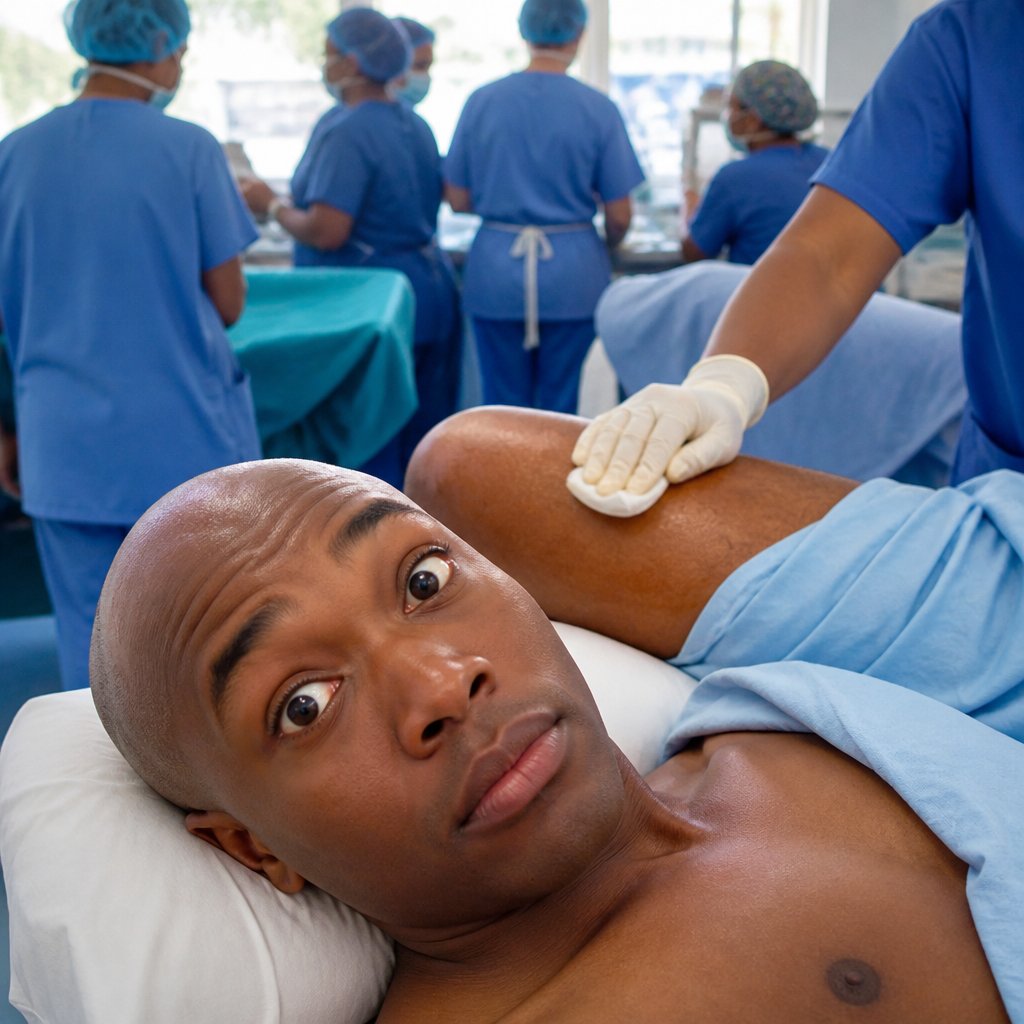
Right before the block, the room buzzed with overlapping chatter among the surgical team. Voices came from all directions, names and instructions blending together. I heard a clear 'right' in the mix. At that moment, a nurse swabbed cold antiseptic onto my left thigh. The chill was sharp against my skin. I blinked, confused. The antiseptic wiped back and forth slowly, wetting the hair on my leg. But the voice I heard said 'right.' My head turned slightly, trying to locate the voice, but it was lost in the jumble. The needle was about to come next. This disconnect between what I heard and what I felt unsettled me. Something was wrong, but the noise and movement swallowed my questions.
Burning Block And A Detached Sticker
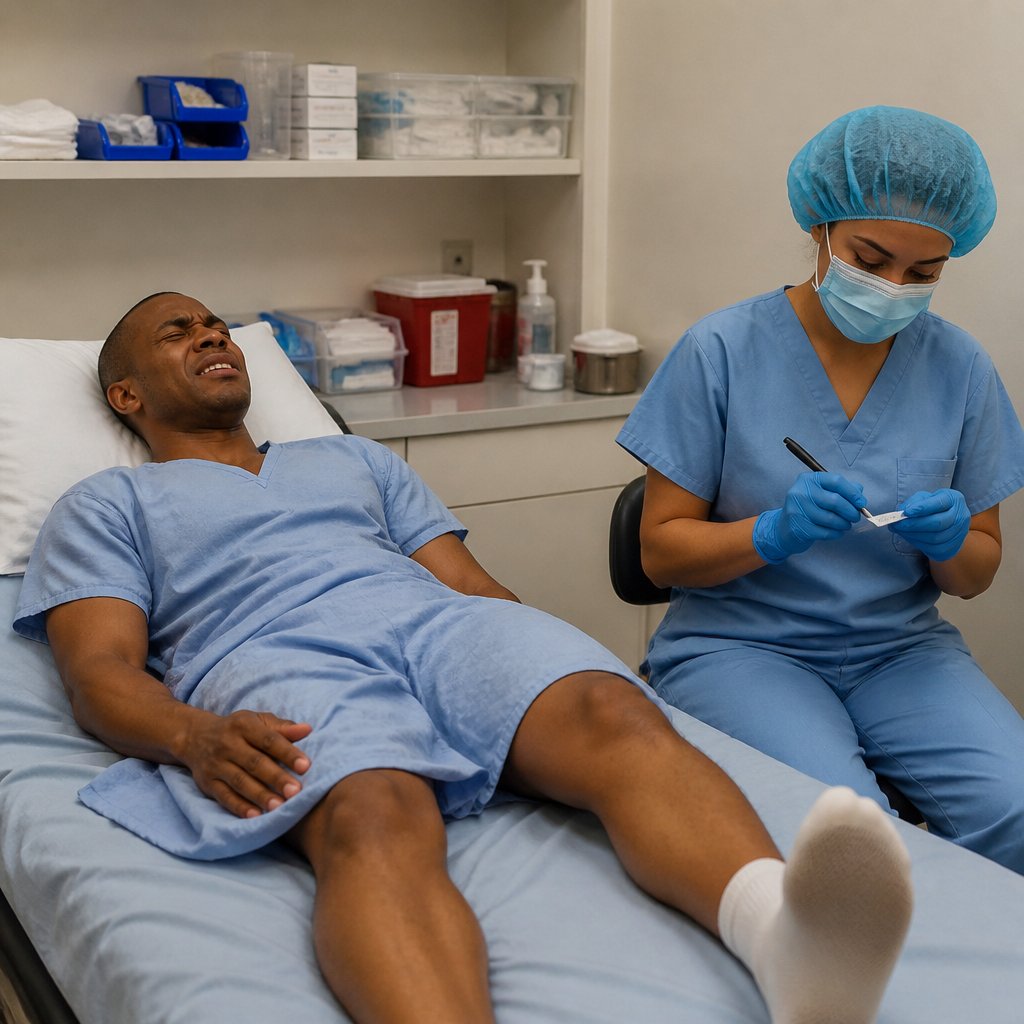
The moment the needle went in, a burning sensation shot through my leg. My left thigh went heavy and numb. I clenched the side rail, the plastic rough against my fingers. A tech nearby wrote something on a sticker without even looking at me. The hospital room smelled faintly of latex and disinfectant. The sticker was then placed somewhere on my chart, or so I was told, but the action felt mechanical, detached, like they were logging data without really seeing what was happening to me. I tried to speak up, but the room was moving too fast. The burning didn’t stop. I couldn’t tell if anyone really noticed how sharp the pain was or how my leg felt wrong already.
Employer Suspends Me Without Pay

After weeks of trying to work through the pain and weakness, my employer finally called me into the office. The word was clear: I couldn’t climb ladders or drive the heavy equipment safely anymore. These were essential parts of my job. Without them, they’d have to put me on unpaid leave. I sat in the small conference room, the buzz of the fluorescent lights above a dull backdrop to the sinking feeling in my chest.
My supervisor, a man in his late 40s with graying hair and a neatly trimmed beard, looked at me with a mix of concern and frustration. He wore a plain blue button-up shirt and khaki pants, his hands clasped together on the table. The room smelled faintly of coffee and air freshener. I watched as he tapped a pen against his notepad, then sighed and said the words that felt like the official end of normal life for me.
Being suspended meant no income, no benefits, and uncertainty hanging over my head. It wasn’t just about money; it was about my future and identity. The foot drop made me feel trapped in my body. I left the office with the sound of shoes echoing down the linoleum hallway, the reality of what lay ahead pressing down hard.
Billing Revealed A Stranger’s Name

Weeks after the surgery, a hospital bill showed up in my mailbox. The envelope felt heavy, stuffed with pages. I flipped through the paperwork, eyes scanning the dense lines of charges. One billing line caught my attention: an "ultrasound-guided nerve block" with a provider name I’d never heard before. I couldn’t place the name, and worse, I didn’t recognize anyone like that from the surgery center.
At home in my small, cluttered kitchen, I sat at the table wearing a worn gray T-shirt and jeans, the morning light filtering through the blinds. The paper felt rough in my hands. My heart raced as I tried to make sense of the disconnect. If someone I never met performed the block, who exactly had administered it? And did they sign off on the wrong leg?
I clenched my jaw, the taste of stale coffee lingering in my mouth as I stared down at the mysterious provider’s printed name. Questions piled up, and the silence in the room felt heavier than ever.
Anesthesiology Office Stonewalls Me
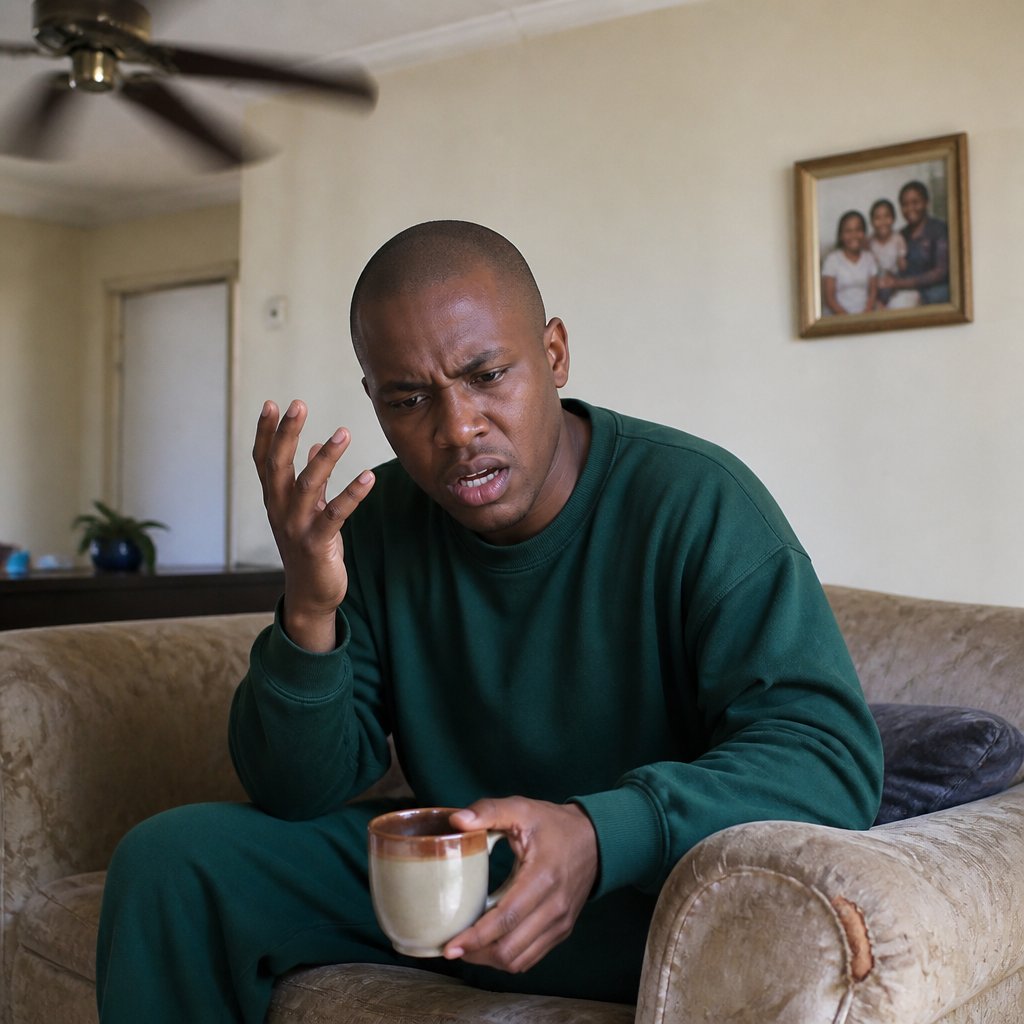
I called the anesthesiology office to ask about the block’s laterality—the exact leg they’d worked on. The woman who answered was curt and distant. She wore a white lab coat over scrubs, but the sterile hospital hallway buzzing behind her didn’t soften her tone.
“We can’t discuss patient details without signed releases,” she repeated like a broken record, even after I explained my situation. When I pushed, she said, “Blocks can cause temporary weakness; that’s a known risk.” There was no empathy in her voice, just corporate deflection.
I sat in my outdated living room wearing a dark green sweatshirt and sweatpants, my fingers clenched around a cold ceramic mug. The hum of the ceiling fan spun above me, but it couldn’t drown out the frustration rising inside. They wouldn’t help me get answers. Instead, they were putting up walls.
Their refusal left me with more questions than answers, stuck in a maze without an exit.
Physical Therapy Brings New Wounds

Physical therapy was supposed to help, but it brought new problems. The therapist noted "foot drop" in my progress report. Each step was a struggle, and the brace they gave me rubbed against my skin relentlessly. One day, the irritation turned into a raw blister.
I remember sitting on a vinyl bench at the PT center, wearing a black hoodie and loose sweatpants, peeling off the brace to see the angry red sore. The smell of antiseptic hung in the air as the therapist examined the blister, eyebrows furrowed. They warned me to keep it clean, but before long, what started as a blister turned into cellulitis. The pain flared and the swelling grew, and suddenly my complications were my body's fault again.
Back at home, I stared at the swollen foot, the blister oozing—a visual reminder that every step forward seemed to come with more setbacks. The clinic calls and notes blamed everything on my body’s response, not the medical error that started it all.
EMG Confirms Nerve Injury

The neurologist’s office was cold and clinical. I sat in a stiff plastic chair, wearing a white T-shirt and jeans, waiting with my foot elevated on a small stool. When the EMG results came back, the neurologist didn’t soften the truth.
He was a tall white man with thinning hair and wire-frame glasses. In his office lined with medical books and anatomical charts, he said bluntly, “You have a peroneal nerve injury.”
Then he asked, “Was the block on the left side?” I felt a chill when he took out a pen and began to write down my answer carefully, as if it mattered more than anyone else had admitted. The weight of that question hung in the sterile air between us.
I nodded, but the question implied someone might still be denying it back at the surgery center.
Defense Shifts To Spine MRI
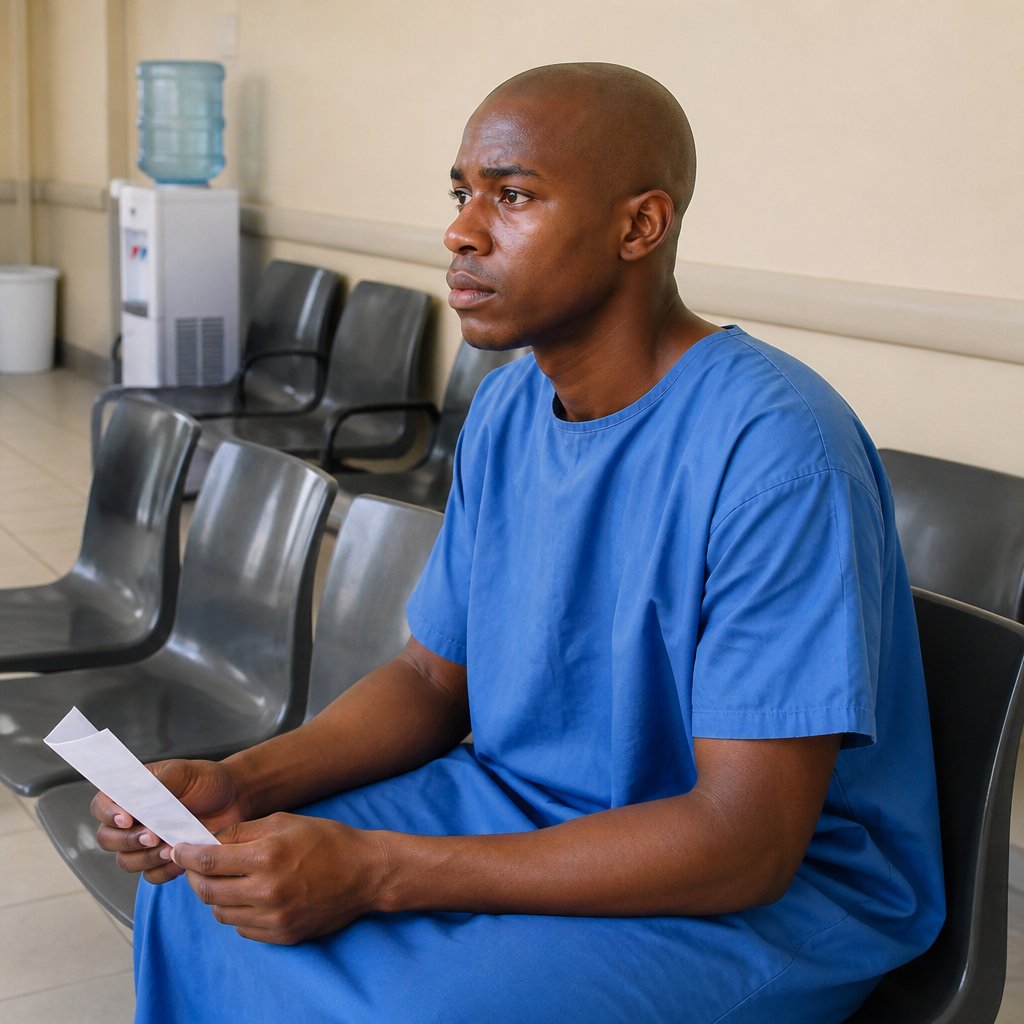
After the neurologist's note arrived, the defense team quickly changed their story. They started pushing an explanation that my foot drop was due to some back or posture issue, insisting on a spine MRI to back up their claim. I sat in the radiology waiting room, the smell of antiseptic sharp in the air, watching others come and go while anxiety gnawed at me. When the MRI results came back, they didn’t show anything that could explain the sudden, complete foot drop. Their posture theory fell apart. Suddenly, the defense retreated and described my injury as a “rare complication” of the procedure. But that diagnosis felt like a dodge, an excuse to cover up the error that had been made. I wondered if they were banking on complicated medical jargon to confuse the judge and jury. The question now was: could I find proof that they were just trying to bury the truth?
Ex-Employee Reveals Scheduling Gaps

During a deposition, a former employee of the surgery center came forward with a crucial piece of information. She explained that errors with laterality—the side of the body—often happened when operating rooms were switched around last minute. She described how the paperwork sometimes didn’t get updated correctly during these changes. I sat at the sterile conference room table, the hum of the overhead fluorescent lights filling the silence as I listened closely. The judge ordered the center to produce limited scheduling logs. When the logs arrived, it showed that my procedure had been switched to a different room, and the side for the nerve block was edited twice in the electronic system. It implied someone had manufactured the “right side” story. This was the first real crack in their defense. But I knew the fight was far from over.
Ultrasound Images Suddenly Missing

Next came a frustrating blow: the ultrasound technician testified that images had been saved during the nerve block procedure, which could prove whether the correct leg was targeted. But when we requested the center's archives, they claimed the image storage system was 'temporarily unavailable.' What made it worse was the center was still billing for ultrasound guidance during my procedure. I sat in a cramped records room, the smell of old paper hanging in the air as I looked at the empty shelves where the images should have been stored. It was hard not to feel like we were being stonewalled. If they had nothing to hide, why were the images missing? And could the missing evidence be enough to break through their defense?
Wife’s Photo Shows Wrong Side

One evening, my wife accidentally snapped a photo of the surgery center’s whiteboard as we waited. The photo clearly showed my last name next to the notation “R knee” even though I was scheduled for a left knee arthroscopy. The whiteboard had a scuffed surface with faded markers, but the incorrect labeling jumped out in bright red ink. We hadn’t noticed the sign until later, but that photo became a powerful piece of evidence. I remember sitting at the kitchen table, the cold cup of coffee forgotten as I stared at the image on my phone—not the usual kind of proof, but real and unfiltered. The center claimed it was a harmless error, a clerical mix-up, but the mislabeling was publicly visible to staff and patients alike. How deep did this mistake go?
Billing Coordinator Admits Cover-Up

In a surprising turn, the surgery center’s billing coordinator testified she was instructed to “clean up” laterality errors on claims so insurance wouldn’t reject them. I sat quietly in the courtroom, the polished wooden benches and echoing footsteps around me feeling like a cage. She described how she and others had been told to alter records to hide mistakes. The judge responded by ordering overnight audits of electronic records and billing trails. The coordinator wore plain office clothes, her face tight with tension as she admitted the cover-up. This crack in the center’s defenses suddenly felt huge. But I couldn’t shake the question: how much of the truth had been deliberately erased, and what else would the audits reveal?
New Logs Show After-Hours Edits

Then came the late-edit revelation. New audit logs surfaced showing someone had edited the anesthesia record well after I had made my first request for medical records. The edits focused on fields related to the laterality of the block—whether it was my right or left leg. Sitting at the lawyer’s office, I stared at the printed logs, the weight of the betrayal sinking in. Someone had knowingly changed critical medical records to cover their tracks. The discovery felt like the moment before a verdict: the truth was out there, but the final judgment hadn’t come yet. I could almost feel the courtroom tension tightening around us, like the sharp click of a gavel that had yet to fall.
Trial Reveals Negligence Timeline

The trial brought everything into sharp focus. Photos of bruises on my leg, the whiteboard mislabeling, my time-out sheet, and the audit logs all lined up to tell the story. The defense tried to argue the injury was a known risk, but the timeline revealed they had guessed wrong and edited records afterward to cover it. I sat in the courtroom center wearing a plain black shirt, the scent of polished wood and paper filling the air, watching the jury deliberate. After hours, they returned with a verdict: negligence was clear, and fault was split between the center and the anesthesiologist. Sanctions and regulatory referrals were set to follow, but the final hammer hadn’t yet dropped. All the evidence was on the table, but the consequences loomed large and uncertain.
Was splitting fault between center and anesthesiologist just?