

The Cap Didn’t Fit Right
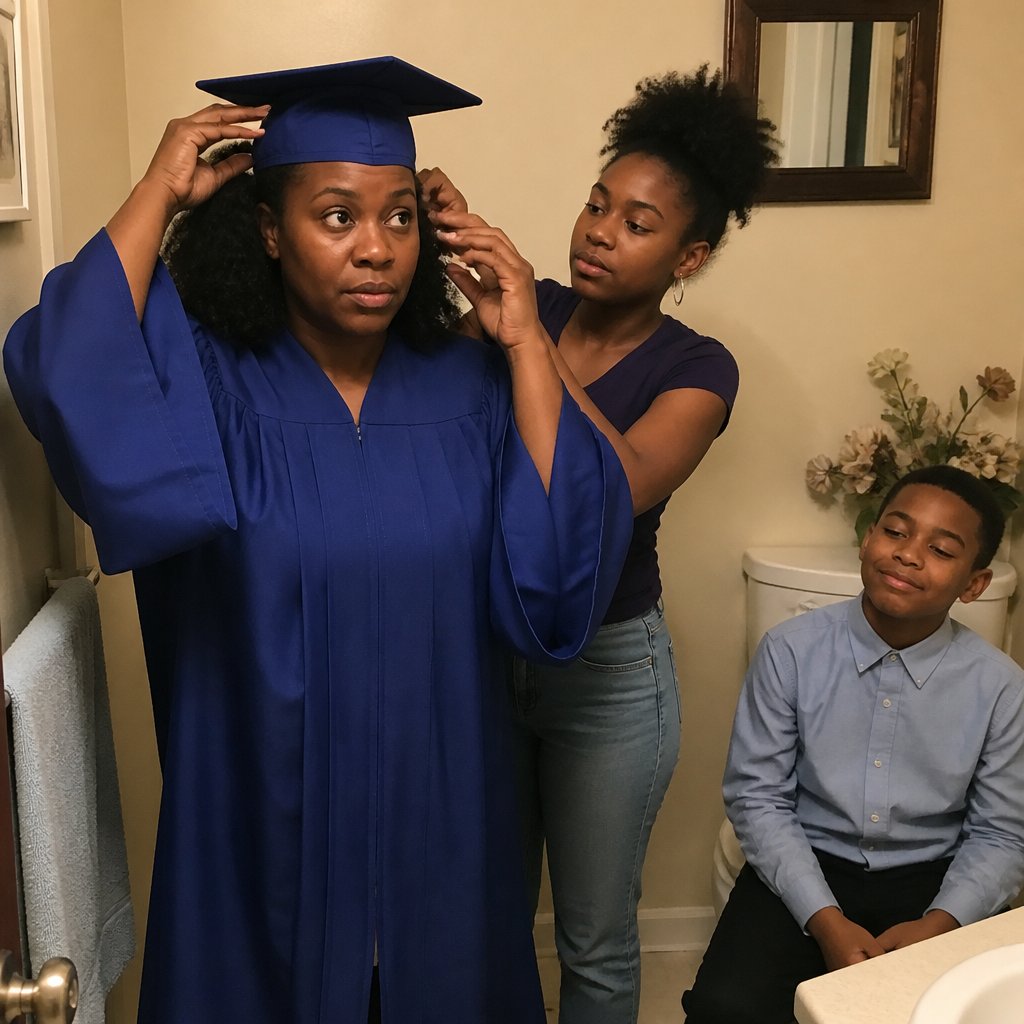
I’d been fussing with the cap for twenty minutes. It kept sliding to one side no matter how many bobby pins I used, and my daughter Keisha finally grabbed it from my hands and fixed it herself. She was fourteen and already better at everything than I was. My son Marcus, ten, sat on the couch in his button-down shirt looking like he’d rather be anywhere else, but even he was smiling a little.
Four years of night classes while they stayed at my mother’s apartment three evenings a week, and now here I was in a rented blue gown, standing in my bathroom mirror looking like someone who was about to do something she’d never done before. Because I was.
Five Hundred Chairs and a Crooked Ramp
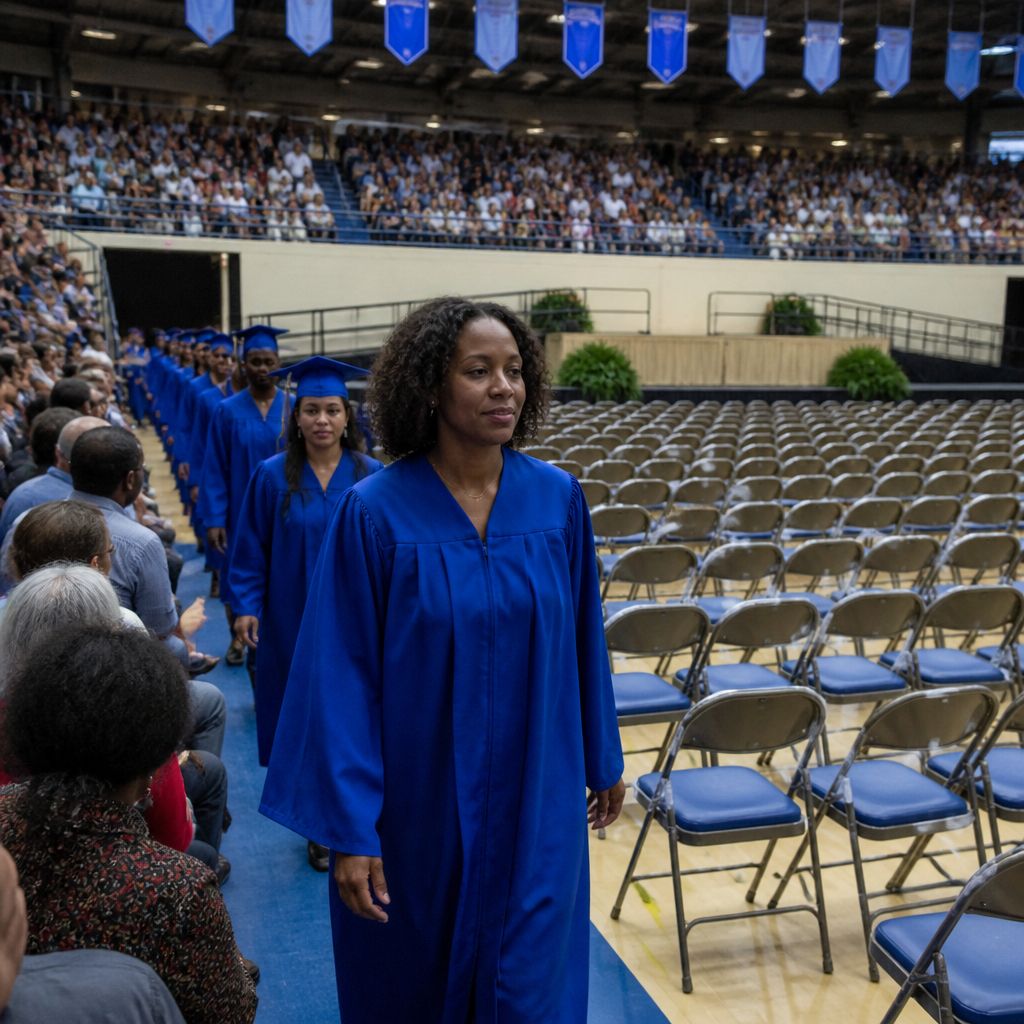
The field house at Whitfield College smelled like floor wax and someone’s perfume turned up too high. Five hundred folding chairs were set up in rows across the basketball court, and a temporary stage had been built at the far end with a ramp on each side. I noticed the ramp on the left wobbled when one of the professors walked up during the processional. I didn’t think much of it.
I was too busy scanning the bleachers for my family. I found them in the fourth row — Keisha holding up her phone to record, Marcus leaning against my mother’s shoulder, and my mom dabbing her eyes with a tissue before anything had even started.
My Row Started Moving
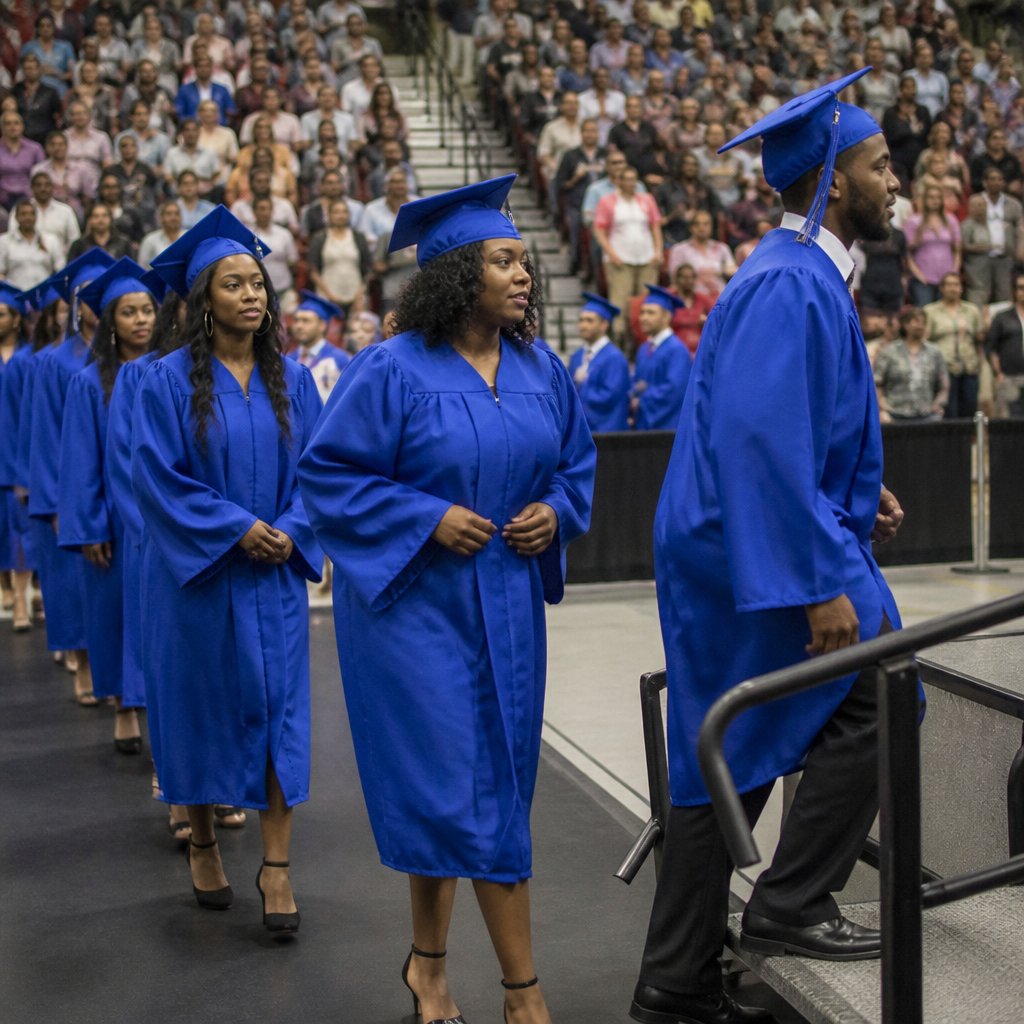
The ceremony dragged in the way these things do — the speeches, the honorary degrees, the president’s remarks about bright futures. My legs ached from the folding chair and the nervous energy I’d been burning all morning. Then they called my section, and the line started moving.
I smoothed my gown with damp palms. This was it. Twenty years after I’d first enrolled and dropped out when Marcus was born, I was about to have someone hand me proof that I finished something. The woman in front of me whispered “don’t trip” and we both laughed. The line shuffled forward. The ramp was six people ahead of me.
The Sound My Ankle Made
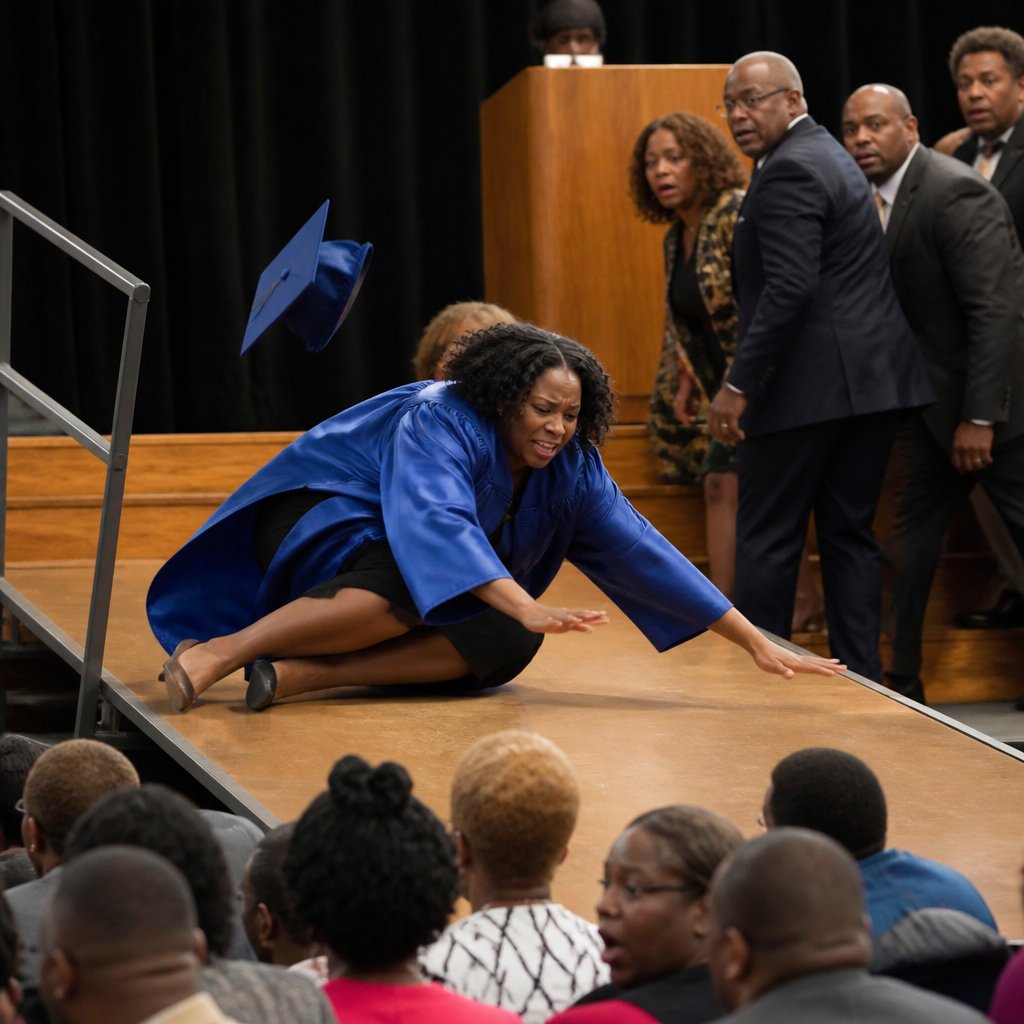
I was three steps up the ramp when my right foot caught something. Not a step, not the carpet — something hard and metallic, raised maybe an inch off the surface. My ankle rolled sideways. I heard a sound I’d never heard before, a wet pop that seemed to come from inside my own body.
My hands went out but there was nothing to grab. I went down on my right side, hard, my cap flying off and skittering across the stage. For one horrible second the entire field house went quiet. Then the gasps started.
Flat on the Stage Floor
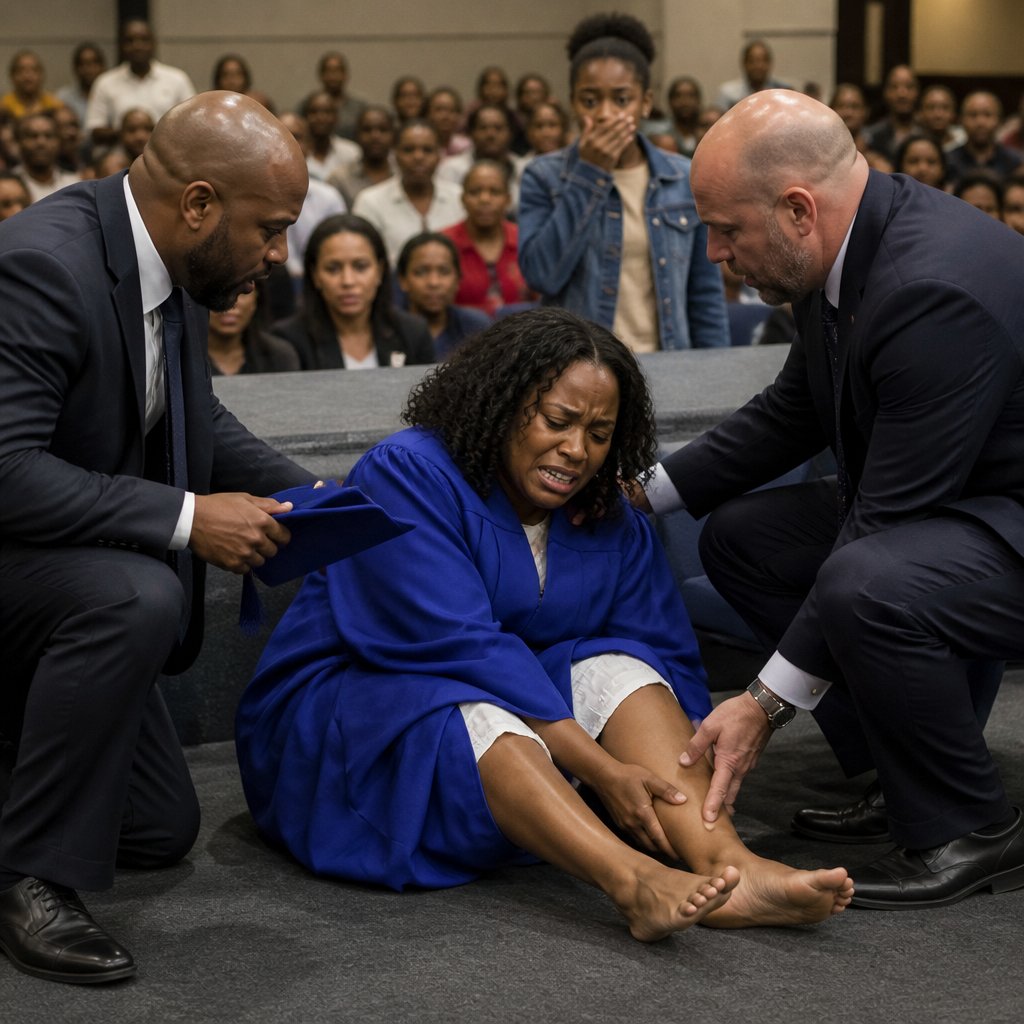
Two men in suits were at my side before I could process what had happened. One of them was saying something about staying still. The other was holding my cap. I looked down at my ankle and immediately looked away — it was turned at an angle that didn’t make sense. The pain hadn’t fully arrived yet, which scared me more than anything.
I could see Keisha in the fourth row, standing up, her hand over her mouth. I wanted to tell her I was okay, but I couldn’t make my voice work. Someone behind me on the ramp was being redirected to the other side. The ceremony was still going.
They Handed Me My Diploma in a Wheelchair
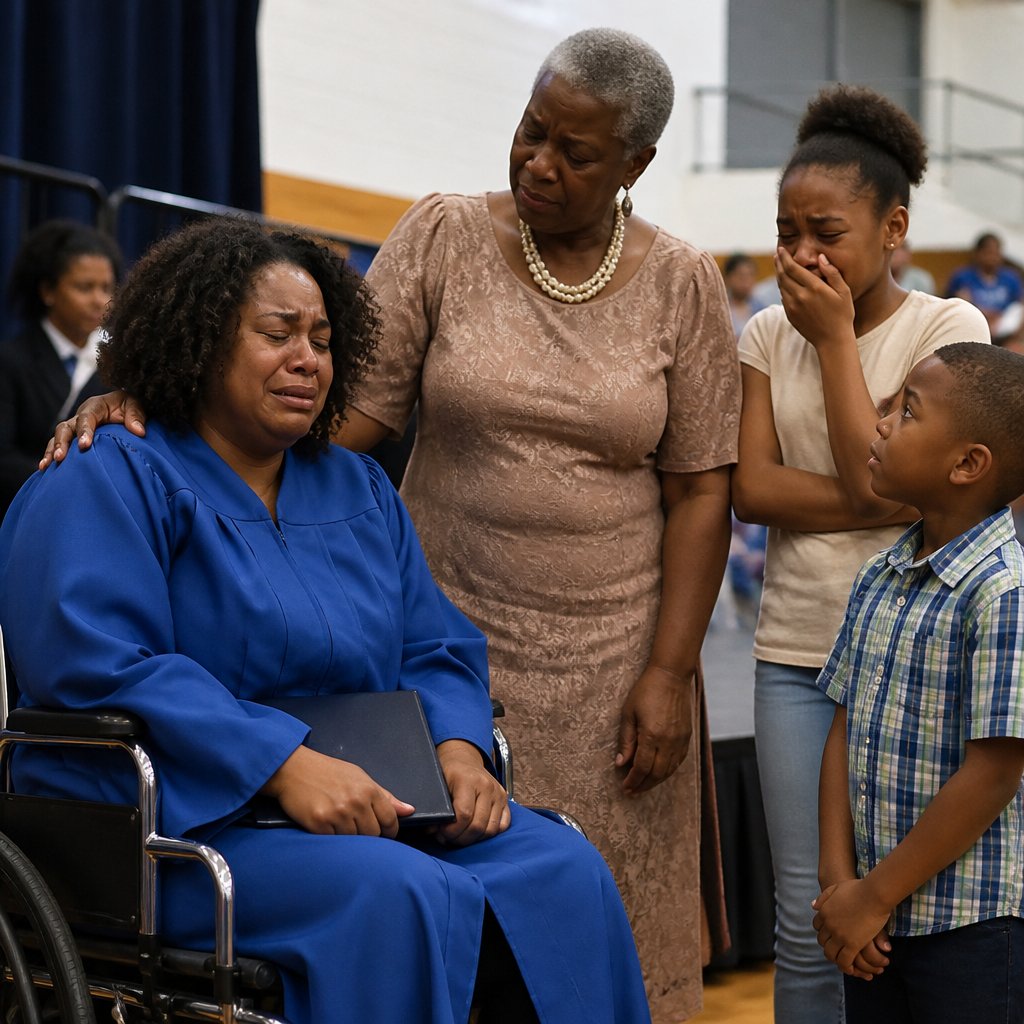
A campus security officer brought a wheelchair from somewhere, and two people I didn’t know helped me into it. Someone — I think it was the dean — appeared beside me with the diploma case and pressed it into my hands. She squeezed my shoulder and said congratulations, and the word sounded strange under the circumstances.
They wheeled me to the side of the stage where my mother and the kids were already pushing through the crowd. Keisha was crying. Marcus looked terrified. My mother took one look at my ankle and said we were going to the hospital right now. The pain had arrived.
The Emergency Room at St. Dominic’s
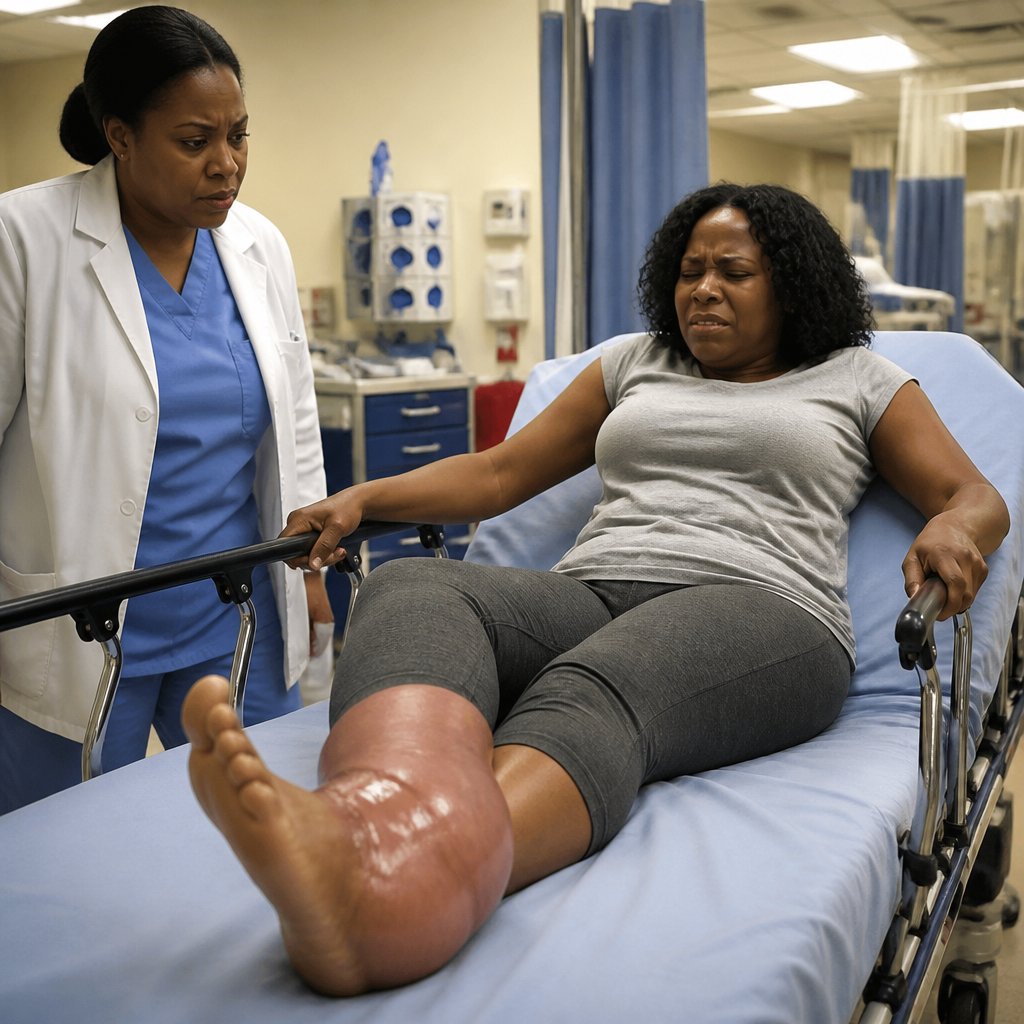
The ER at St. Dominic’s was packed, and we waited three hours before anyone looked at my ankle. By then it had swollen to twice its size and turned a color I’d describe as eggplant. They wheeled me down a hallway that smelled like bleach and old coffee, and a technician positioned my foot under the X-ray machine with a gentleness that still made me wince.
When the doctor came back, she didn’t sit down. She pulled up the images on a monitor and said the words “compound fracture” and “surgical consult” in the same sentence. I gripped the side of the gurney with both hands.
Three Screws and a Titanium Plate
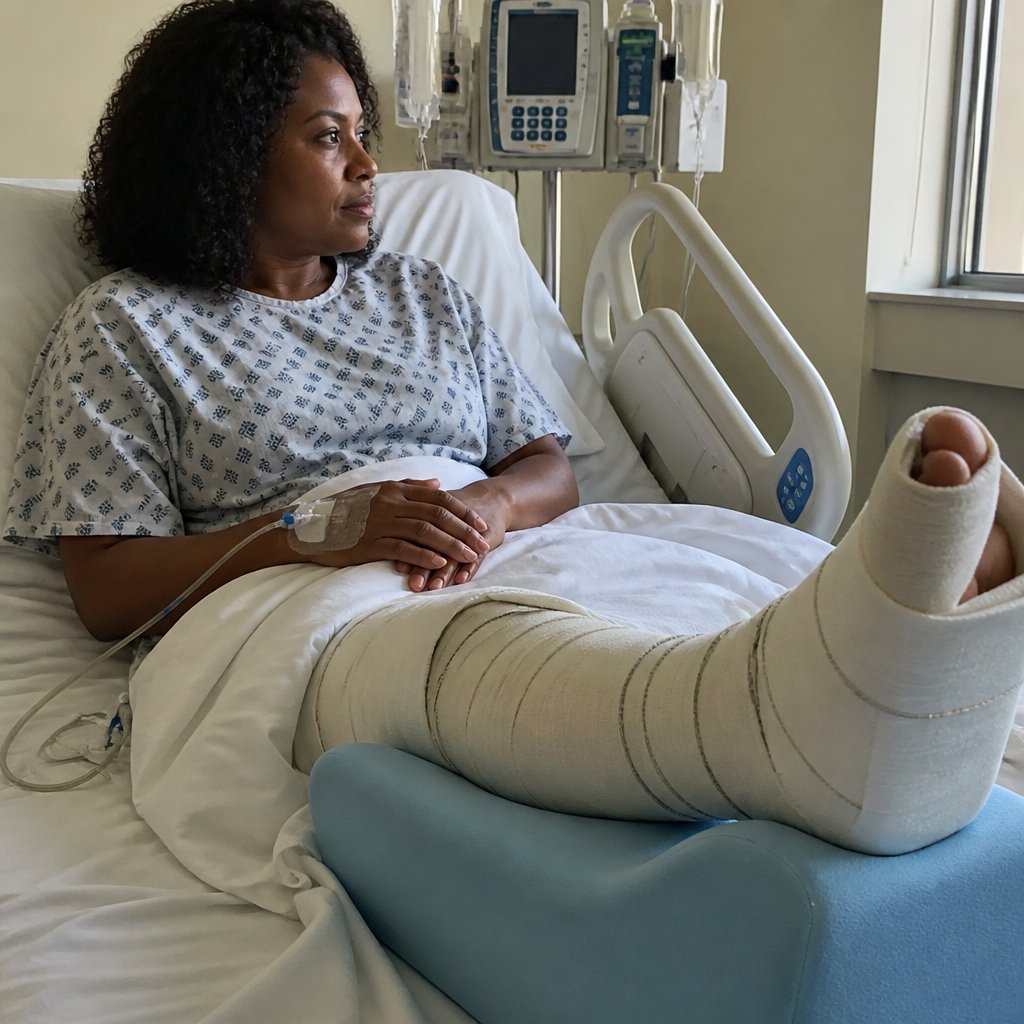
Surgery was the next morning. I remember the anesthesiologist counting backward and then nothing until I woke up in recovery with a throat so dry it felt lined with sandpaper. My right leg was elevated in a foam block, wrapped in enough gauze and padding to insulate a pipe.
The surgeon came by later and told me they’d put in three screws and a titanium plate to stabilize the fracture. He said it went well. He said recovery would take eight to twelve weeks minimum. He said I’d need physical therapy after that. He did not say how I was going to pay for any of it.
I Couldn’t Carry a Tray

I was a server at Rosario’s on Elm Street — had been for six years. Good tips, flexible hours, the kind of job that let me leave by four on class nights. But you can’t carry a tray of plates on a broken ankle. I called my manager from the hospital bed and he said to take all the time I needed. What he meant was he’d have to fill my shifts.
The first hospital bill showed up nine days after surgery. Four more followed within the month. My insurance covered eighty percent of the surgery and zero percent of the physical therapy. I started doing the math on a napkin and stopped because the numbers made me nauseous.
I Kept Seeing It When I Closed My Eyes
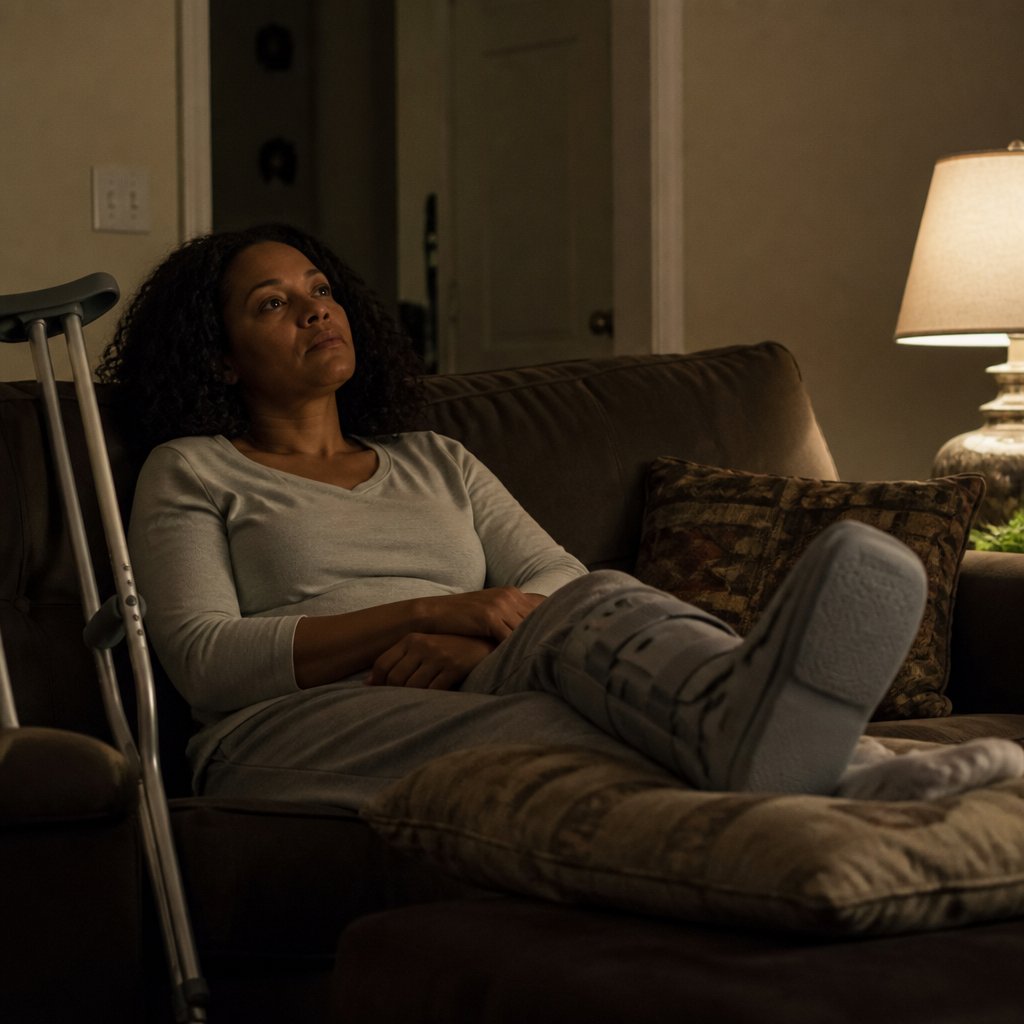
Recovery was slow and loud with pain. The worst part wasn’t the throbbing or the boot I had to wear or the crutches that rubbed my armpits raw. The worst part was the replay. Every time I closed my eyes, I was back on that ramp. My foot catching on something solid. The pop. The fall.
I kept trying to see what I’d tripped on. In my memory it was metallic — a raised edge, like a seam or a cover plate that wasn’t flush with the surface. It hadn’t been part of the ramp itself. It was something that shouldn’t have been sticking up. And the more I replayed it, the more certain I became.
I Went Back Three Weeks Later
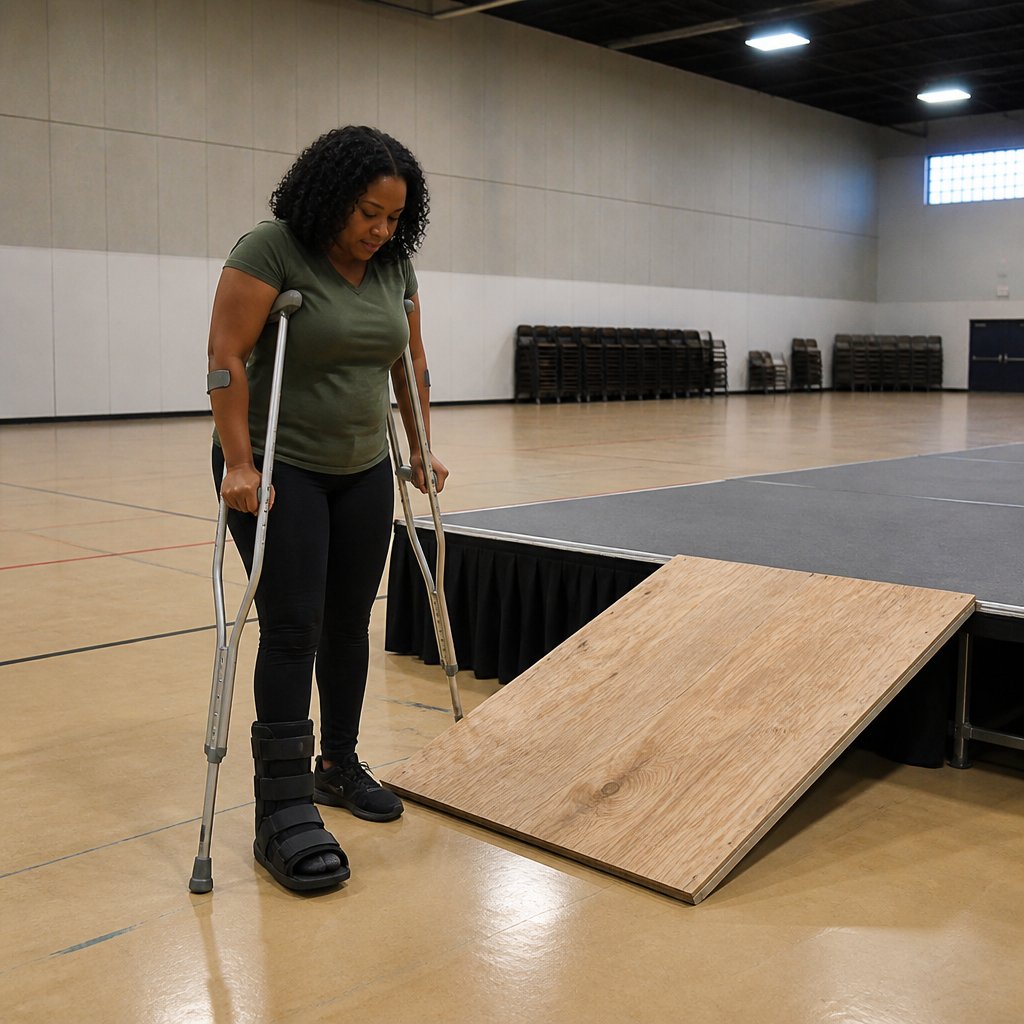
My mother drove me to Whitfield on a Tuesday morning. I hadn’t told anyone I was going — I just needed to see. The field house was empty, all the commencement decorations stripped away, the folding chairs stacked against the far wall. The stage was still up. I crutched my way across the basketball court and stood at the bottom of the ramp.
My breath caught. The metal cover plate I remembered — the one that had grabbed my foot — was gone. In its place were four fresh bolts and a new flush-mounted panel, the metal still shiny and unscuffed. Someone had fixed it. Recently. I stood there on my crutches and felt something shift from confusion to anger.
Maria Didn’t Even Hesitate

I called my friend Maria that evening. She’d been in the audience, fifth row, with her daughter. I asked her if she remembered the ramp. She didn’t even hesitate. She said she’d noticed the metal plate sticking up before the ceremony started, when the professors were walking up. She said she’d watched two other graduates stumble on it before me — they’d caught themselves, but barely.
She said she’d thought to herself, someone’s going to fall. And then someone did. I asked her if she’d be willing to say that again if I needed her to, and she said yes without asking why.
The Lawyer on Vine Street
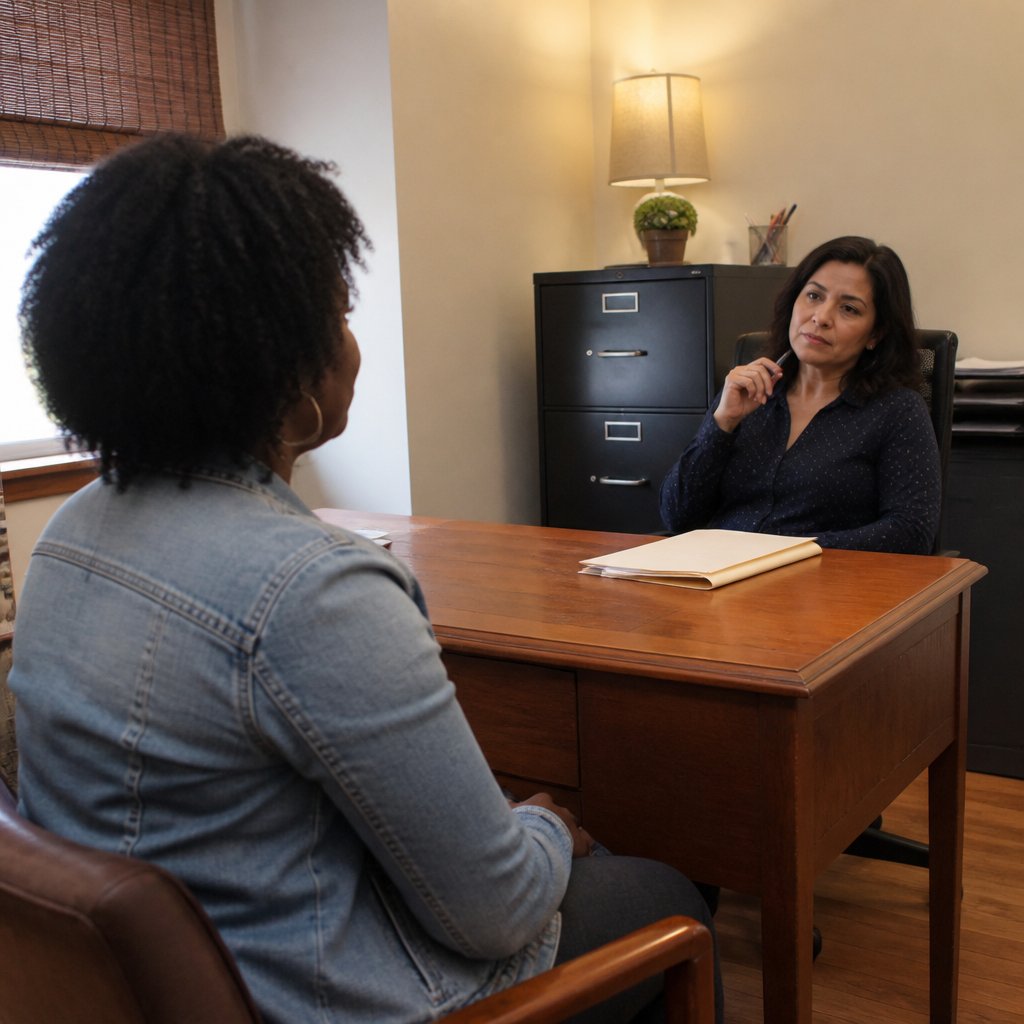
I’d never hired a lawyer for anything in my life. I found Diane Velasco’s office on Vine Street through a coworker whose cousin had used her for a slip-and-fall at a grocery store. The office was small — two rooms above a dry cleaner — but it was clean and she was direct.
She listened to everything without interrupting: the ramp, the plate, the fall, the surgery, the bills, and then the repair I’d found three weeks later. When I finished, she leaned back in her chair and said, “They fixed it after your fall?” I nodded. She opened a legal pad and started writing.
The Letter Went Out on a Friday
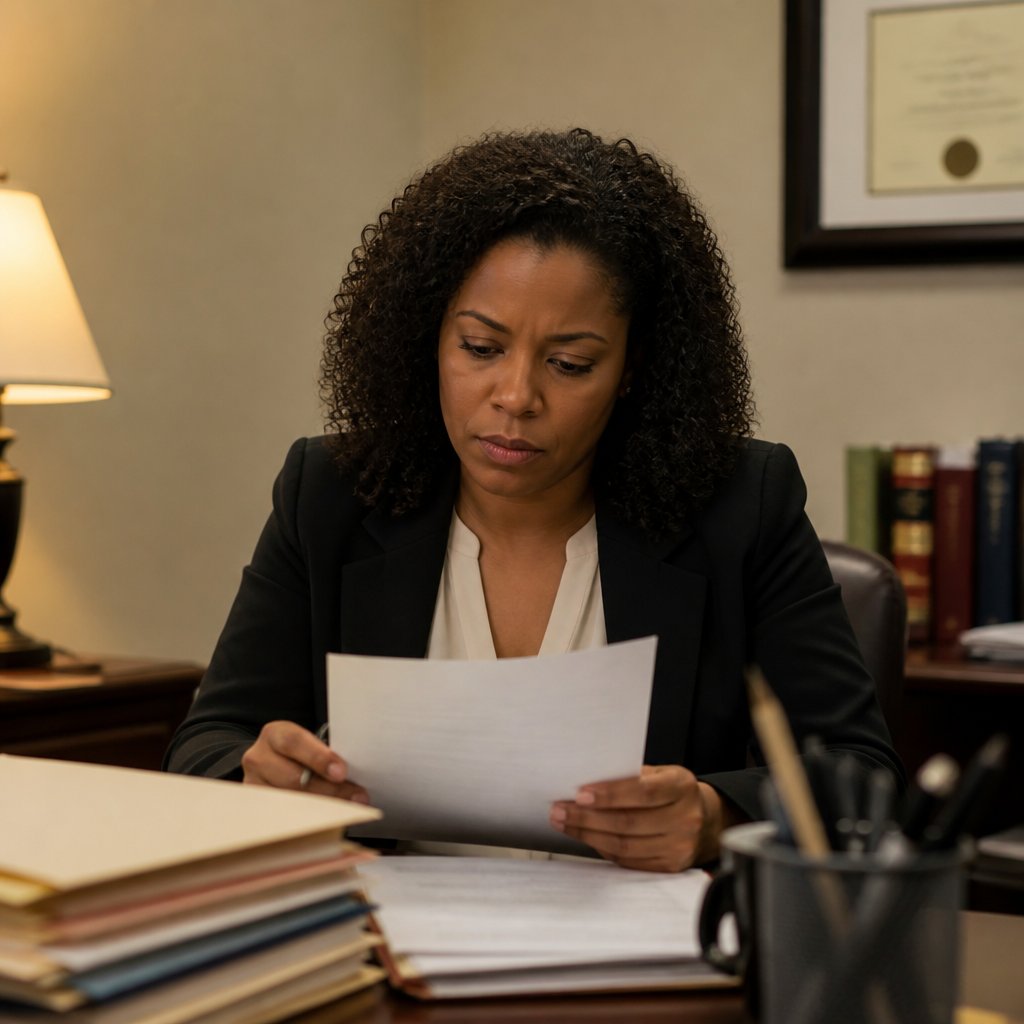
Diane sent a demand letter to Whitfield College the following week. She outlined the injury, the medical costs, the lost wages, and the fact that the ramp had been repaired shortly after the incident — which, she wrote, suggested the college was aware of the hazard.
The response came eleven days later from a law firm I’d never heard of. It was two pages of language I barely understood, but Diane translated it for me in one sentence: they’re saying it’s your fault and they don’t owe you anything. I sat in her office and stared at the wall behind her desk. She let me sit for a minute before she said, “This is where it actually starts.”
The Work Orders Were Dated March
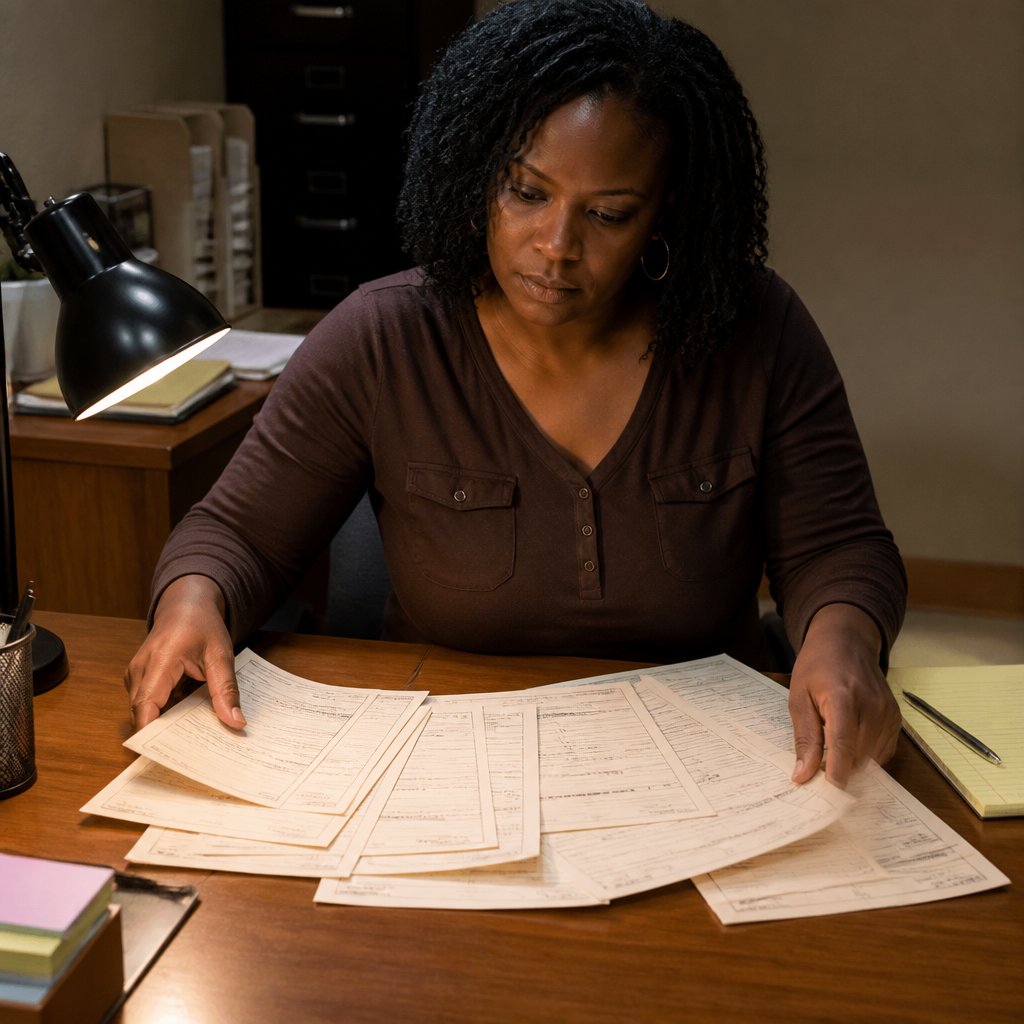
Diane filed a formal discovery request and what came back changed everything. Buried in a stack of facilities documents were three work orders, all dated March — three months before my graduation in June. Each one described the same thing: a metal cable cover plate on the left-side commencement ramp that was lifting at the edges and creating a trip hazard.
Each one was marked Priority: Moderate. Each one was stamped Received by the facilities office. None of them were marked Completed. Diane spread them out on her desk and looked at me. “They knew,” she said. I already knew that. But seeing it in writing felt like being tripped all over again.
Craig Hessler Had Tried to Warn Them
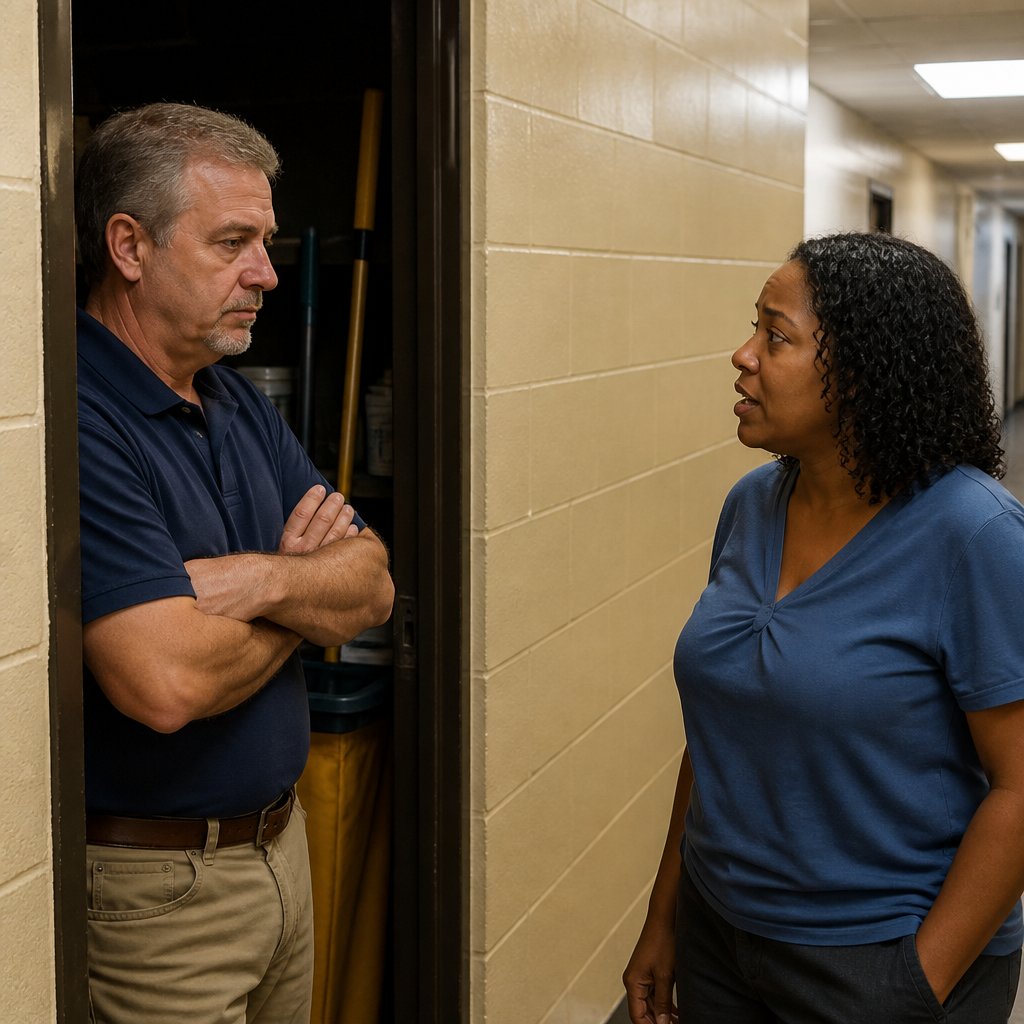
The work orders had been filed by a man named Craig Hessler, a maintenance supervisor who’d worked at Whitfield for eleven years. Diane’s investigator tracked him down and he agreed to talk.
Craig said he’d flagged the ramp plate three separate times after a student event in March where someone nearly fell. He said he’d been told each time that it would be handled before commencement. The last time he brought it up, his supervisor told him to stop submitting work orders for “cosmetic issues.” Craig said he wasn’t surprised when he heard what happened. He said he was just surprised it had taken that long.
The College Brought in Morrison & Pratt
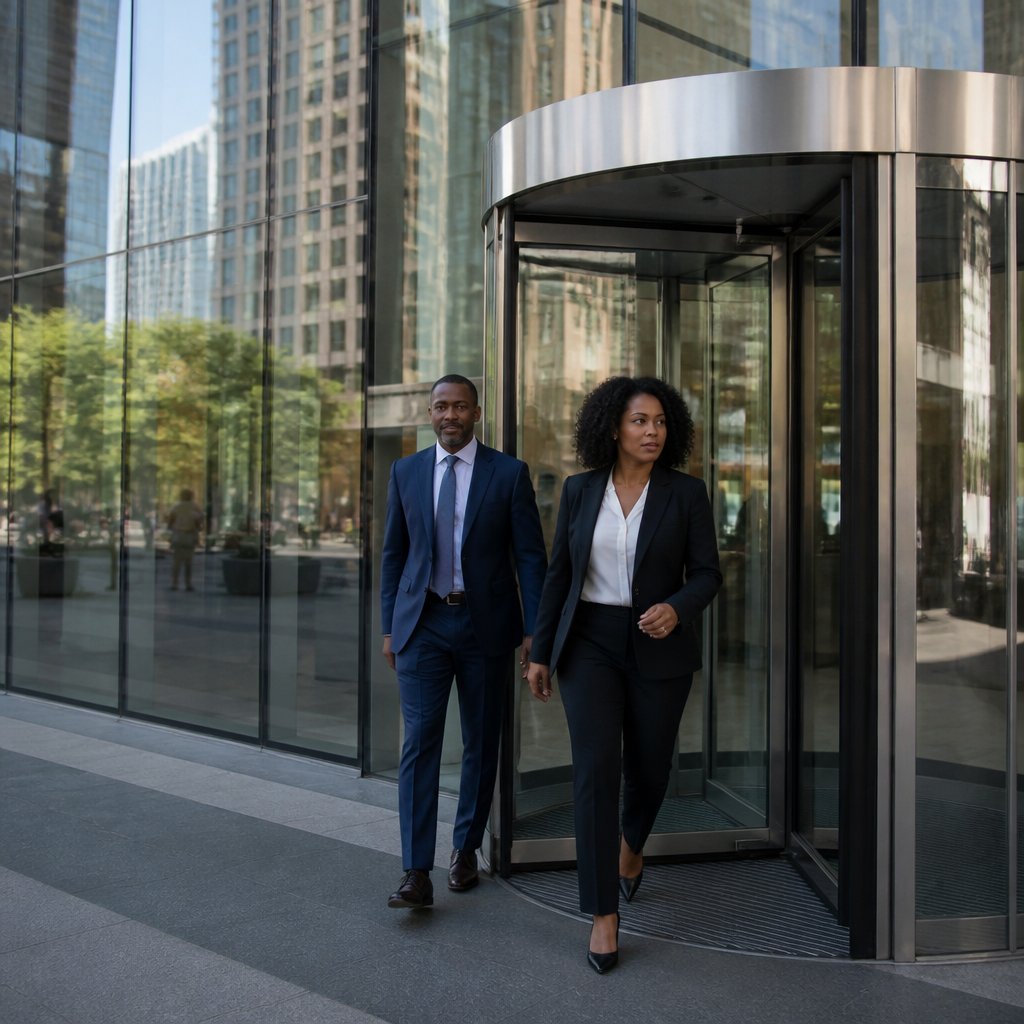
Whitfield hired Morrison & Pratt, a defense firm that Diane described as “the kind of people who bill four hundred an hour to tell you the sky isn’t blue.” They filed a response arguing that the ramp met all applicable building codes, that the plate was within acceptable tolerances, and that I had failed to exercise reasonable care while navigating the stage.
They also argued that my injuries were pre-existing or exaggerated. That last part made my blood hot. I had the surgical scars. I had the X-rays. I had a titanium plate in my ankle that set off the metal detector at the courthouse. But according to Morrison & Pratt, I was making it up.
They Asked Me What Shoes I Wore

My deposition was held in a conference room at Morrison & Pratt’s downtown office. Their lead attorney, a man in a charcoal suit with a watch that probably cost more than my car, spent the first twenty minutes asking me about my shoes. What kind were they? What was the heel height? Had I practiced walking in them? Were they new?
I told him they were black flats I’d owned for two years. He asked if I could prove that. Diane cut in before I could answer. He moved on, slowly, the way someone moves when they want you to know they have all day. He asked me to describe the fall in detail. Then again. Then a third time, checking for inconsistencies. I gave him the same answer each time because there was only one truth.
The Prognosis Was Permanent

Dr. Claudia Pham was the orthopedic specialist Diane brought in to review my records. Her report was twelve pages long and I understood about half of it, but the summary was clear enough. The compound fracture and subsequent hardware installation had resulted in permanent reduced mobility in my right ankle. I would walk with a limp for the rest of my life.
I could not return to work that required prolonged standing — which ruled out every job I’d ever had. The chronic pain would be manageable but constant. When Diane read me the last line of the report over the phone, I had to pull my car over and sit in a parking lot for twenty minutes before I could drive again.
They Offered Forty-Five Thousand
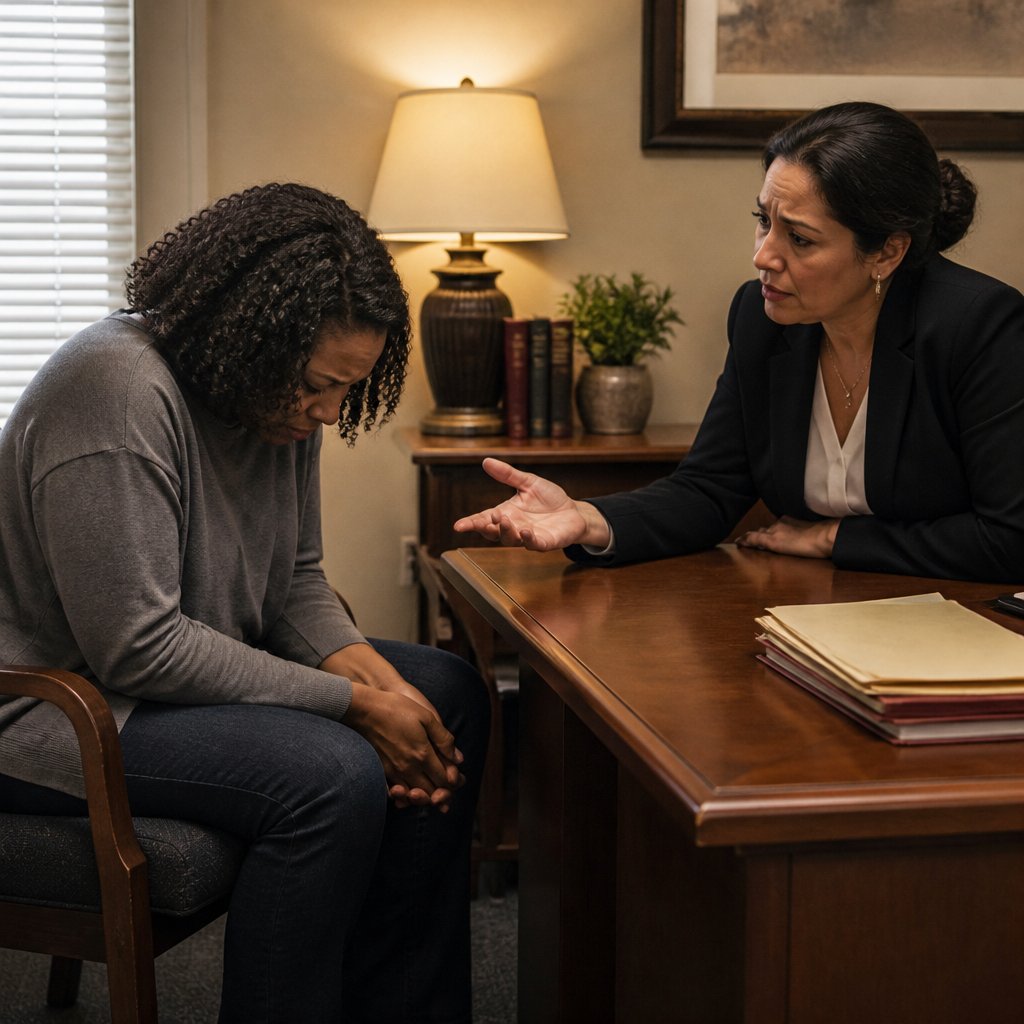
The settlement offer came six weeks before the trial date. Forty-five thousand dollars. Diane called me into her office and laid it out. After legal fees and medical liens, I’d walk away with maybe twenty thousand. It wouldn’t cover what I still owed the hospital. It wouldn’t cover the physical therapy. It wouldn’t cover the year of wages I’d lost.
But it was money, and I hadn’t had much of that lately. I’d been eating store-brand cereal for dinner three nights a week. My mother had been buying the kids’ school supplies. Diane let me sit with it, then said, “This is what they’re counting on — that you’re too tired to fight.” I told her I was tired. She said, “I know. But I’m not.”
The Comments Section Was Cruel
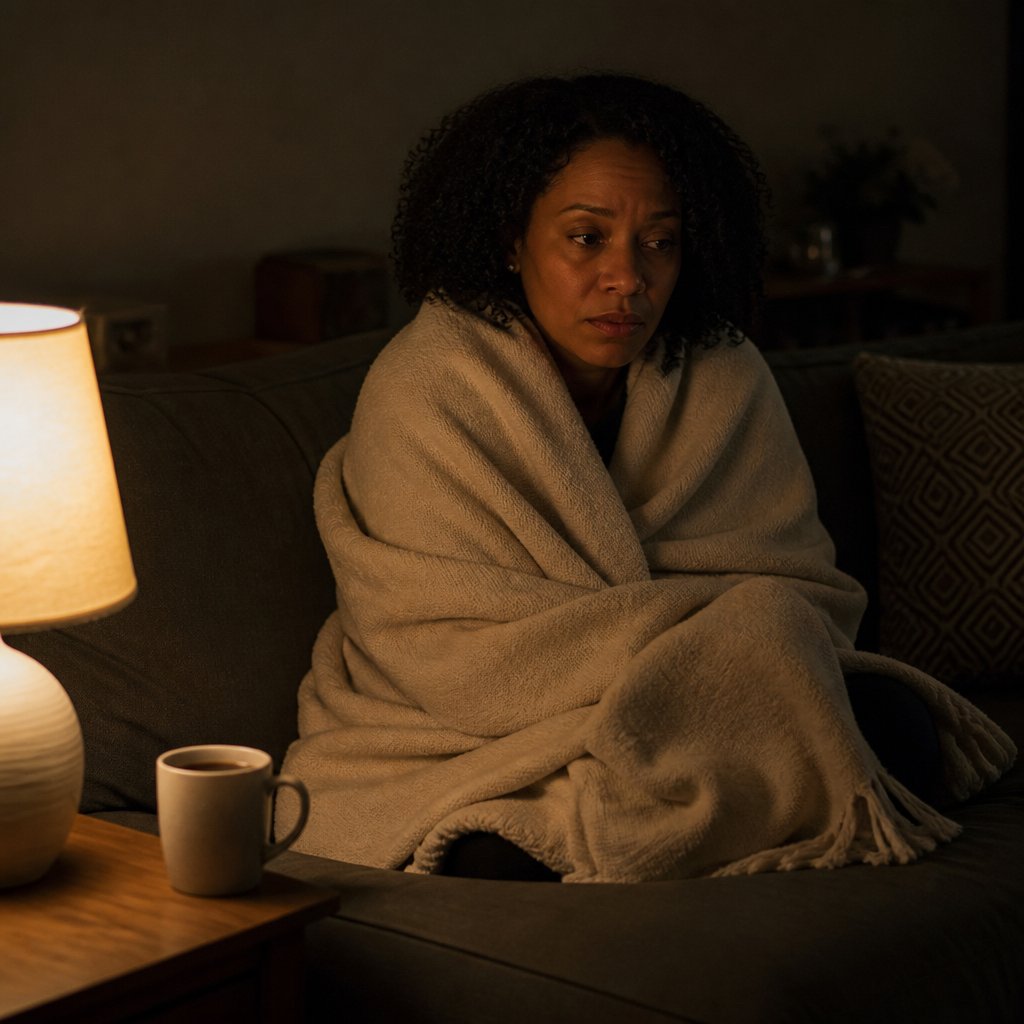
A reporter from the Whitfield Herald called on a Tuesday. She’d gotten the court filings and wanted a comment. I said yes because Diane said it could help. The article ran the next day. The comments were split down the middle — half said the college was negligent and should pay, and the other half said I should have watched where I was walking and that I was looking for a payday.
One person called me a grifter. Another said I should be grateful I got a degree at all. I made the mistake of reading them at midnight and couldn’t sleep after. Keisha found me on the couch the next morning and asked if I was okay. I told her I was. I wasn’t.
Courtroom 4B Smelled Like Old Wood
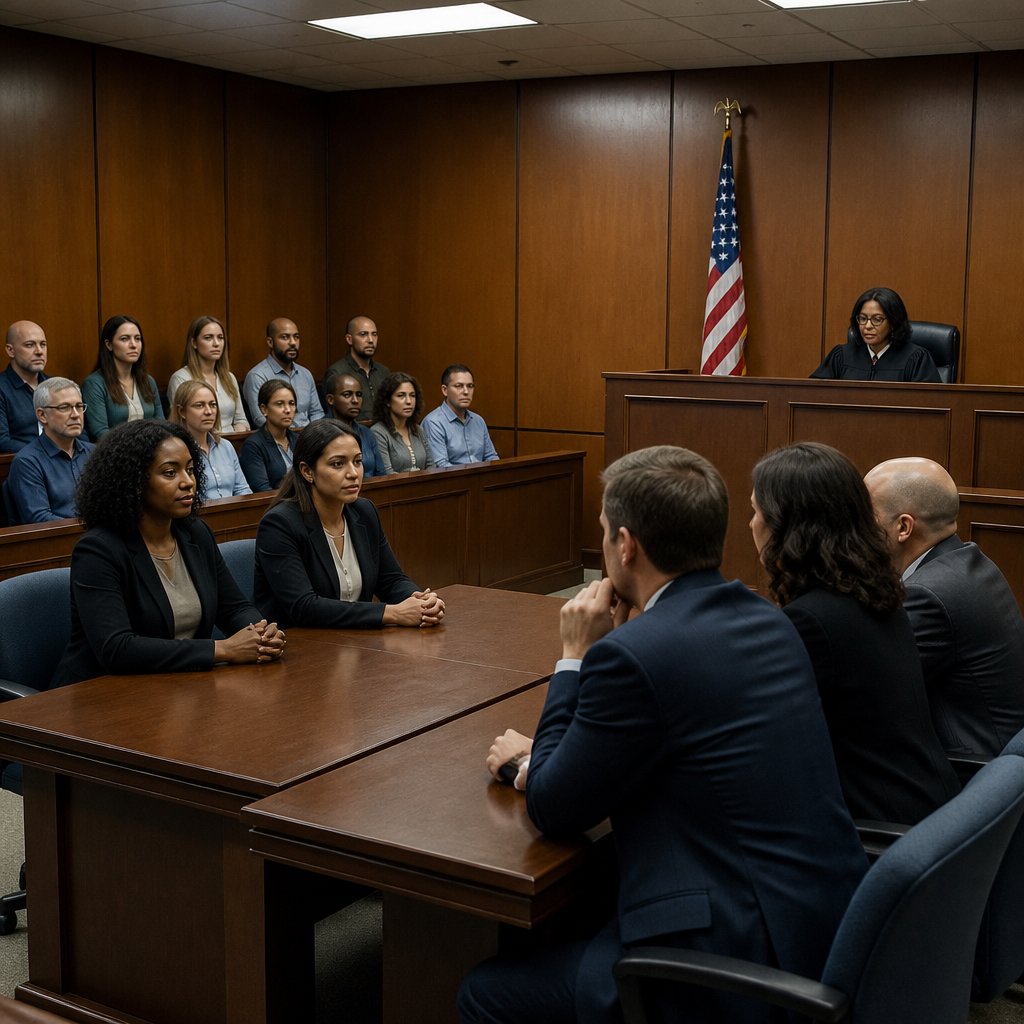
The trial started on a Monday in October, four months after the settlement offer I’d turned down. Courtroom 4B in the county courthouse was smaller than I expected — dark wood paneling, an American flag standing in the corner, and fluorescent lights that hummed if you listened closely.
The judge, a woman in a plain black robe with reading glasses pushed up on her forehead, called the room to order. Twelve jurors sat in two rows to my right. I tried not to stare at them but I couldn’t help it. These were the people who were going to decide if what happened to me mattered. Diane squeezed my hand under the table.
Diane Stood Up and the Room Got Quiet
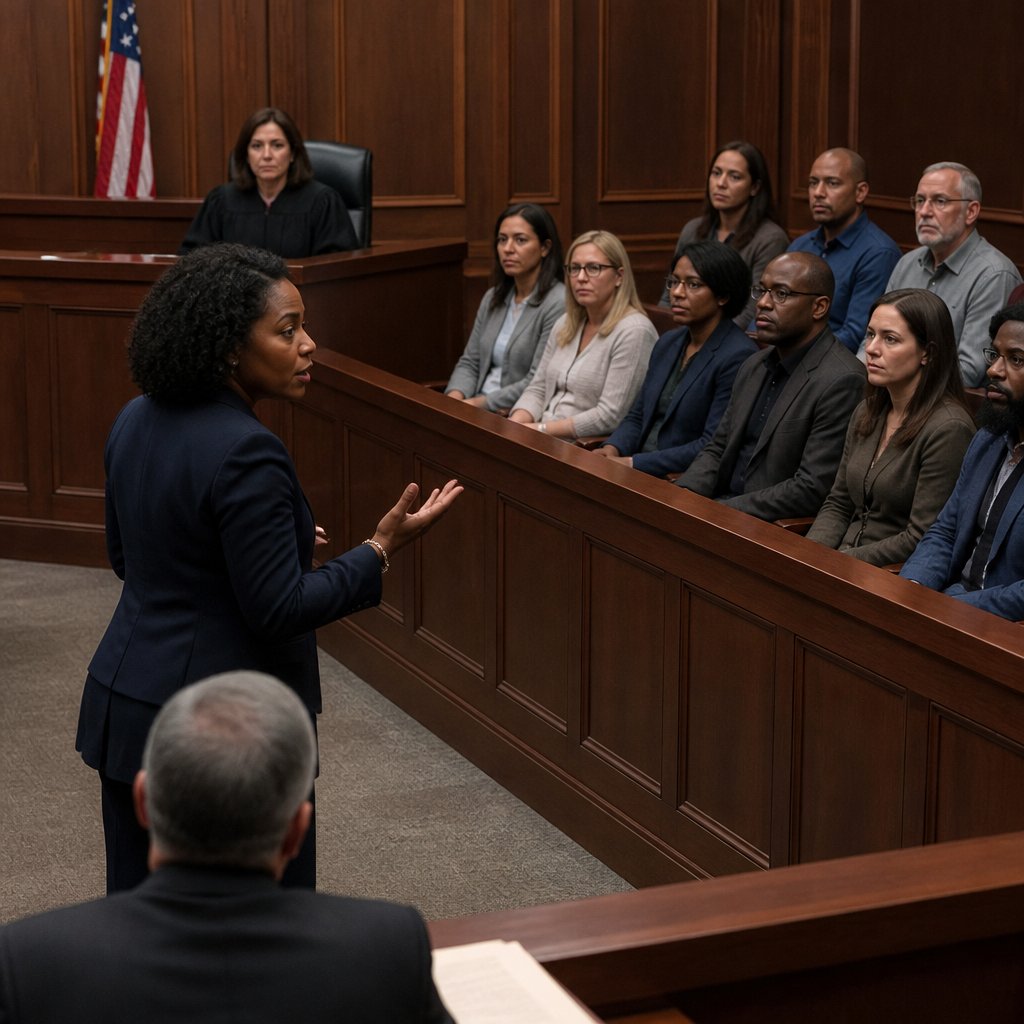
Diane’s opening statement lasted eleven minutes. She started with the night classes — four years of them, three nights a week, after full shifts at Rosario’s. She talked about the kids staying at my mother’s, about the textbooks I’d bought used, about the final exam I’d taken with a calculator borrowed from Marcus’s school.
Then she walked the jury through June eighth. The ramp. The plate. The fall. The sound. The wheelchair. The diploma handed to me while I cried. She never raised her voice. She didn’t need to. When she sat down, two of the jurors were looking directly at me. One of them, a woman in a green cardigan, hadn’t blinked.
Someone Had Taken a Photo
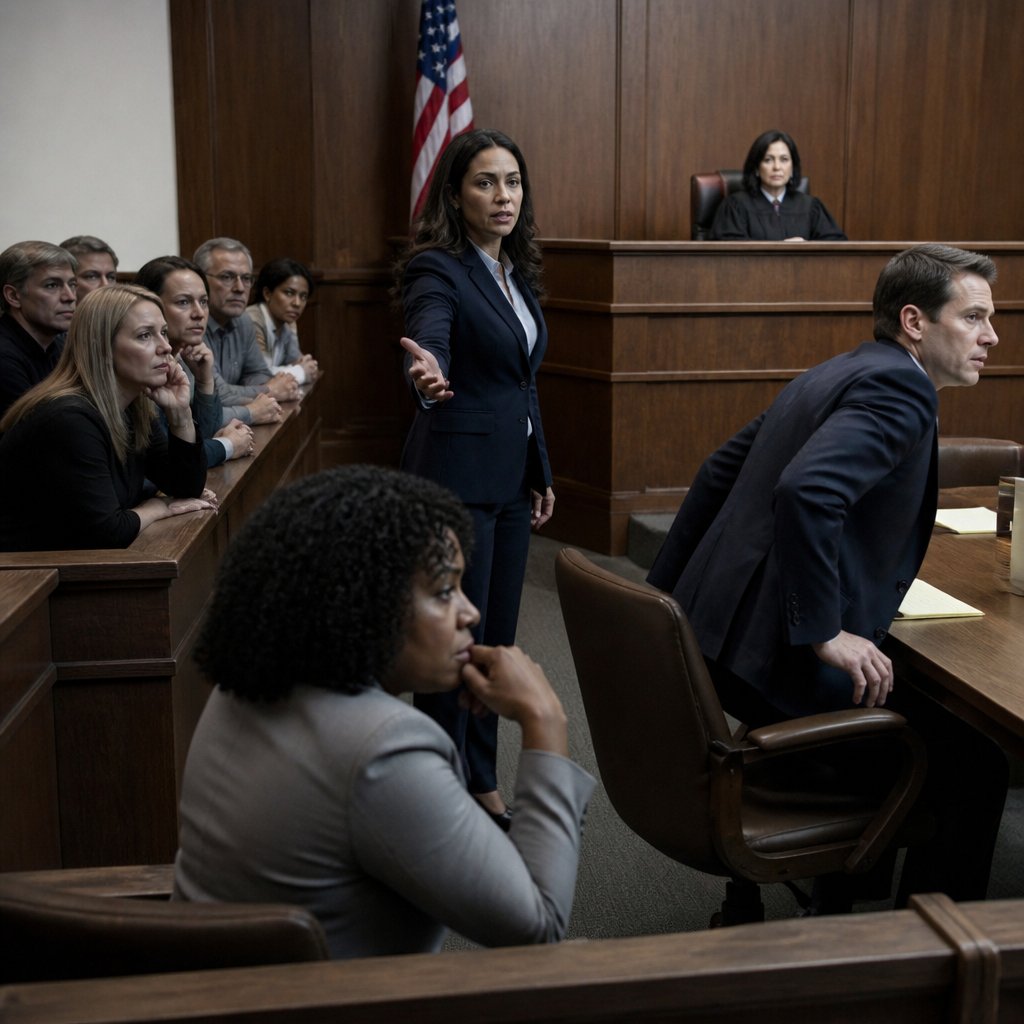
The evidence that hit hardest wasn’t the work orders or the medical records. It was a photo. A parent in the audience had taken a picture of her daughter approaching the stage about thirty minutes before my section was called. In the background, clearly visible, was the left-side ramp — and the metal cover plate, lifted at least an inch off the surface, the edge curled up like a bent fingernail.
Diane had it displayed on a screen. The courtroom was silent. The defense attorney objected to the resolution. The judge overruled him. The photo stayed up for a long time.
Craig Hessler Wore His Work Boots
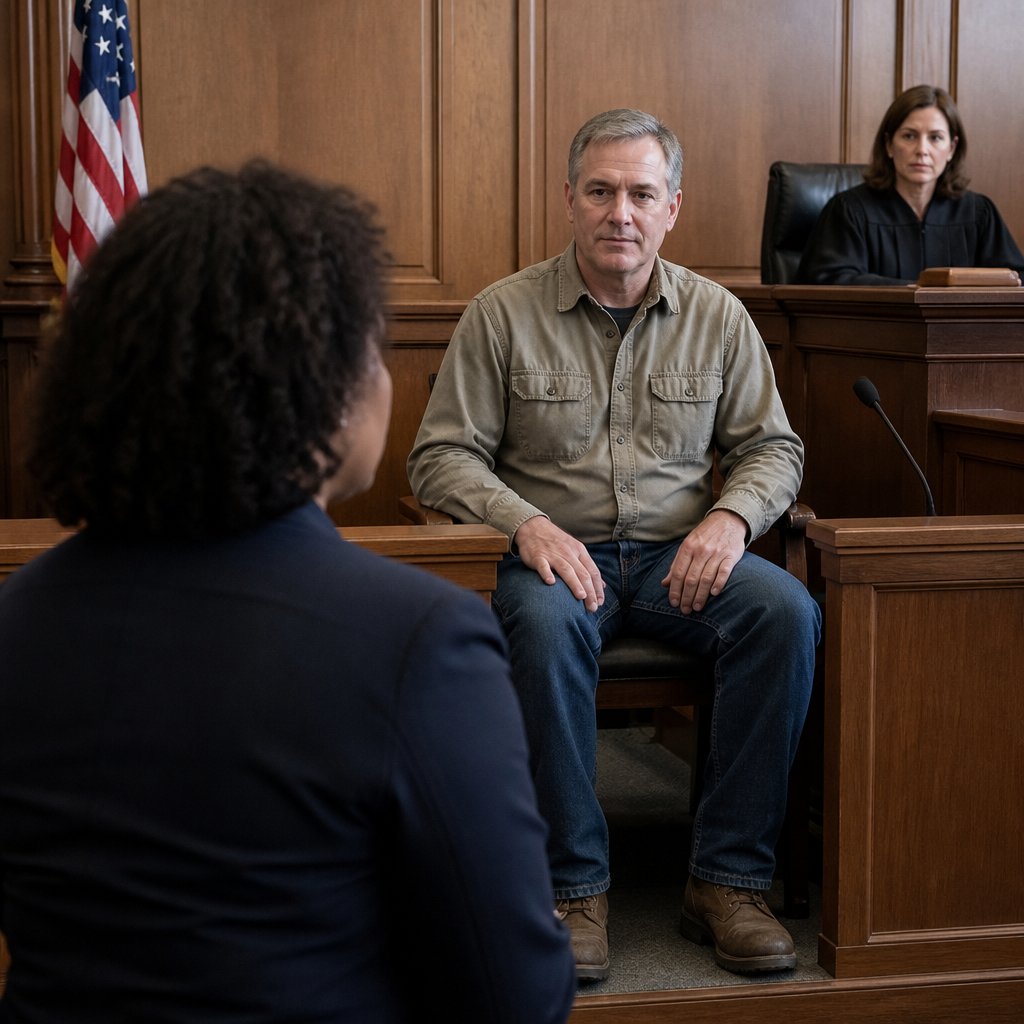
Craig took the stand in the same boots he probably wore to work every day. He was calm, direct, and clearly uncomfortable being there. He explained his job, the work orders, the three separate times he’d reported the ramp plate. He described the conversation with his supervisor where he was told to stop filing reports about cosmetic issues.
Diane asked him if he considered a raised metal edge on a walking surface a cosmetic issue. He said no. The defense attorney tried to suggest Craig had a grudge against the college. Craig said he’d worked there eleven years and had never filed a grievance. The defense didn’t push it further.
Their Expert Said Everything Was Fine
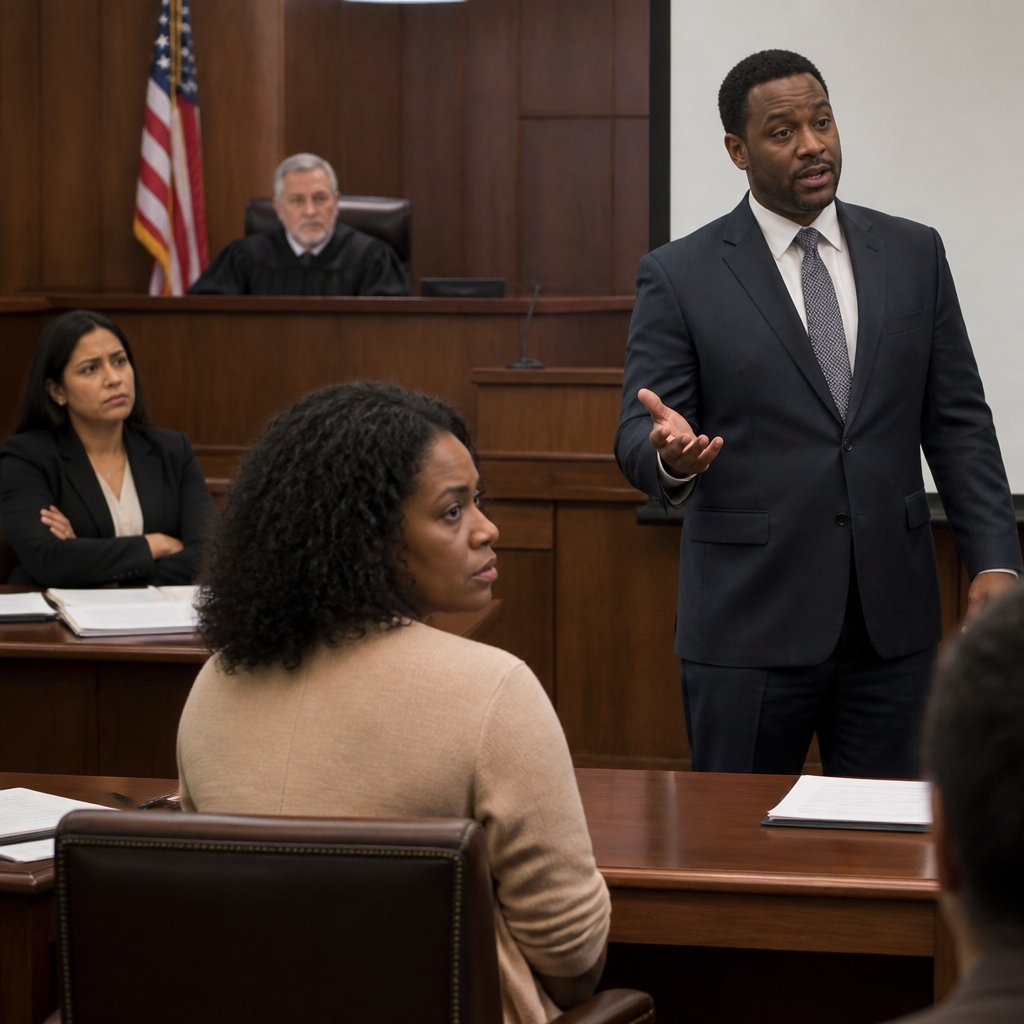
Morrison & Pratt’s safety expert was a man who’d clearly done this before. He had a calm voice and explained that the ramp met building code requirements, that the plate was within acceptable variance for a temporary stage installation, and that any reasonable person navigating the ramp should have been able to avoid it.
Diane asked him one question on cross-examination: had he ever personally inspected the ramp before it was repaired? He said no. He’d based his assessment on the building plans and the repair records. Diane let that sit with the jury. The woman in the green cardigan shifted in her seat.
I Told Them About the Night I Almost Quit
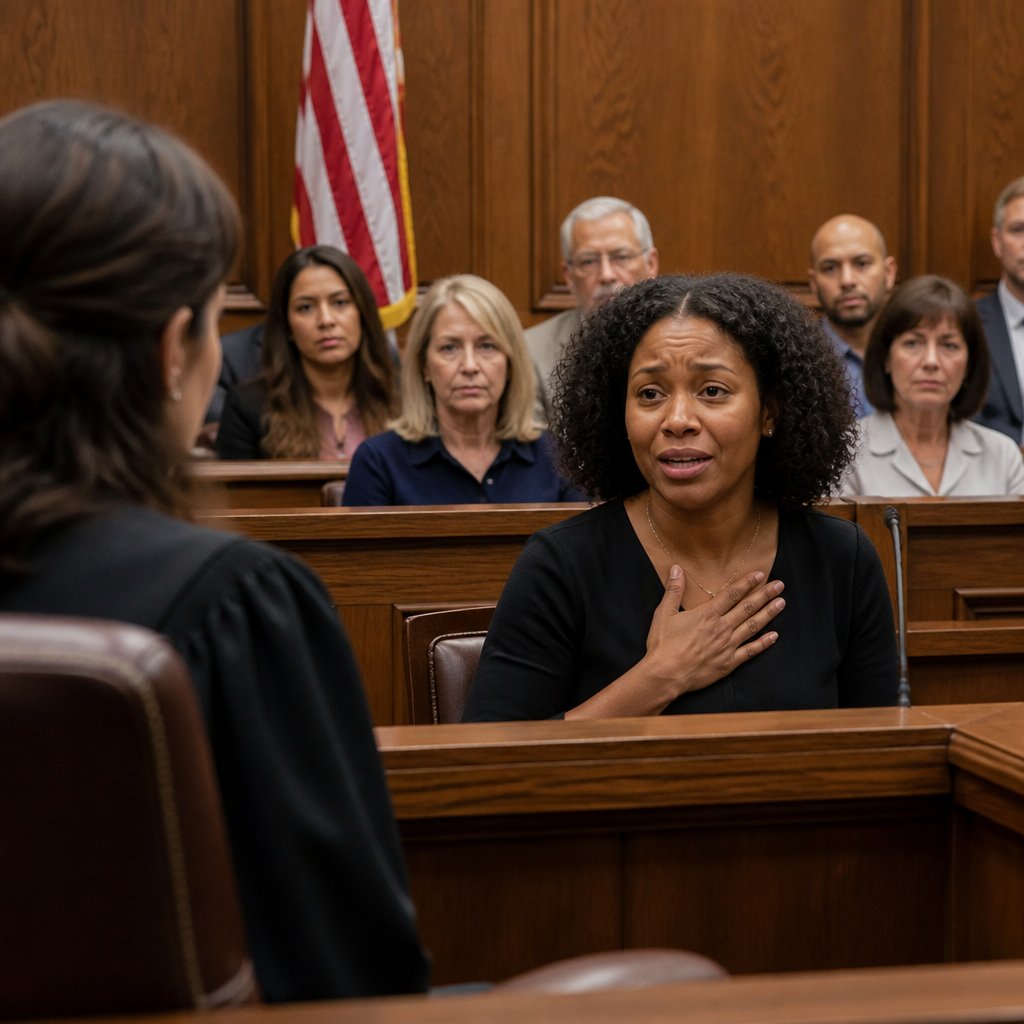
When I took the stand, I told them about the semester I almost dropped out. Marcus had been sick, Keisha was struggling in school, and I was behind on rent. I’d sat in the parking lot of the community college at nine p.m. on a Wednesday and cried in my car for twenty minutes before going inside to take a midterm.
I told them about graduation day — the cap that wouldn’t stay on, my mother’s tears, the walk across the basketball court. And then I told them about the ramp. The defense attorney asked if I’d been distracted. I told him I’d been proud. He didn’t have a follow-up for that.
The Hallway Was the Hardest Part
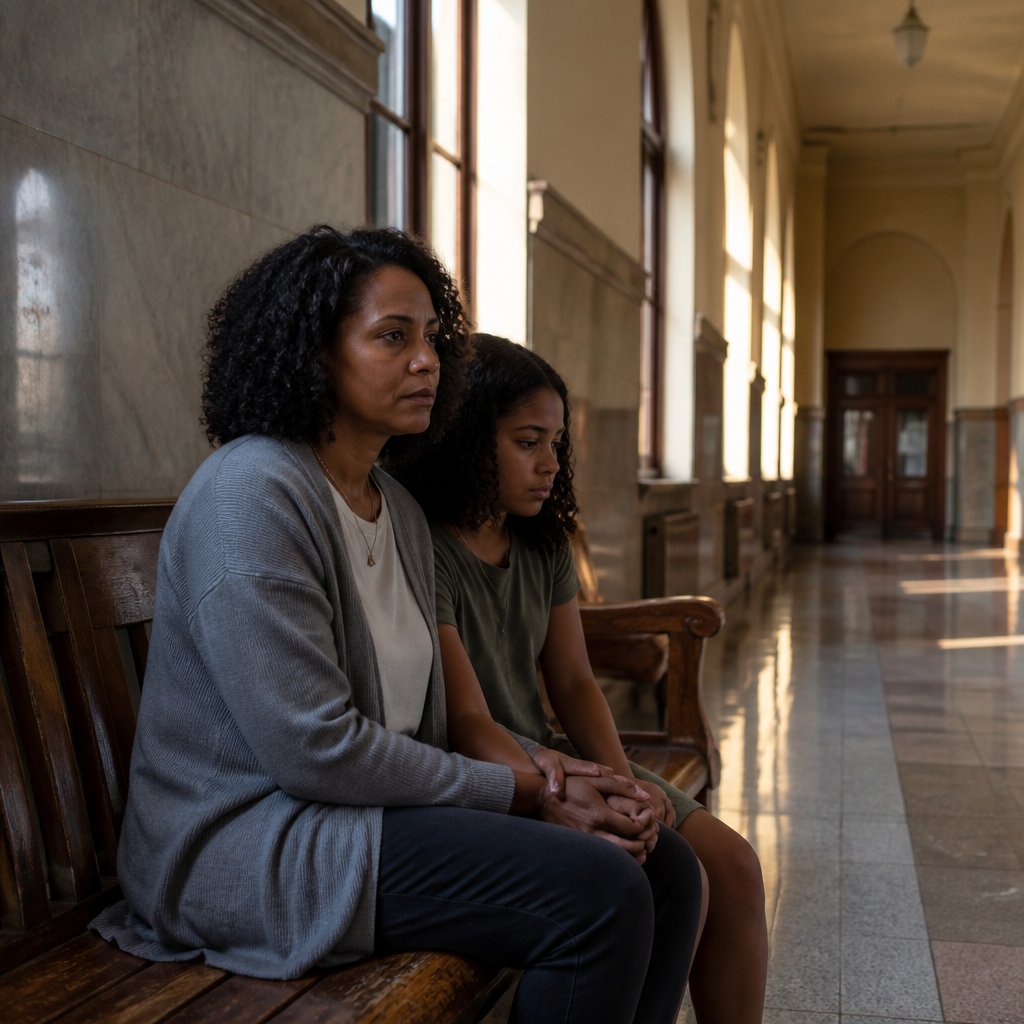
Closing arguments took most of the afternoon. Diane hammered the work orders and the repair. Morrison & Pratt hammered personal responsibility. The judge gave her instructions to the jury and they filed out at 4:17 p.m. Then we waited.
The hallway outside Courtroom 4B had a row of wooden benches worn smooth by decades of people doing exactly what I was doing — sitting and hoping. Keisha came after school and sat next to me. She didn’t say anything. She just held my hand the way she used to when she was small and the thunder was loud. Two hours passed. Then three. I watched the light through the window change from yellow to gray.
The Foreperson Stood Up
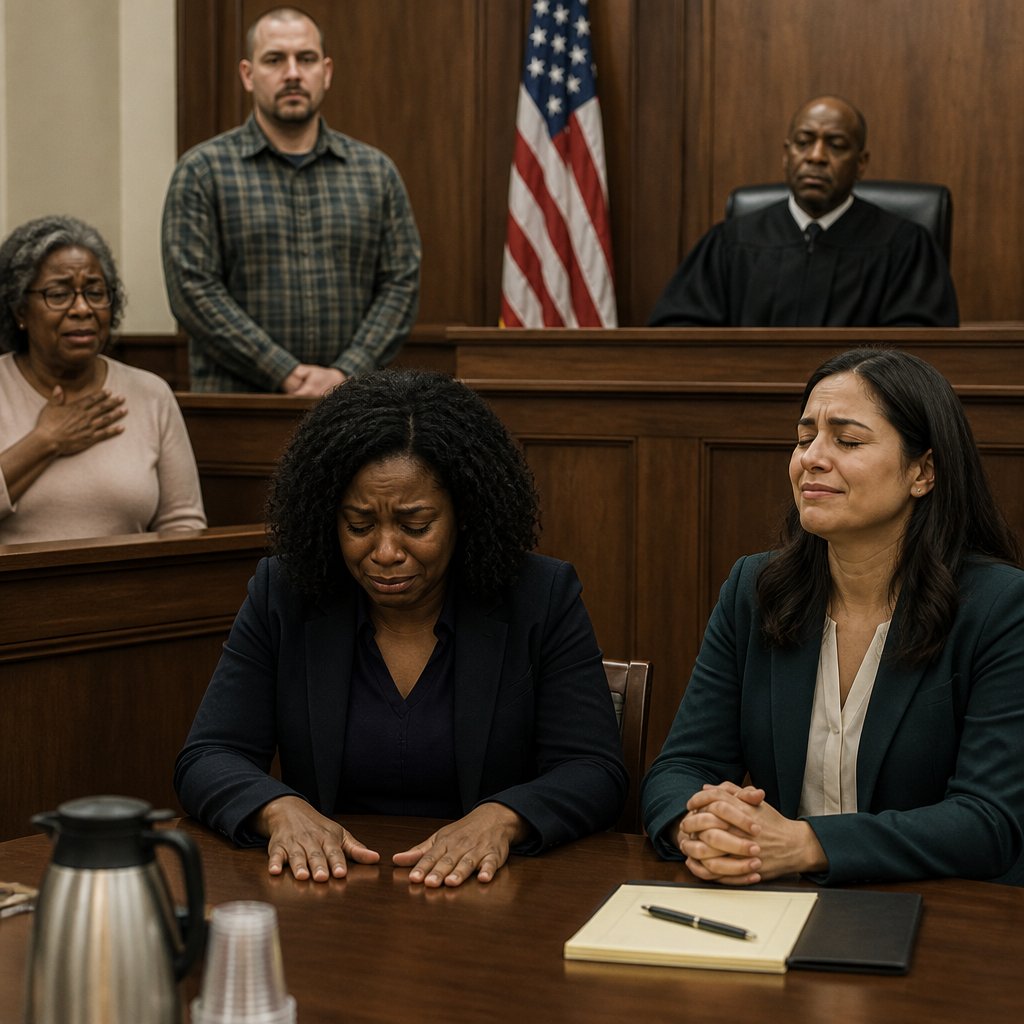
The bailiff came out at 7:40 p.m. and said the jury had reached a verdict. My legs felt hollow as I walked back in. The twelve of them filed into their seats. The foreperson — a man in a plaid shirt who’d been taking notes the entire trial — stood up.
He said the jury found Whitfield College eighty percent liable for my injuries due to negligence in maintaining the commencement stage. He said they were awarding six hundred and twenty thousand dollars in damages. The number didn’t register at first. I heard Diane exhale next to me. I heard my mother make a sound from the gallery. I put both hands flat on the table and stared at them because I didn’t trust my face to do anything I wanted it to.
What I Hung on the Wall
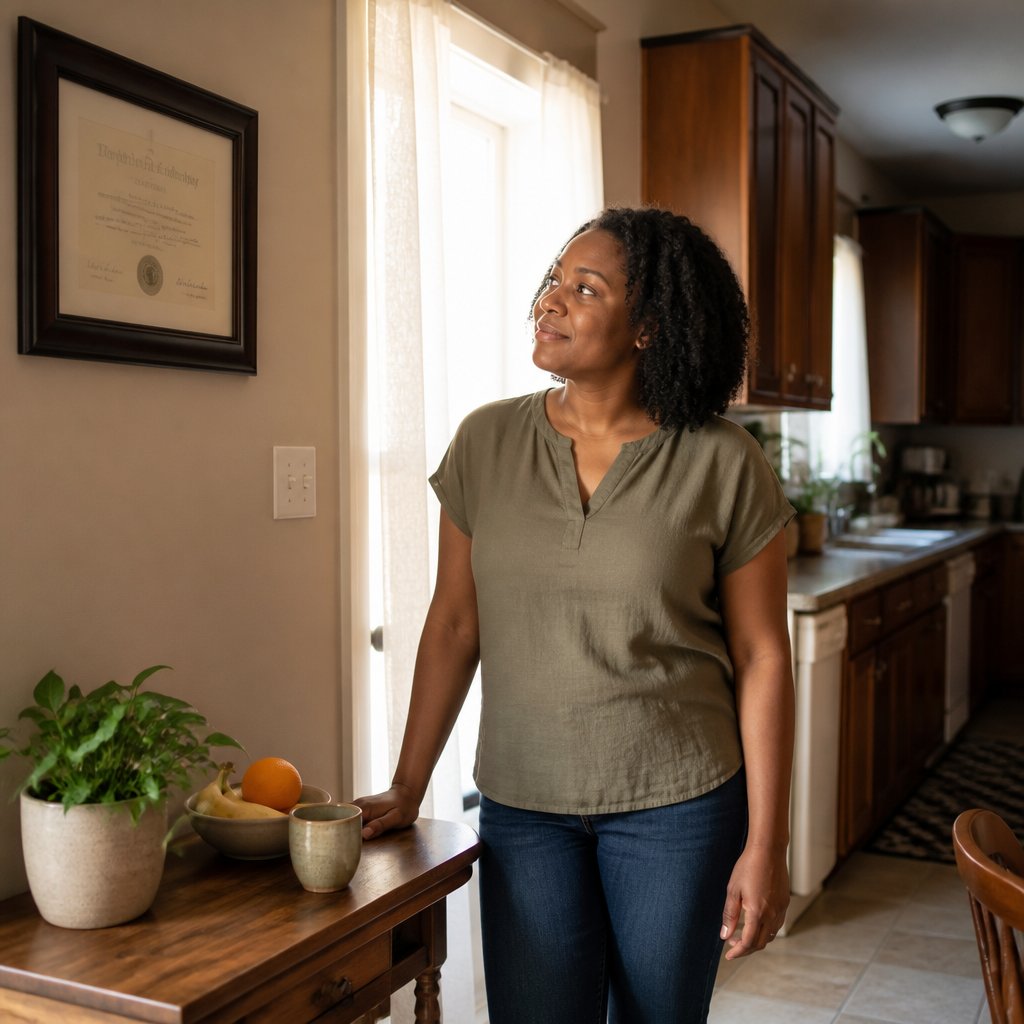
The money covered the medical bills, the lost wages, and the physical therapy I’d been putting off. After Diane’s fees and the hospital liens, what was left wasn’t six hundred thousand — but it was enough to breathe again. Enough to stop eating cereal for dinner. Enough to put a deposit on a better apartment with a bedroom for each kid.
Whitfield never apologized, but they replaced every temporary ramp plate on campus with permanent flush-mounted panels the following spring. I still walk with a limp. Some mornings the ankle is so stiff I have to sit on the edge of the bed for five minutes before I can stand. I hung my diploma on the wall above the kitchen table. Sometimes Keisha catches me looking at it. She thinks I’m proud of the degree. I am. But mostly I’m remembering that I earned what’s inside it twice — once in the classroom and once in Courtroom 4B.
Did the university's response justify your legal action?