



The Filling Was Routine
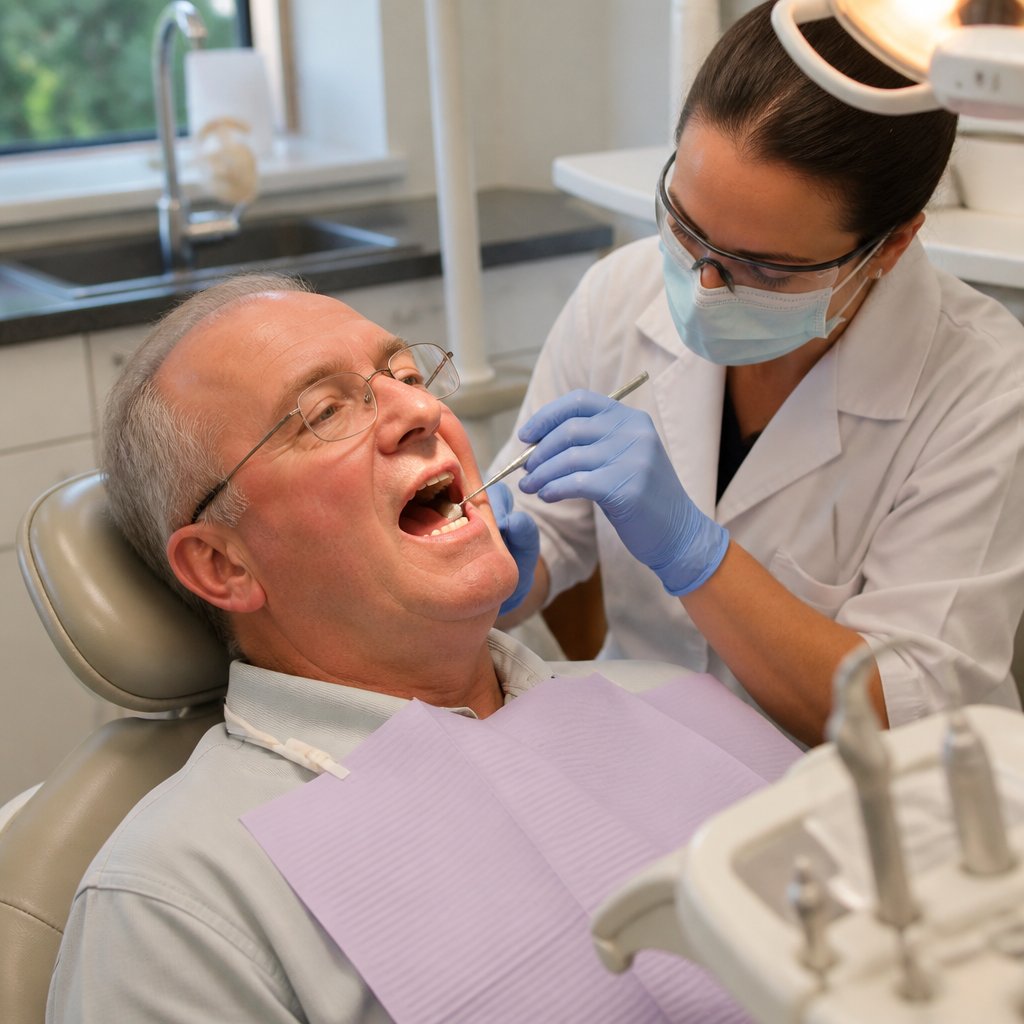
Dr. Anita Shah had been Gary Lindgren's dentist for eleven years. Twice-a-year cleanings, a crown in 2019, and one root canal that Gary still complained about at parties. On this particular visit — a Tuesday in January — Dr. Shah found a small cavity on Gary's lower left molar and recommended a composite filling. Standard procedure. Twenty minutes in the chair, a little Novocain, done by lunch.
Gary agreed. The filling went in without complications. Gary drove home, ate soup for dinner because his jaw was still numb, and went to bed. By his own account, he woke up the next morning a different man.
Gary Felt Different

According to Gary, the changes were immediate and dramatic. He was more irritable. He snapped at his wife over breakfast. He honked at a driver who was going the speed limit. He found himself clenching his jaw — the same jaw the dentist had worked on — in moments of frustration that used to roll off him. He felt, in his words, "like the filling had rewired something."
His wife, Deborah, noticed too — but her version of events, which would come out later, was somewhat different from Gary's. For now, Gary was convinced: the filling had changed his personality. He started researching dental materials and mercury and amalgam toxicity and neural pathways. He went down a rabbit hole. At the bottom of the rabbit hole was a lawyer.
The Lawsuit Asked for $3 Million

Gary's attorney, a personal injury lawyer named Doug Wexler who advertised on bus benches, filed a complaint against Dr. Shah seeking $3 million in damages for "neurological injury, personality alteration, and loss of quality of life resulting from negligent dental procedure." The complaint alleged that Dr. Shah had used a filling material that caused a "neurotoxic reaction" which fundamentally altered Gary's temperament and cognitive function.
Dr. Shah's malpractice insurer assigned the case to a defense attorney named Martin Frey, who read the complaint three times and then called his wife to tell her about his day. She laughed for two minutes straight. Martin didn't blame her.
Gary's Expert Was Unconventional

Doug Wexler hired an expert witness — a naturopathic practitioner named Dr. Lawrence Finney who had written a self-published book about dental materials and neurological harm. Dr. Finney was not a dentist. He was not a neurologist. He had a doctorate in naturopathic medicine from an institution that Martin's paralegal found had lost its accreditation in 2017.
Dr. Finney's report stated that the composite resin used in Gary's filling could, "in susceptible individuals," trigger "neurochemical cascading" that would manifest as personality changes. He cited his own book three times. He cited no peer-reviewed studies. Martin Frey highlighted this section and smiled. Things were going to be interesting.
Martin Brought a Real Neurologist

Martin's expert was Dr. Patricia Yeung, a board-certified neurologist at the university medical center with over a hundred peer-reviewed publications. Her report was four pages long and ended with: "There is no recognized mechanism by which a standard composite dental filling could alter personality, temperament, or neurological function. The plaintiff's claims are not supported by any body of credible scientific evidence."
She also noted — with what Martin described as "barely concealed exasperation" — that the filling material used by Dr. Shah was BPA-free, mercury-free, and had been FDA-approved since 2004. It was, in her professional opinion, about as neurologically active as a piece of toast.
The Deposition Where Gary Described His Symptoms

Martin deposed Gary for three hours. Gary was detailed and passionate. He described his personality changes with the conviction of a man who truly believed what he was saying. He was angrier. He was less patient. He had road rage where he used to be calm. He'd yelled at a barista over a coffee order. He'd slammed a door so hard it cracked the frame. All since the filling.
Martin listened patiently, took careful notes, and asked one question at the end: "Mr. Lindgren, before the filling, did you consider yourself an even-tempered person?" Gary said yes, absolutely. Martin said, "Thank you, that's all I need." Gary's attorney looked pleased. He shouldn't have.
Deborah Lindgren Took the Stand
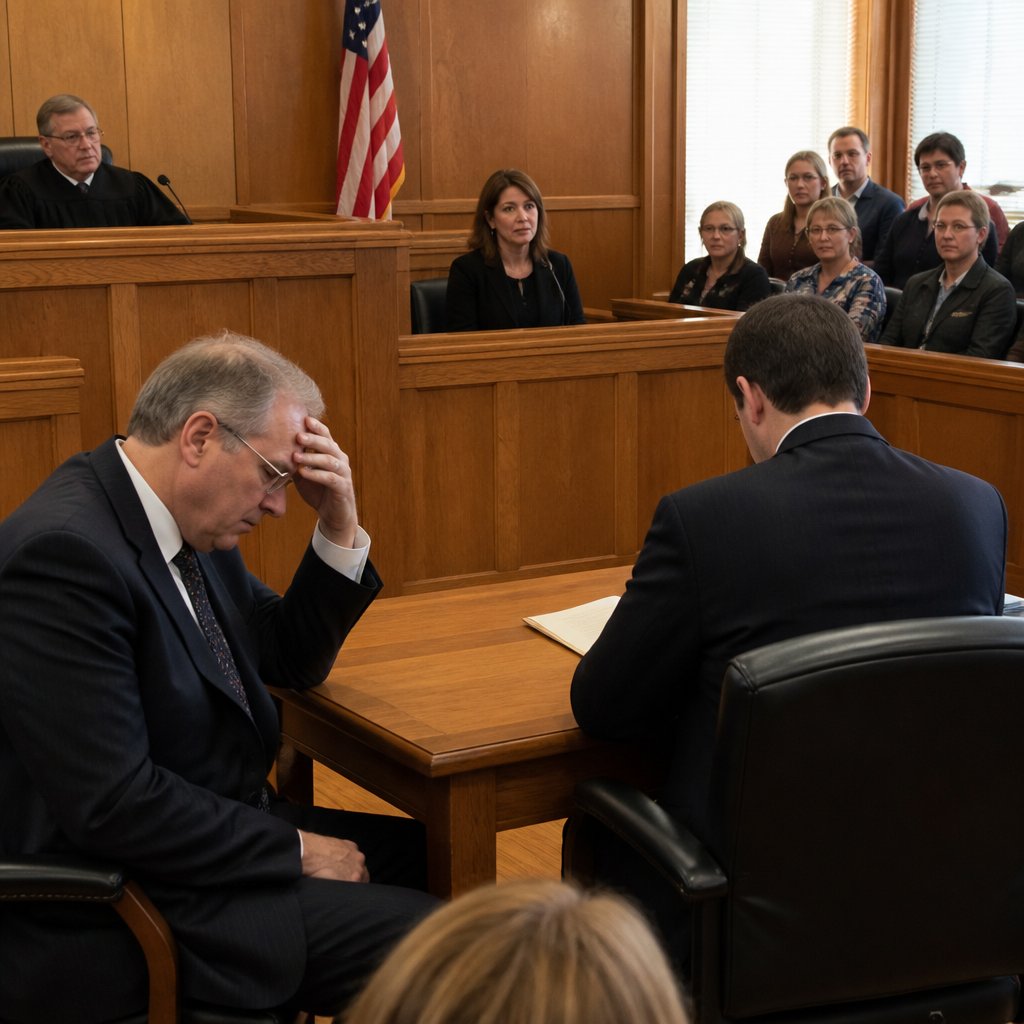
Deborah was called as a witness by the defense. She walked into the courtroom looking like a woman who had something to say and had been waiting a long time to say it. Martin asked her a simple question: "Mrs. Lindgren, before the dental filling in January, would you describe your husband as even-tempered?"
Deborah looked at Gary. Then she looked at the jury. Then she said: "My husband has been yelling at baristas since 2011. He's been slamming doors since before we were married. He once screamed at a Little League umpire until they asked him to leave. The dentist didn't change his personality. His personality has always been like this. He just decided to blame the filling instead of looking in the mirror."
The Courtroom Tried Not to Laugh

Martin asked Deborah to elaborate. She did. She described an incident in 2018 where Gary threw a remote control at the TV during a football game. An incident in 2020 where he yelled at a neighbor's teenager for skateboarding too loudly. An incident six months before the filling where he road-raged at a school bus — a school bus — for stopping too long. Each story was delivered with the matter-of-fact exasperation of a woman who had been married to this man for twenty-three years.
The jury wasn't trying very hard not to laugh. The woman in seat three had stopped trying entirely. Gary sat at the plaintiff's table with his jaw clenched — which, given the circumstances, proved nothing.
Case Dismissed

Martin moved for a directed verdict. The judge granted it without hesitation. He said the plaintiff had failed to establish any credible scientific link between the dental filling and the claimed personality changes, and that the plaintiff's own witness — his wife — had testified that the alleged personality traits predated the procedure by more than a decade.
He added, with visible restraint: "The court is sympathetic to the plaintiff's frustration with himself, but encourages him to explore non-litigious avenues of self-improvement." The gallery laughed. The judge didn't stop them. Gary walked out of the courtroom without speaking to his lawyer. Deborah walked out separately, got in her car, and drove to her sister's house. They separated three months later. The filling, for the record, is still there. It's fine.
Did the judge make the right call in this case?