



Trusting A Mail-Order Smile

I decided to try the mail-order aligners after seeing the ads online. No dentist office, no in-person scans, just a selfie scan through their app. They promised my bite would settle in two weeks. I read through their terms and agreed to monthly payments, even though I never met a provider face-to-face. The only thing I had was a checkout confirmation with a vague reassurance that the trays were made for me. It felt strange to commit to a treatment without any personal exam, but the low cost and convenience won me over. I held the package receipt in my hand and wondered if I was making a mistake before the first box even arrived.
No Dentist, Just Trays And Cards
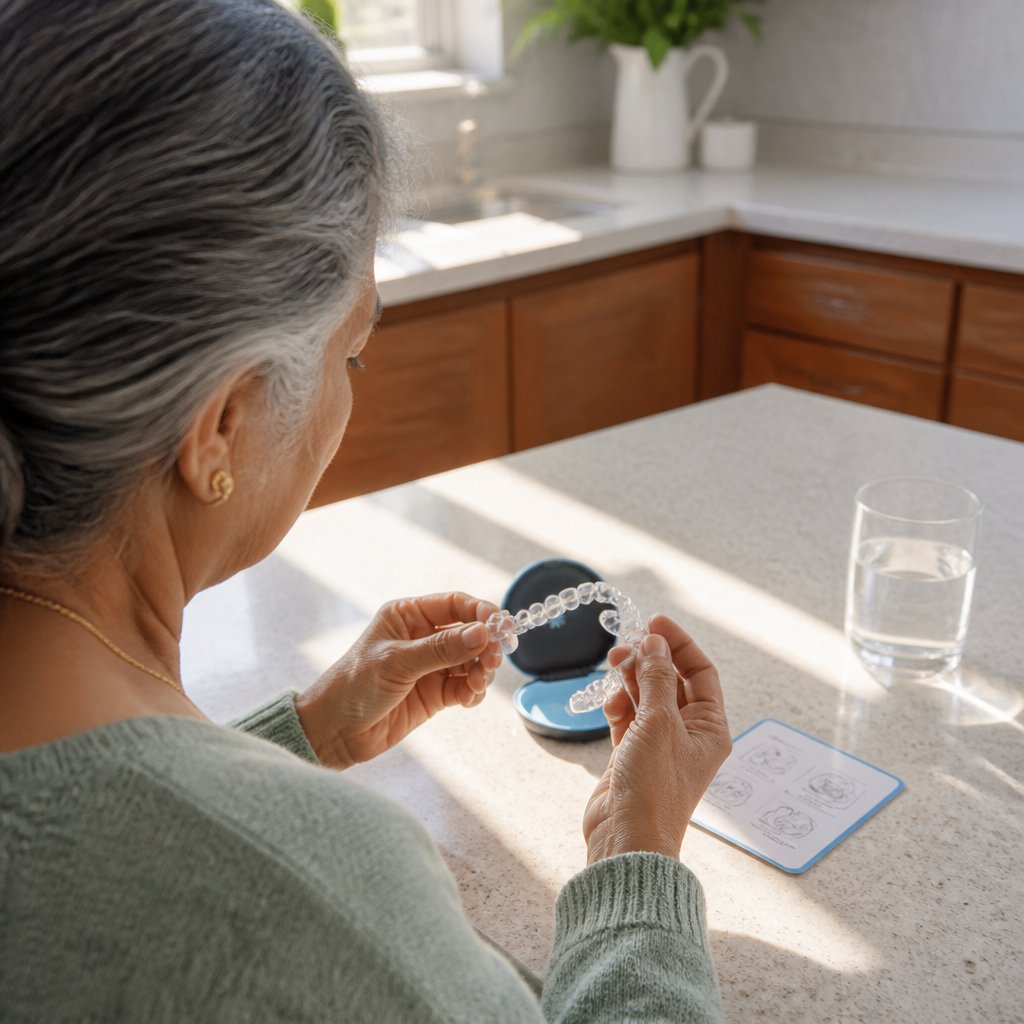
The first box arrived with clear plastic trays labeled by week. There was a small card inserted, telling me to "wear for 22 hours daily," but no name of any dentist or specialist. The instructions were generic—no customized guidance, no assurance on how the trays matched my specific teeth. I noticed the trays felt tight but expected that. There was no doctor’s note or any way to contact a real provider, just a support email that promised help if needed. I put in the first tray, hoping the system’s promise of compliance would be enough to fix my bite.
My Back Teeth Stopped Touching

By the second week, I noticed my back teeth weren’t touching when I bit down. It felt strange and uncomfortable. I messaged support, describing the problem, and got a copy-paste reply telling me to "trust the process" and that some pressure was normal. I saved that message—it became my first paper trail proving I reported issues. Still, I felt uneasy. The reassurance was vague and didn’t address my specific concerns about how my bite was shifting. I kept wearing the trays, hoping the pain and pressure would lead to the promised results.
Chewing To Force A Bad Fit
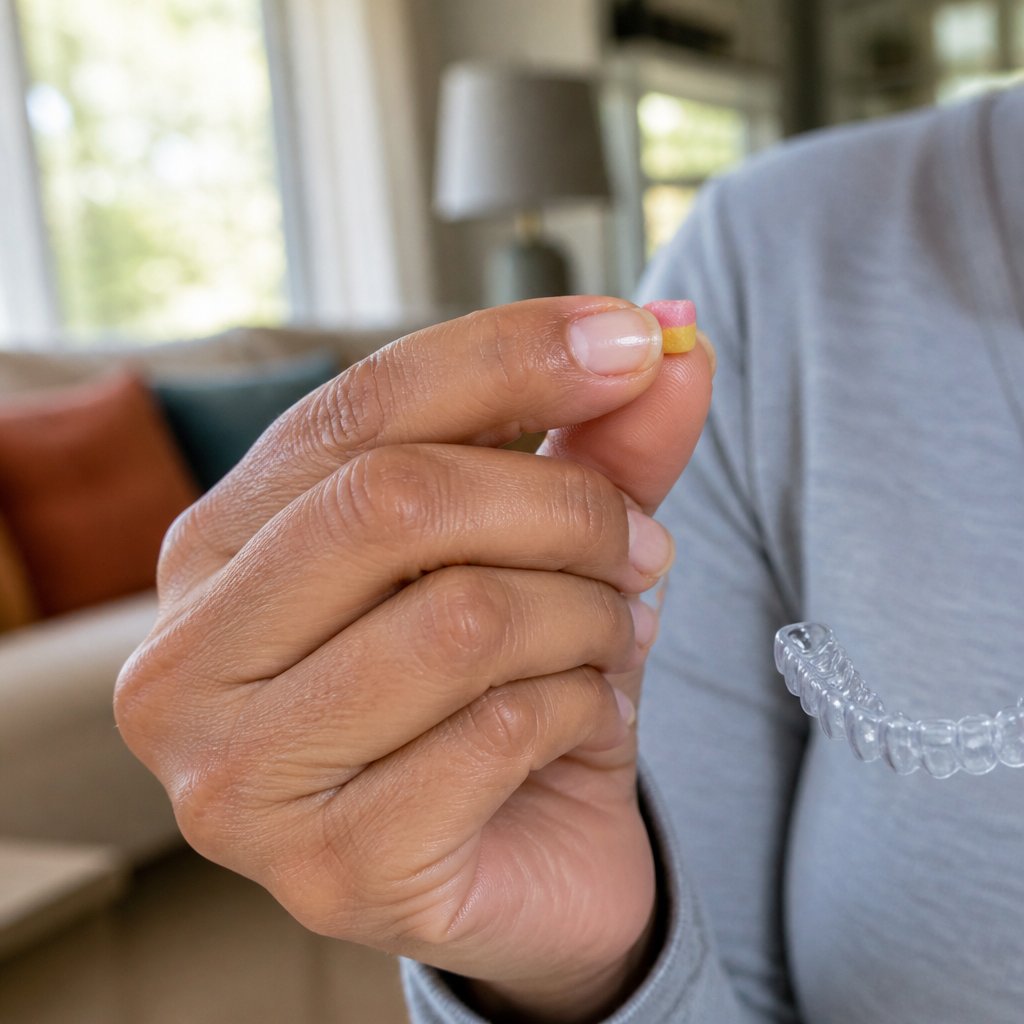
When I reached Week 4, the lower trays wouldn’t fully seat on my molars. They just wouldn’t fit right. The package included a chewy tool, a small rubber pellet, which I used to try to push the trays down. It felt like forcing something that didn’t want to move. Instead of guiding my teeth, the trays seemed to be fighting my anatomy. The chewy became my only way to make the trays sit, but the discomfort kept growing. I wasn’t sure if this was supposed to happen or if I was damaging myself.
Jaw Started Clicking And Sticking

One evening, while yawning, my jaw clicked loudly and then stuck halfway open. It didn’t immediately reset like I expected. Panic hit me for the first time. I tried to move it back, but the jaw felt locked and painful. The clicking noises continued. This was no longer simple discomfort. I realized something was seriously wrong. The trays had changed the way my jaw moved, and it wasn’t good. I didn’t know how to fix it or what damage had been done.
Records Arrive With Missing Pages

I finally demanded the full treatment plan and the dentist’s name. They sent me a PDF, but it looked off—pages were missing, and the signature was a generic scrawl, not a real name. It felt like the documents were filtered, curated to cover something up. I knew then this wasn’t going to be straightforward. The file sat on my kitchen table, edges curling under the weight of unanswered questions. I flipped through it again and again, searching for anything that could help me understand how badly this had been botched.
The weight on my jaw felt worse that day. I rubbed my temples while staring at the screenless PDF on my laptop, frustrated by both my pain and the incomplete records. It was as if they were controlling the narrative by controlling the evidence. I couldn’t tell if they were hiding errors or just incompetent, but either way, I was stuck without the truth.
When I called support to clarify the missing pages, their answers were vague and dismissive. They kept repeating the same scripted lines. I realized that getting real documentation was going to be harder than I thought. I didn’t know how deep this would go or who exactly was responsible, but I sensed this was just the beginning of a larger fight.
Box For Another Patient Arrives

A second box arrived early — way before I expected it. I opened it, feeling a mix of hope and dread. Inside were new trays, but something was clearly wrong. The upper tray had my name neatly printed, but the lower tray showed a different patient code altogether. This wasn’t just a paperwork error; it was physical evidence that someone else’s treatment plan had been shipped to me. I held the mismatched trays in my hands, the plastic cool and rigid, and felt a cold knot tighten in my stomach.
I put the trays side by side on the dining table, the fluorescent light overhead casting harsh shadows. The labels stared back at me — one with my name, the other with a code I didn’t recognize. How had this mix-up happened? How many times had I worn someone else’s trays? I thought about my jaw locking and shifting, the pain getting worse. The pieces were starting to come together, but I still didn’t know what the company planned to do about it.
I called support again, my voice tight. They promised to investigate but gave no timeline. They sounded rehearsed and distant, like they weren’t expecting a customer to find this level of error. Meanwhile, the trays sat on my table, a constant reminder of the damage I might have sustained.
Labels Photographed, Support Denies Significance

I took out my phone and photographed the trays’ labels from every angle. Each label was clear — my name on the upper tray and a different patient code on the lower. I sent the photos to customer support, demanding an explanation. Their response was that the code was an internal reference number with no significance. According to them, it wouldn’t affect my treatment or the trays’ fit.
The denial didn’t make sense. If the codes were meaningless, why were they different? Why ship a kit with mismatched parts at all? I sat on my couch, the plastic trays resting on the coffee table, the soft hum of the heating system filling the quiet room. The doubt gnawed at me. If this was normal, why did my bite feel so wrong?
Support’s refusal to acknowledge the problem only deepened my mistrust. They sidestepped every question, repeating scripted lines about ‘normal pressure’ and ‘minor adjustments.’ It felt like their way of washing their hands of responsibility. I wanted to believe them, but my jaw pain and shifting bite told a different story. I didn’t know how to prove it yet, but I knew I couldn’t let this go.
Surgeon Orders Imaging For Diagnosis

The pain and locking in my jaw were unbearable now, so my primary care doctor referred me to an oral surgeon. He was a middle-aged white man with a calm bedside manner. In his office, I sat on the exam chair wearing a light blue medical gown. He examined my jaw, gently pressing around the joint while I winced. After a thorough check, he ordered MRI imaging to look for structural damage.
When the report came back, the oral surgeon walked me through it. The imaging showed inflammation and disc displacement in my temporomandibular joint—classic signs of TMJ injury. He pointed at the scans on the lightbox, tracing the joint’s irregular shape with his finger. This was the first time I had a clear, medical diagnosis. The damage wasn’t in my head or just in pain; it was real and visible.
I left the office clutching the printed report, the paper crinkling slightly in my hand. But knowing the diagnosis didn’t make the pain or the financial burden any lighter. I still had no idea how the mismatched trays had caused this, or if the company would accept responsibility. The surgeon said treatment might be long and complicated. I wasn’t ready for that fight yet.
The Checkout Screenshot Raised Doubts

They sent me a screenshot of the checkout page to prove I agreed to their terms. But it didn’t look like what I remembered. The layout was different, some prices didn’t match, and crucially, the arbitration clause wasn’t anywhere in the emailed receipt I had saved. It felt like they swapped versions after the fact, like they manufactured my assent to cover their backs. I stared at the printout, the lines of text blurring as I tried to reconcile it with my memory.
My lawyer said this discrepancy could be a big deal. If they changed the terms without telling me, my consent was questionable at best. But proving it was tricky. Their support team insisted everything was standard procedure. They pointed to the signed agreement on file and brushed off my complaints. Yet, the missing arbitration clause in the original email gnawed at me. Was it really there and I missed it? Or did they insert it later?
I sat at my kitchen table, the edges of the paper crumpled from handling. The scent of stale coffee lingered in the room. I knew this question over the agreement’s authenticity could make or break the case. But I still didn’t have the proof to expose their version swapping. The fight was just getting real.
They Claimed I Clicked Agree Online

Next, the company filed a motion to compel arbitration. Along with it came an affidavit claiming I clicked "I agree" to their terms on a precise date and time. They had a digital timestamp, they said. But I didn’t trust it. My lawyer demanded the backend logs and the page version history from the company. We needed to see the full digital footprint — not just their selective proof.
The tension grew as we waited for their response. The case hinged on this digital evidence. If they could produce the exact page I saw, showing the arbitration clause clearly, it would be hard to fight. But if the logs revealed discrepancies or missing versions, it could prove the company manipulated the situation. I stared at the blank wall of my home office, the hum of my old ceiling fan filling the silence.
Weeks passed without the requested data. My anxiety mounted. Without those backend logs, we were flying blind. The company’s claim felt like a trap — a legal net they hoped I’d get tangled in.
A Support Rep’s Unexpected Confession

Out of the blue, I got a message from a former support representative who once worked for the company. She said mismatched trays were more common than admitted. Apparently, agents were told to keep customers wearing the trays unless they were bleeding, nothing else counted as a valid complaint. The script was tight, leaving no room for error or customer discomfort.
Her words confirmed what I suspected. The problem wasn’t just me or my case. It was systemic. But she was just one voice, a whistleblower who could be dismissed as disgruntled. We needed more than her account. I met her at a quiet café, a small table between us and the murmur of other patrons. She wore a plain black jacket over a purple blouse, her face anxious but determined.
She pulled out a folded document — notes she’d taken on the scripts and company instructions. I listened as she explained the pressure to silence complaints. Still, this was just a witness story. Until it was tested in court, it was only a piece of the puzzle.
Laying Out The Proof
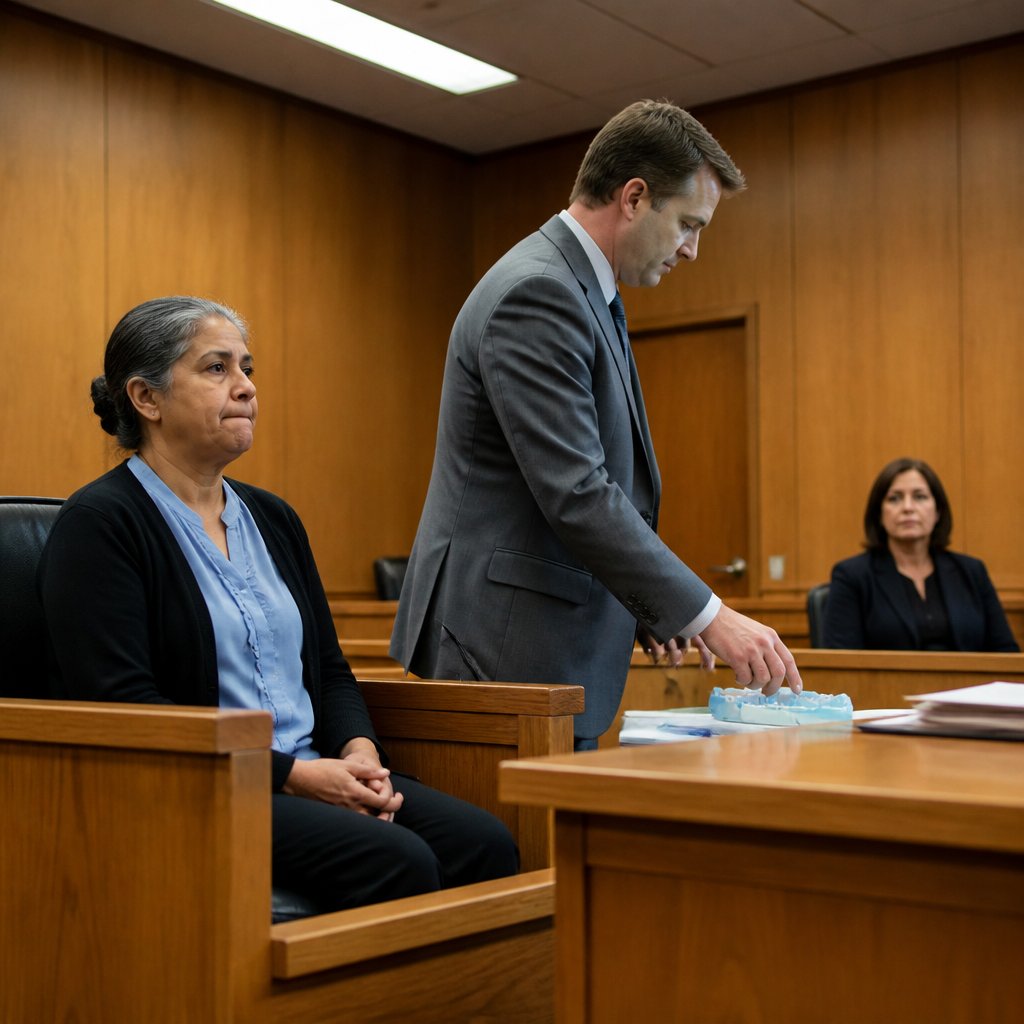
My lawyer arranged everything on the table, lining up each week’s set of dental trays beside stacks of medical bills and insurance denial letters. The trays looked harmless, but I knew each one had slipped me further down a path of pain. I watched him point to the mismatched trays, then to my medical records, connecting the dots for the jury with quiet insistence. I sat stiffly in the courtroom, the fluorescent lights above buzzing as a dull ache throbbed in my jaw. Every now and then, I shifted uncomfortably in my chair, trying to swallow the tightness crawling along my face. The jurors scribbled notes, their faces grave but unreadable. I wanted them to see me not as a complainer, but as a person caught in a nightmare of mismatched treatments and broken promises. Then the judge excused everyone for deliberation, and the courtroom emptied except for me, my lawyer, and the lawyer for the company. Time slowed, the hum of the air conditioner seeming louder, and I realized this night would decide if anyone believed the story my jaw told.
Jury Verdict Shakes Company

The jury filed back in, their expressions unreadable as they handed the verdict to the bailiff. The judge called the court to order and read aloud: the arbitration clause was rejected, liability was found against the company, and sanctions were imposed for deleting portal evidence. Relief flickered inside me but didn’t settle; the award covered my medical care and lost wages, but this felt bigger than the numbers. The insurance company had to reverse their denials, rewiring the tangled mess of coverage. Behind the scenes, the company quietly altered their packaging and changed the tele-dentist protocols, signaling that the problem went beyond just my case. The courtroom walls seemed to close in as I realized the damage I endured was part of a larger pattern. My jaw still ached, but now I wondered how many others were caught in the same trap, and if their stories would ever come to light.
Was the tele-dentist responsible for the jaw injury?