




Discharge Packet Lists Implant Details

When I left the hospital after the hip replacement, the discharge packet included detailed documentation. Among the papers, I found the implant’s model and lot numbers clearly listed. At first, everything seemed routine. But about six weeks later, the new hip began making a grinding noise. It wasn’t just mechanical; the sensation felt fundamentally wrong, as if the hardware itself was compromised. I noticed a subtle but persistent discomfort that didn’t align with normal recovery.
The packet’s sterile smell lingered as I held the papers, trying to reconcile the official details with the increasing pain. Something about the documentation felt too precise, too clinical to explain what I was experiencing. Why was my hip clicking and grinding when the implant was supposed to be brand new? The early symptoms felt like a mechanical failure happening beneath my skin, but I had no proof yet.
Surgeon Dismissed My Groin Pain

At my two-week post-op visit, I told the surgeon about sharp groin pain that persisted. He listened but immediately labeled it as “expected post-operative pain,” advising me to push through and attribute discomfort to the rehab exercises. The clinical room smelled faintly of disinfectant. His tone was matter-of-fact, and he didn’t order any imaging or tests. Instead, he reframed my worries as part of the normal healing process.
I left feeling dismissed, as if my subjective pain mattered less than the surgeon’s predetermined script. The nurse handed me a brochure on physical therapy protocols as the surgeon prepared to see the next patient. I wondered if my symptoms were truly routine or the first sign of something wrong. The pain didn’t improve, but I was told to keep moving forward.
X-Ray Shows Implants In Place
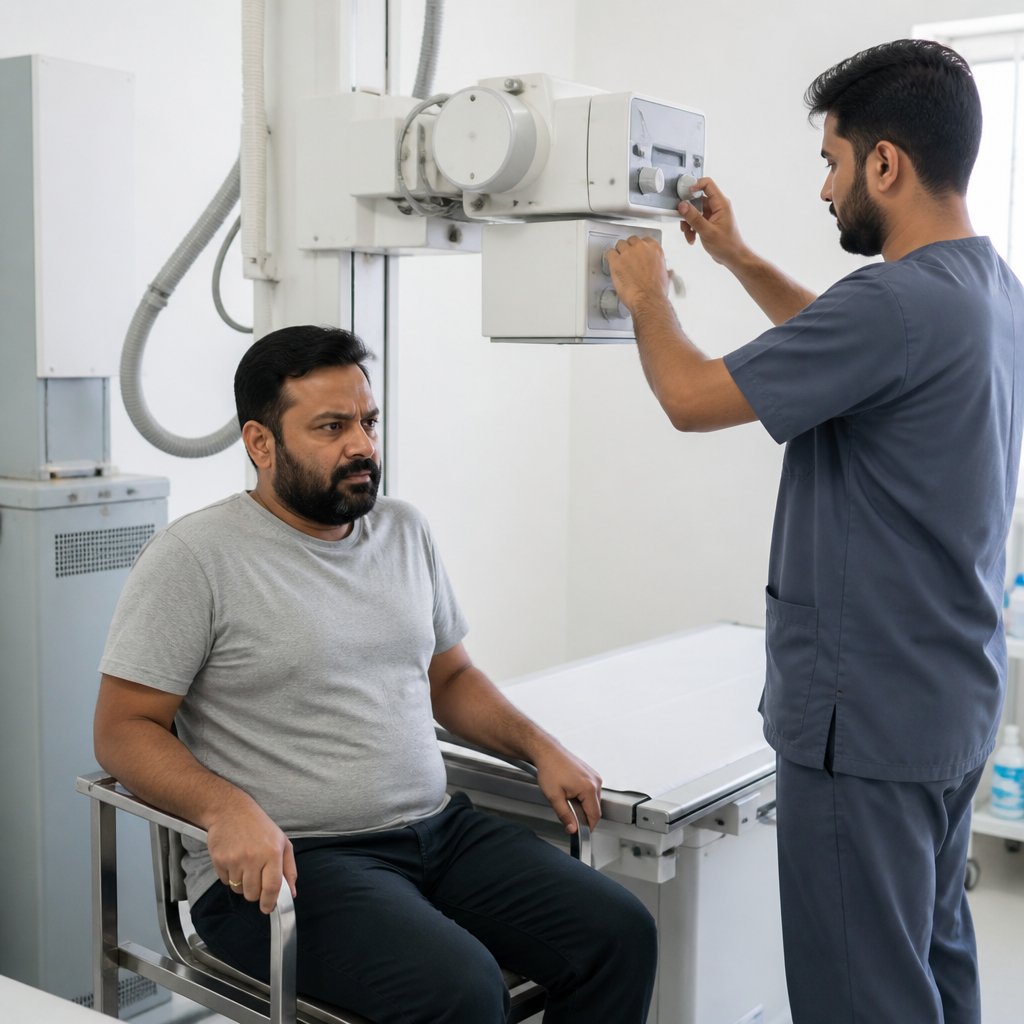
Six weeks after surgery, the hip started clicking loudly. During this visit, we took X-rays to check implant positioning. The radiologist’s report stated "components in place," indicating no obvious displacement. But the report also mentioned a faint lucency line around the implant—an early radiological sign suggesting possible loosening. This finding wasn’t explained to me during the appointment.
I remember the sterile smell of the radiology suite and the cold metal chair I sat on while waiting. The technician spoke briefly, then left me alone with the heavy silence and the images on the screen behind his back. The faint lucency seemed like a subtle warning that no one was making clear. The clicking grew louder each day, but I was left with ambiguous reassurances.
Hospital Sent Redacted Operative Report

I requested my full operative report and implant log to understand the hardware used. The hospital responded with a redacted copy. Crucially, the page containing the device’s sticker with serial and lot numbers was removed, preventing me from verifying the chain of custody. The remaining pages detailed the surgical procedure but lacked the device identification needed for investigation.
Holding the incomplete packet, I noticed the sharp crinkle of the paper as I flipped through. The absence of the device-sticker page felt deliberate, like a barrier to transparency. Without that critical documentation, I couldn’t trace the implant’s origin or confirm its authenticity. The hospital’s silence on this omission spoke volumes, raising more questions than answers.
Physical Therapist Noticed Early Failures

During physical therapy sessions, my therapist mentioned she’d seen multiple patients that month with hips failing far too early. She described cases where implants loosened, caused inflammation, and required revision surgeries within weeks. Her tone was cautious but suggested a pattern beyond typical recovery variations.
The therapy gym smelled like sweat and rubber mats. She wore a gray athletic top and black pants, moving me through exercises while talking about the cluster of early failures. Hearing this, I felt less isolated. It wasn’t just me—maybe something systemic was happening. But she stopped short of naming causes or institutions involved.
Hip Gives Out On Stairs

It happened unexpectedly while I was going down the stairs. My hip just gave way beneath me. I lost balance and fell hard, landing on my arm. The pain was immediate and sharp. EMS arrived quickly and noted in their report: "prosthesis instability suspected." That line turned vague suspicion into formal documentation of harm.
At the emergency room, the staff examined my fractured wrist and took X-rays of my hip. The radiologist commented on early signs of loosening around the prosthetic cup. I felt a sinking realization. This wasn’t just a rehab hiccup; something mechanical was seriously wrong.
The sterile smell of the hospital mixed with the sharp metallic scent of the imaging room lingered as the doctors discussed next steps. Their expressions were serious but guarded, suggesting they had seen this before, but weren’t ready to say more. I was left wondering how widespread these failures might be, beyond my single case.
Second Orthopedist Sees Migration

After the emergency visit, I was referred to a second orthopedist for a fresh opinion. He examined my hip X-rays carefully, pointing out that the acetabular cup had shifted significantly since the original implant just months before. "This migration is far too soon," he said firmly.
He ordered an aspiration of the joint fluid to check for infection or other causes. The room smelled faintly of antiseptic as he prepared the syringe. His tone was clinical but concerned, emphasizing that something mechanical was failing early, not normal wear or infection.
His office was filled with orthopedic models and charts. He spoke of implant integrity and mechanical loosening as if he was preparing for complications he'd seen too often. But the exact cause of this early failure remained unclear, and the aspiration results were still pending.
Aspiration Shows Metal Debris

The lab called days later with the aspiration results. No infection was detected, but the fluid was filled with metal debris and numerous inflammatory cells. This was a crucial finding. It pointed away from infection and toward abnormal wear or inferior materials inside the implant.
The sample arrived in a sterile vial with a faint metallic sheen visible inside. The pathologist described microscopic metal particles causing a strong inflammatory response, explaining my pain and instability. This was not expected in a correctly manufactured prosthesis.
I thought about the sterile lab room where the technicians analyzed the fluid under microscopes, their sterile gloves carefully handling the samples. Somehow, the implant was shedding metal, and no one had warned me this could happen. The implications were alarming, but the chain of responsibility still unclear.
Hospital Claims Implant Stickers Lost

I requested the actual implant stickers from the operating room—the unique lot numbers and identifiers that would definitively prove what device was used in my surgery. The hospital responded with a surprising claim: they had been "misfiled during an EHR migration."
This was the only definitive identifier of the implant. Without it, tracing the chain of custody became nearly impossible. Their explanation felt like a cover-up, or at best a grave administrative error. The sterile hospital records room felt distant and unwelcoming every time I tried to get answers.
I pictured the stacks of digital records silently stored on servers, now missing critical surgical documentation. If the stickers were truly lost, it raised serious questions about the hospital’s record-keeping and transparency. How could I prove the implant’s origin without them?
Invoices Reveal A Secondary Distributor

The subpoenaed invoices detailed purchases from a secondary distributor at nearly half the usual price. The hospital claimed a backorder crisis forced this shift. I noticed many lot stickers on the documentation looked altered—small font differences and smudged ink. Testimony from a procurement officer confirmed that altered lot stickers were scanned into the hospital’s inventory system regardless, suggesting leadership knowingly accepted these implants without proper verification.
The officer described how they were instructed to overlook discrepancies to expedite surgeries. This wasn’t a case of one-off mistakes but indications of systemic choices by hospital leadership. The hospital’s internal purchasing records conflicted with what was logged in the operating room. I had to track the chain of custody with these contradictory data points and piece together who authorized the secondary distributor’s shipments.
One invoice showed a purchase date after patient surgeries had already occurred, raising questions about the timing. If these implants came from a questionable source during a supply crunch, the hospital’s responsibility became harder to deny. Yet with leadership seemingly complicit, proving intent meant unraveling their communications next.
Emails Show Plans To Delay Recall

Internal emails surfaced between hospital executives discussing “pausing any recall language” to avoid patient alarm and operational disruption. The tone was cautious but clearly prioritized protecting the hospital’s reputation over immediate patient safety. One email chain showed a legal adviser warning about potential liabilities, followed by leadership nodding to delay public announcements.
The hospital sent out a vague letter to affected patients, mentioning general joint pain and recovery timelines without acknowledging implant issues. Several patients reported receiving settlement offers requiring nondisclosure agreements, hinting at attempts to silence concerns. These settlements were handled through a third-party mediator, further obscuring hospital accountability.
This coordinated approach suggested the hospital was deliberately managing information flow to minimize fallout. The question became when the leadership first knew about the implant problems and how long they chose to sit on the information. These emails could tie the chain of knowledge and intent together, but timing and context were crucial.
FDA Investigator Confirms Recall Pending

Our attorney received a call from an FDA investigator who confirmed a recall was being drafted but had not been finalized. The investigator expressed frustration about the hospital and distributor’s slow cooperation. Meanwhile, a whistleblower recording came into our possession: a distributor representative promised a “quiet swap-out” to a hospital administrator, insisting it must remain off the record.
The voice was low and urgent, emphasizing avoidance of any public scrutiny that could trigger a formal recall. This recording implied a deliberate cover-up coordinated between distributor and hospital staff. It confirmed our fears that the implant issues were widely known for months but suppressed to continue routine surgeries.
The timing of the recall draft and the recorded promises of secrecy exposed a tangled web of collusion. We needed to verify when the hospital was first warned and how decisions to delay action were made. The FDA’s tentative recall and the distributor’s clandestine plans raised the stakes considerably.
Explanted Components Mysteriously Missing

Following a judge’s order, a neutral custodian was appointed to secure all evidence related to the implants. Two explanted components from affected patients were reported as ‘misplaced’—they had vanished from hospital storage. This raised alarms since those components were critical to proving the counterfeit nature of the implants.
Simultaneously, shipping records were traced back to a shell company linked to the distributor’s accountant. This company had no legitimate manufacturing or distribution operations, suggesting it was used to launder counterfeit products into the supply chain. The custodian’s involvement aimed to prevent further evidence tampering.
The hospital’s failure to produce these components compounded suspicion of intentional concealment. Without the physical evidence, establishing the exact failure mode of the implants became difficult. The missing components and the shadowy shell company deepened the mystery—who else was involved? And how far did the cover-up extend?
Backdated Recall And Financial Ties Exposed

A formal recall finally went out, but it was backdated and incomplete. Federal indictments soon followed, revealing the hospital had been alerted to implant issues months before the recall. Worse, we uncovered that the lead surgeon who dismissed my ongoing pain had financial ties to the distributor and sat on the hospital’s purchasing committee responsible for implant selection.
This surgeon’s dual role presented a clear conflict of interest, potentially influencing decisions to continue using the suspect components. The indictment detailed payments and incentives funneled through consulting contracts. Patient records also showed a pattern of early implant failures dismissed as normal complications.
This revelation shifted the narrative from inadvertent errors to deliberate profit-driven decisions at multiple levels. As the recall reached patients, questions mounted about how deeply corruption affected clinical care. The surgeon’s role in purchasing and direct patient care became a critical focus of the investigation.
CEO Admits Recall Delay Was Business

During a court hearing, the hospital CEO publicly admitted the recall delay was a business decision aimed at protecting revenues and reputations. The admission contradicted previous statements claiming patient safety was the priority. The court began moving toward a global settlement requiring annual audits and lifetime monitoring for all affected patients.
The settlement would also mandate full disclosure to every patient who received the questionable implants—a stark departure from the hospital’s earlier vague letters. Patient advocates welcomed the transparency but remained wary of enforcement. The CEO’s statement opened the door for broader investigations into hospital practices and distributor accountability.
While the settlement terms took shape, questions persisted about potential criminal liability for individuals involved and the adequacy of compensation for those harmed. The story was far from over as public scrutiny increased and regulatory bodies intensified their oversight.
Should hospital staff face criminal charges for implant errors?