




Overtime Hours Seemed Off

I was scrolling through the timekeeping system late one Friday afternoon when something caught my eye. The overtime hours logged for a few recent shifts didn’t match what I remembered putting in. More than once, the numbers were rounded down, shaving off valuable minutes here and there. It wasn’t blatant, but enough to add up over time. I quietly took screenshots, saving them on my personal drive. I knew payroll would probably "correct" these discrepancies soon, but I wanted a record, just in case.
The subtle smell of stale coffee lingered in the break room as I leaned over the laptop, trying to keep my notes organized without drawing attention. The hum of the vending machine in the corner was the only other noise. I couldn’t shake the feeling that this was just the tip of a bigger problem. Was this standard practice, or something more deliberate? I kept my mouth shut for now, but I felt the weight of those missing minutes.
Manager Warned To Avoid Email

The next day, I brought up the odd rounding with my manager during a quick hallway conversation. His expression shifted when I mentioned the discrepancies. He lowered his voice and said, “Keep questions about the rounded-down hours off email. We don’t want this documented.” That phrase hit me like a punch. It was a direct signal to avoid any written record, a casual, almost conspiratorial request to hide what might be going on.
I nodded, trying to mask my unease. The fluorescent-lit hallway felt narrower suddenly. My manager, a middle-aged man with graying hair and wearing a casual button-down, glanced around nervously. His tone wasn’t just a request; it was an order designed to isolate me, to keep the issue out of sight. I left that conversation with an unmistakable sense that there was a cover-up in motion.
Injury Report Disappears Overnight

The following morning, I checked the shared drive again, looking for that dock injury report I’d seen days before. It was just gone. The file had vanished without any explanation or notice. The sterile office felt colder, the hum of the air conditioner louder as if emphasizing the silence left by that missing document.
That injury report wasn’t just paperwork; it was a link between the wage issues and safety concerns I’d started to piece together. Its disappearance suggested someone was trying to erase evidence or suppress information. I wasn’t the only one who noticed, but no one was talking about it. This wasn’t just about pay anymore; it was about what the company wanted to hide.
HR Labels Me The Problem

A few days later, I was summoned to the HR office. The room was small and cramped, with outdated motivational posters peeling off the walls. Dana, the HR rep, sat behind a cluttered desk wearing a neat blouse and skirt, her posture businesslike but firm. She reframed my wage and safety concerns as a “behavioral issue” and slid a memo across the desk titled “Team Alignment.”
I looked at the document, the edges sharp and the paper thick. It wasn’t about solving problems but about fixing me. Dana said I needed to sign it to move forward, as if my questions were what disrupted the team, not the rounding down of hours or the missing reports. The quiet hum of the ventilation system filled the room as I hesitated.
Broken Link On Policy Update

Later, the company announced an updated dispute resolution policy via a vague email. When I tried to access the PDF, the link was broken for most employees. The company intranet page showed an error, and repeated attempts led nowhere. It felt like setting up plausible deniability—giving the appearance of transparency without the substance.
Workers whispered in the break room about the missing document while nursing their coffee. I could see the frustration mounting. Was the company intentionally hiding the details to avoid future claims? The stale smell of burnt coffee mingled with the quiet murmurs, a dull soundtrack to growing suspicion. Without access to the formal document, we were left guessing.
Dana Demands I Sign Now

One afternoon, Dana cornered me near the HR office, her tone clipped. She said I had to sign a “standard arbitration form” before the end of the month. No discussion. No exceptions. I felt the floor tilt as she spoke, the usual buzz of the office muffled around us. Dana wore a crisp white shirt and tailored black pants, her expression resolute.
The weight of her demand hit me hard. This wasn’t just paperwork anymore—it was a deadline forcing my hand. I tried to ask questions but got cut off. The stifling smell of cleaning solution lingered in the hallway as she left me standing there, the form already waiting on her desk. It felt less like an option and more like an ultimatum.
HR Refused Review Time

I requested to take the arbitration form home to review it but was flatly refused. Dana insisted I sign it on the spot. The HR office felt smaller that day, the air thick with pressure. The fan above buzzed loudly, making the insistence feel harsher.
I stared at the crisp paper in front of me. No chance for questions, no room to consult anyone. It was a coercive move, turning policy into a trap. Dana’s eyes didn’t waver. My heart pounded as the clock ticked, but the choice was clear—or so they wanted me to believe.
Backdated Arbitration Raises Questions
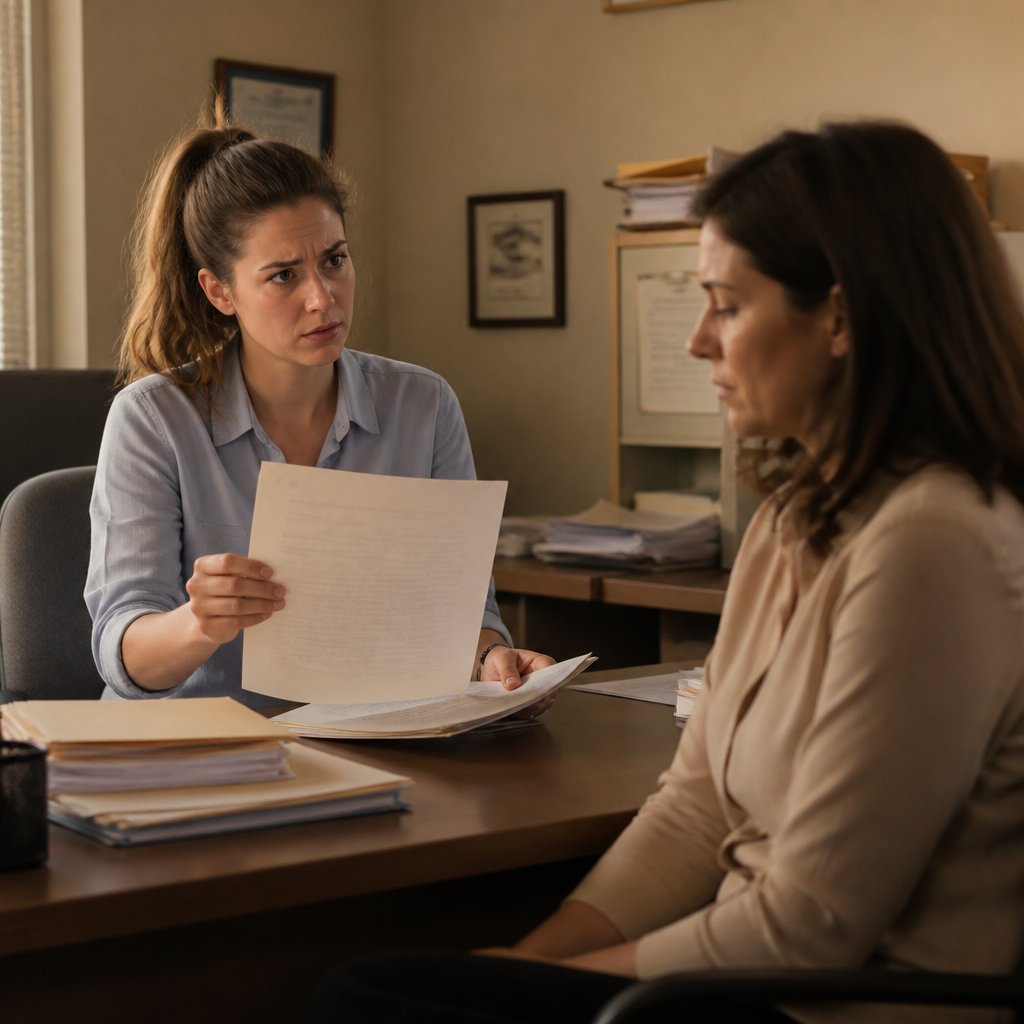
As I scanned the arbitration agreement, I noticed it was backdated to before my initial complaint email. I asked aloud why it carried a retroactive date. The room fell heavy and quiet. Dana’s face tightened but she didn’t answer immediately. My voice felt louder in that small HR office than it should have.
The stale smell of paper mixed with the low drone of the air vent. The tension thickened with the silence, as if everyone was waiting for someone to break it. That backdate wasn’t just a date; it was a line in the sand, a way to potentially erase what had come before. I couldn’t tell if they expected me to sign without noticing.
Pressure To Initial Timeline Change

Dana called the backdating an “administrative correction” and insisted I initial beside the date. The pressure was clear—they were testing whether I’d help them rewrite the timeline. My hand hovered over the paper, the pen feeling heavier than usual. The office felt suffocatingly quiet.
My eyes caught the edges of the form, the fine print mentioning claims “past or future.” This wasn’t just a form; it was a legal trap disguised as routine paperwork. The room smelled faintly of lemon disinfectant, but I barely noticed. I wanted to resist, but every second spent hesitating seemed to make their grip tighter.
Access Denied After Refusal

I read the arbitration agreement’s retroactive language carefully—“any claim, past or future.” I refused to sign. By that afternoon, things changed fast. My folder access was cut off, and my security badge stopped working at the front door. The buzzing of the electronic lock was a sharp contrast to the quiet murmur of coworkers nearby.
I stood there, badge in hand, trying it again. The red light flashed, denying me entry. It was clear the retaliation had begun. The usual hum of the office suddenly felt like a wall closing in. No one approached or said a word. I was on the outside, literally and figuratively, but what would come next was still unknown.
Security Review Targets My Files
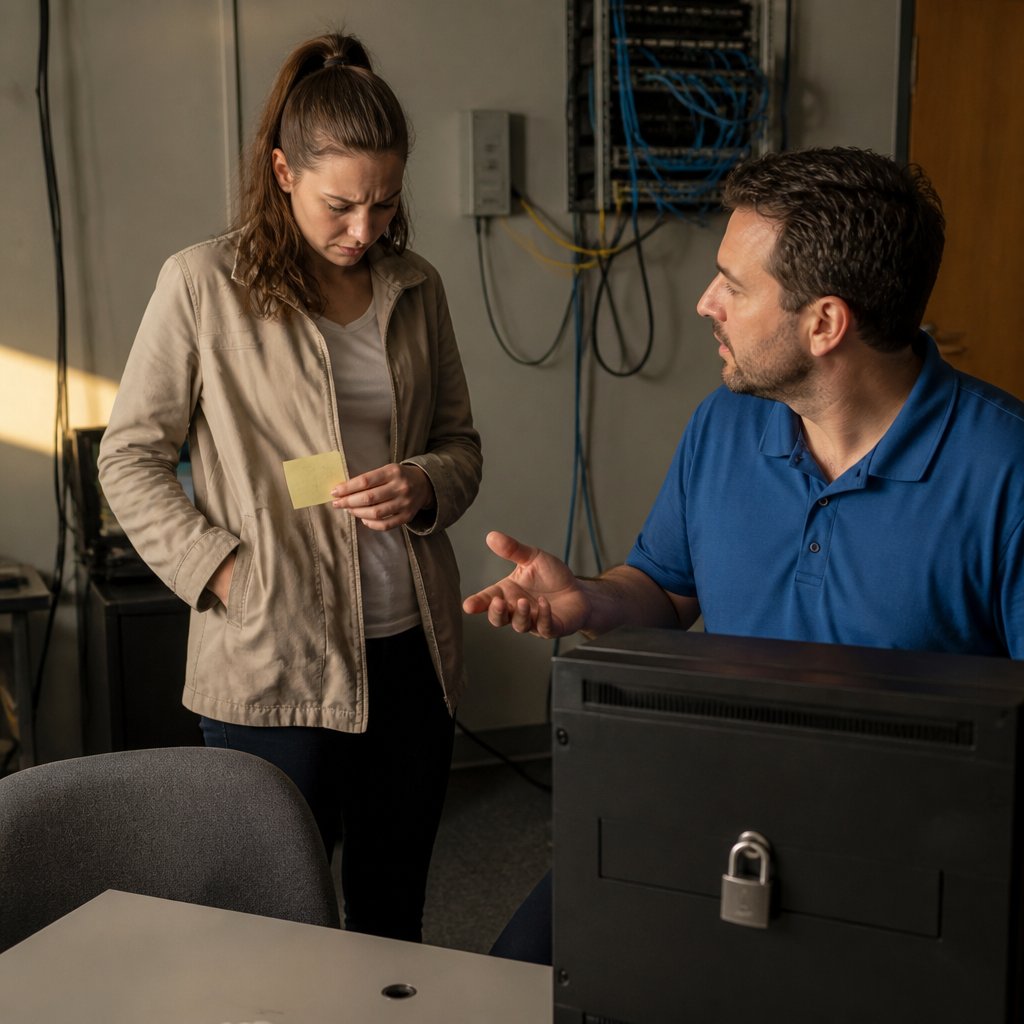
Monday morning, I tried to log in like usual, but IT denied access. They cited a “security review” for “unusual downloads” flagged on my account. The irony hit me—I’d been downloading payroll statements and safety incident reports to document my concerns. Suddenly, my careful record-keeping was treated as a threat.
I went to the IT office, a cramped windowless room lined with tangled cables and blinking monitors. The technician, a lanky man in a blue polo, avoided eye contact while explaining the protocol. He said the review was standard procedure for potential data breaches, but I felt targeted.
My badge still worked for building entry, but I couldn’t access any internal systems. If this was a lockdown, no one said how long it would last. I left with a sticky note stuck to my jacket pocket—"Account suspended pending further notice." The cafeteria buzzed outside, oblivious to my stalled workday.
Had my documentation efforts just become the basis for an internal investigation? Or was this a pretext to pressure me? I glanced at the note again, the rough edges scratching against my skin, and wondered what came next.
Manager Labels Me High Risk

Later that day, my manager called me into his small, glass-walled office. He was a stocky man in his late 40s with closely cropped salt-and-pepper hair, wearing a rumpled white shirt and khakis. I noticed he had an unopened coffee cup on his desk, the aroma of burnt grounds lingering faintly.
He forwarded me an email thread on his phone, but I couldn’t see the screen. His voice lowered as he described it: HR and leadership had flagged me as “high risk” and “not a culture fit.” The words felt like a punch to the gut.
Before I could respond, his calendar notification popped up. He told me HR had scheduled a second meeting. No details. The office’s hum of distant printers and muffled conversations seemed to fade around me.
I nodded silently, the label sinking in. The workplace I thought I knew was shifting, and I had no idea where this was headed.
Unexpected Lawyer Joins Meeting

The second meeting took place in a bland conference room with beige walls and a round table scarred with pen marks. I arrived early, dressed in a gray blouse and black slacks, clutching my notebook.
When HR and my manager arrived, the tension was thick. Then, unexpectedly, they placed a speakerphone on the table. A corporate attorney’s voice came through—calm but firm, cold and detached. I wasn’t warned she’d be on the call.
She laid out an ultimatum: they’d offer severance only if I signed an arbitration and non-disparagement agreement within an hour. No negotiation, no exceptions. The clock started ticking.
My hands felt clammy, the smooth surface of the table cool beneath my palms. I glanced around the sterile room and back to their faces, searching for any sign of flexibility. There was none.
Coworkers Warned To Avoid Me

That afternoon, a coworker slid a note onto my desk: a text message from someone else. It said managers had been told not to talk to me, and to report any questions I might ask. The phrase “surveillance zone” echoed in my mind.
I sat in the break room, a cramped space with faded linoleum floors and flickering fluorescent lights. My brown ponytail felt heavier than usual as I read the message again, the buzzing of the vending machine nearby seeming unusually loud.
Every glance from colleagues now felt calculated. I was invisible and scrutinized all at once. Work had turned into a maze of whispers and watchful eyes.
No one mentioned the new rules openly. I wondered how many were following the directive, and what would happen if I broke the silence.
Was it fair for HR to enforce a backdated agreement?