




Signed Without Full Understanding

My first day back at work started with a rushed onboarding at a little kiosk set up in the break room. HR handed me a tablet and said, "Just e-sign here and here." I nodded, eyes scanning quickly, assuming it was standard paperwork. The kiosk was cramped, with a buzzing fluorescent light overhead and the faint smell of stale coffee in the air. I remember glancing around; a coworker was munching on a sandwich, barely paying attention. I tapped my signature, not slowing down to read the dense paragraphs on the screen. It felt like a formality, but now I worry it was more than that.
Later, a sinking feeling settled in when I realized I might have signed something I never fully saw. That paperwork could be used against me — a trap hidden under the guise of routine. The realization crept up slowly, like the buzzing of the fluorescent bulb, persistent and inescapable.
Coworker’s Joke Reveals Contract

One afternoon in the cramped HR office, I was chatting quietly with a coworker named Kevin, a tall white guy in his thirties with a messy haircut and a faded company T-shirt. He smirked and said, "Hey, you know they locked us all into that two-year, 50-mile noncompete? It's like they don’t want anyone leaving for a better gig."
I blinked. I hadn’t heard that detail before. The atmosphere felt lighter, but the words hit heavier than the fluorescent hum from the overhead lights. Kevin shrugged, like it was just a joke, but something about it didn’t sit right. It sounded like a trap — a cage wrapped up in legalese and fine print.
I kept the thought to myself, but it gnawed at me during the rest of the shift. That joke was more than a tease; it might be a warning. What if I was stuck in low-wage work because of this buried clause?
HR Shows Signed Agreement

Later that week, HR called me into the main office, a place with beige walls and a glass window overlooking the floor. The HR manager, a middle-aged white woman named Lisa, slid a printed PDF across the desk. It had my e-signature timestamped on the very first day.
Lisa said, "This is standard for everyone. Two years, 50 miles. It’s just the way things are around here." Her tone dared me to challenge it. I looked down at the signature, the ink crisp on the paper, and felt the weight of it like a stone pressing against my chest.
My voice caught. I wanted to say I didn’t understand what I was signing, that I wanted out, but the moment hung heavy. The faint hum of the air conditioner buzzed in the background as I realized how sticky this contract really was.
Hours Cut and Write-Ups Begin

Over the next few days, my scheduled hours were sliced dramatically. I went from a full 40-hour week to barely 20 hours, all without clear explanation. The break room felt colder somehow, with fewer people making small talk.
Then petty write-ups started. A supervisor pulled me aside to note I’d lingered too long at the clock-in station, then another cited a minor uniform violation I’d never been warned about. The tension weighed on me like the squeak of the vending machine’s oldest snack button, stuck half-pressed.
I couldn’t tell if this was coincidence or a deliberate tightening of control. It felt like they were trying to keep a grip on us before more people decided to quit. The unease was sharp and persistent, but I had no proof.
Secret Applications Submitted

Worried about the hours and the growing pressure, I started quietly applying to jobs at the competitor company. I made sure to keep my phone out of sight and emails unopened in the break room. Every time I filled out an application, I felt like I was defusing a hidden bomb.
I slipped my resume into envelopes at home and mailed them myself. The only sound in my small apartment was the soft rustle of the paper as I assembled each packet. I didn’t tell anyone at work, knowing it could trigger retaliation if they suspected.
The secrecy was exhausting, but I had to keep this hope alive. I had to find a way out of the trap they’d set without giving them a chance to tighten it further.
Access Restricted After Notice

When I finally gave notice, things changed immediately. My swipe badge stopped working on the production floor, and I had to be buzzed in and out, like I was a guest rather than a longtime employee. The security desk was a solid wall of glass and steel, cold and unwelcoming.
I noticed files I used daily were suddenly off-limits. The software tools I relied on were disabled. HR claimed it was "for security," but it felt like they were treating me like a threat, not a person.
The hum of the building's ventilation system echoed hollowly as I passed the locked doors. It was a silent warning, a reminder that the company was preparing some kind of case against me.
HR Confronts Me With Contract
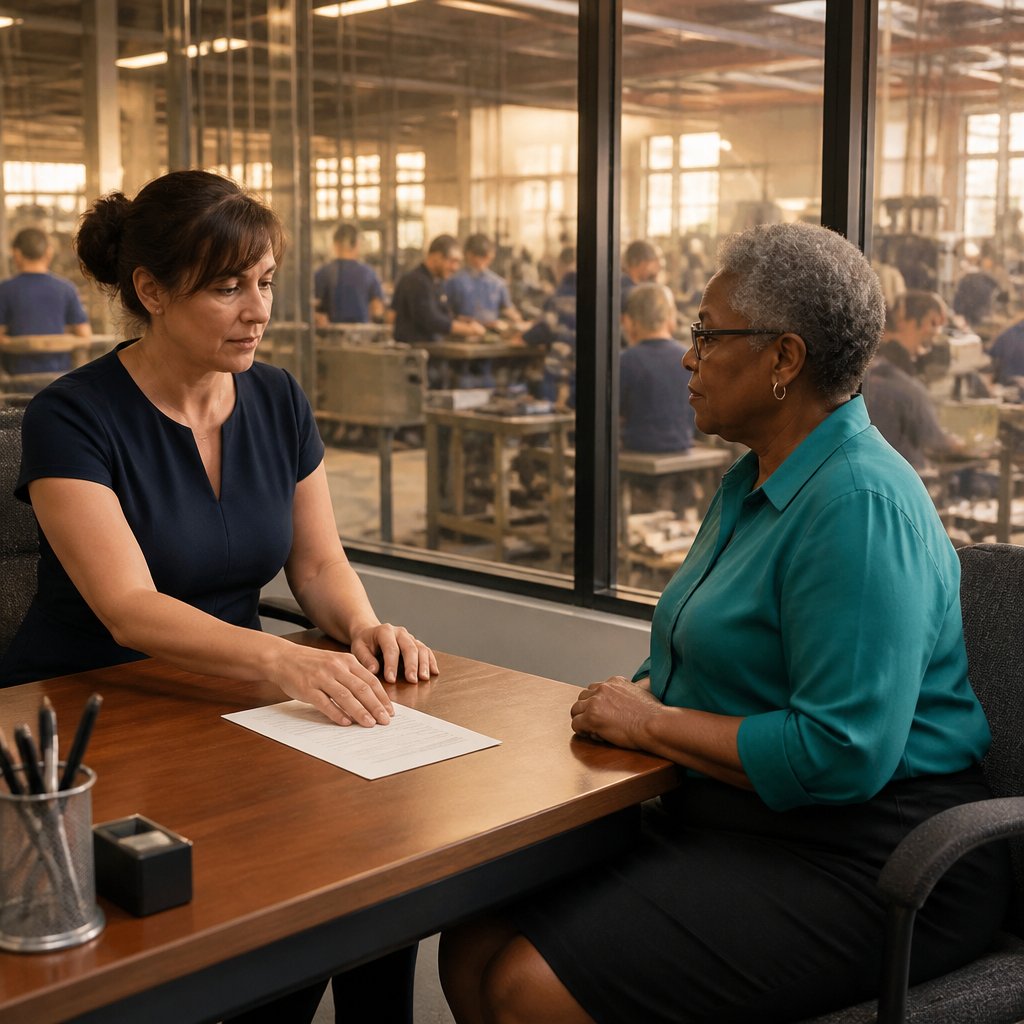
HR summoned me to a glass-walled office overlooking the production floor. Lisa was there again, sitting behind a polished desk. Without a word, she slid the noncompete agreement across to me. The paper felt cold and heavy under my fingertips.
"Leaving now is a breach," she said flatly. "There will be consequences." Her eyes were steady, unblinking. The distant clatter of machines on the floor filtered through the glass, underscoring the gravity of the moment.
I sat frozen. This wasn’t just paperwork anymore — it was a threat. I realized I was caught in a legal battle I hadn’t signed up for.
HR Demands New Employer Info

HR pressed for details about my next job. "Where are you going?" Lisa asked, leaning forward with a barely concealed edge in her voice. I stayed silent, refusing to reveal the name.
She smiled thinly and said, "We’ll find out." The words hung in the glass office, charged with unspoken threats. It felt like a promise they were watching, maybe even reaching out behind the scenes.
The faint click of her pen punctuated the silence. I had no proof, just a gut feeling that surveillance or back-channel calls were already underway.
Shadowed and Escorted Out

On my last day, I was followed step-for-step. Two security officers in plainclothes shadowed me throughout the shift, their presence like a constant weight on my shoulders. They wore casual slacks and polo shirts, blending in, but their eyes never strayed far.
When my shift ended, a supervisor met me at the exit and escorted me out the back door, away from the main crowd. The cool rush of evening air hit my face as the door clicked shut behind me.
The message was clear: they were preparing to paint me as untrustworthy, a risk to the company. I wasn’t sure if it was fear or control driving their actions, but the end of this chapter felt like the start of a fight.
Cease-And-Desist At New Job

Just two days into the new job, my new supervisor called me into a small conference room. She was a younger Latina woman in business casual, wearing a neat blouse and slacks. Her face was grim as she said, "Our outside counsel emailed a cease-and-desist, and your name is on it."
The room smelled faintly of disinfectant and stale coffee. I felt the air thicken, the walls closing in. My livelihood was now caught in their legal crossfire.
I sat down heavily, trying to steady my breath. What came next wasn’t just a matter of paychecks; it was about my future. My new employer, my reputation — everything hung in the balance.
Frozen At The Turnstile

The day after I handed in my resignation, I tried to enter the office as usual but my security badge wouldn’t unlock the turnstile. I swiped it repeatedly, the green light never came on. The familiar click and beep were gone, replaced by an unyielding silence. Standing there, I felt a wave of disbelief. The card reader’s red light mocked me as employees passed by, oblivious or steely-faced. I called the security desk but was told to wait; apparently, legal was deciding whether I was "too risky" to be granted access. Without access, I couldn’t do my job, and without a formal notice, I was stuck in limbo. The break room smelled faintly of coffee and bleach, an everyday comfort I was suddenly cut off from. I spent an hour outside the building, watching the workers inside while my badge remained a worthless plastic rectangle in my hand.
Demand Letter At My Door

A thick envelope arrived at my home a few days later. The return address was my old employer’s legal department. Inside was a crisp demand letter outlining their stance: I was violating an agreement, and if I didn’t cease working immediately, they would escalate. What unnerved me most was an attached schedule listing my exact shifts, breaks, and office hours at my new job. It was clear they were watching me closely. The kitchen smelled of fresh coffee as I sat at the table, letter in hand, heart pounding. The thought that my movements were tracked felt invasive. I considered the implications — if they were this aggressive on paper, what might they do next? I knew the tension was only growing, but the letter didn’t say what the next step would be, leaving me in suspense and unease.
The Cost Of Waiving Noncompete

My contact from the old company called with a proposal: they would "waive" the noncompete clause if I returned to work there at the same pay and signed a new agreement extending the restriction period. The offer was a thinly veiled trap. It was clear this wasn’t about protecting their business but using the clause as leverage. I sat in the cramped HR office, the scent of stale coffee lingering, while I listened. The woman across from me wore a red blouse, her tone firm but polite. They wanted to keep me tethered, not free. I realized they were trying to force me back under their control or else keep me out entirely. The choice they presented was impossible. I left the office with the document in my bag, wondering how far they would go to maintain their grip.
Witnesses Called Under Threat

After I filed suit, I started hearing from a few former coworkers. They told me they had been contacted by management. The company was asking them to provide statements as 'witnesses' about my conduct and the circumstances of my departure. It wasn’t a casual request. One coworker, a man in his forties with a worn warehouse vest and jeans, confided that managers threatened to cut their shifts or change schedules if they didn’t cooperate. Another woman, younger with a ponytail and a bright safety vest, said she’d overheard supervisors being instructed to report any interviews or conversations they had with me to HR.
The pressure was spreading quietly but steadily throughout the warehouse where we had all worked. It was clear the company was trying to intimidate anyone who might support my claims or speak up against them. The usual buzz of forklifts and pallets in the background contrasted sharply with the tension these threats caused among employees. Yet, no one was openly defying the pressure; they had bills to pay and families to feed.
I felt the retaliation was escalating from isolated demands to a broader campaign. It wasn't just about me anymore—it was about controlling the narrative inside those walls. But how deep did this reach? And who else was being forced to choose between loyalty and justice?
Low-Wage Leverage Document Found

In discovery, my legal team uncovered an internal email chain titled “Low-wage leverage strategy.” The subject line was stark and chilling. It laid out a deliberate plan to intimidate departing employees and dissuade them from pursuing other jobs within a 50-mile radius. The emails detailed instructions to pressure workers into signing restrictive agreements and to monitor anyone who resisted.
The company’s upper management was clearly strategizing how to use the noncompete clause as a weapon, not just a legal formality. I sat in the sterile HR office, flipping through printed copies of the chain. The faint hum of the air conditioner was the only sound. The language was cold and calculating—no attempt to hide the goal of keeping wages low and controlling the labor pool.
When my lawyers presented this evidence, the company scrambled. Their response was to push a settlement demand with a gag clause, aiming to bury any details. It felt like the first time they saw the strength of our position. But I wasn’t ready to be silenced, not when this was about more than me.
Suspicious Certificate Emerges

Just days before summary judgment, the company produced a new training certificate supposedly proving I had acknowledged the noncompete in a session months earlier. Something felt off. The timestamp didn’t match our work calendar, and the font looked inconsistent with other official documents I'd signed. My attorney pointed out that the signature appeared digitally inserted.
I leaned back in the sterile conference room chair, watching the legal team scrutinize the document. The faint smell of stale coffee hung in the air as we exchanged quiet murmurs about potential fabrication. If the court accepted this certificate, it could poison the record and damage my case severely.
Why would they risk fabricating evidence at such a late stage? It was a gamble, and I wondered if the company felt backed into a corner. But whether this certificate was authentic or a trick, it opened a new front in the battle ahead.
Vendor Disputes Certificate Date

Our next move was to contact the vendor responsible for the training certificate system. After reviewing their records, the vendor confirmed the template shown on the certificate didn’t exist on the claimed date. This was more evidence the company’s document was fabricated.
Back in the cramped law office, the smell of printer ink filled the air as my lawyer prepared the sanctions briefing. The insurer demanded all prior enforcement history, seeking to understand if this was a pattern. Slowly, the company’s long-standing tactics of intimidation and interference were surfacing publicly.
The pressure was mounting. If the court accepted our motion, it could lead to serious consequences for the company and their legal team. But the company wasn’t backing down yet—they had to try something else.
Enforcement List Exposed Publicly

Discovery produced a long list of enforcement actions—the company’s records of hourly threats, coerced returns, and forced signings. It was a damning catalog of how many workers had been pressured over the years. A reporter caught wind of the filings and requested full documents from the court.
In response, the company sent out an all-hands email warning employees about leaks and misinformation. I stood in the crowded break room, the hum of the vending machine punctuating the tense silence as my former coworkers whispered about the fallout. Damage control was clearly underway.
The case was nearing a decisive ruling, and the company’s carefully guarded secrets were spilling into public view. How would this exposure change the workplace culture? And what would the court decide?
Mediation Stuns With Email Proof

At mediation, the atmosphere shifted when my legal team presented the “Low-wage leverage strategy” email. The room fell silent. Company representatives, dressed in business casual with pressed shirts and slacks, exchanged uneasy glances. Their last offer was to pay me to leave the industry altogether—a clear attempt to avoid liability.
I sat across from them, wearing a modest blouse and slacks, feeling the weight of the moment. The mediator glanced at the email printouts on the table, then back at the company’s lawyers. The case was about to advance to the court for decisions on liability and damages. The question now was whether the company would concede or fight to the bitter end.
I realized that whatever happened next would shape not only my future but potentially the rights of many workers like me. But the next move was out of my hands.
Should HR's noncompete clause block a $1.50 raise?