



Building C Was a Deathtrap
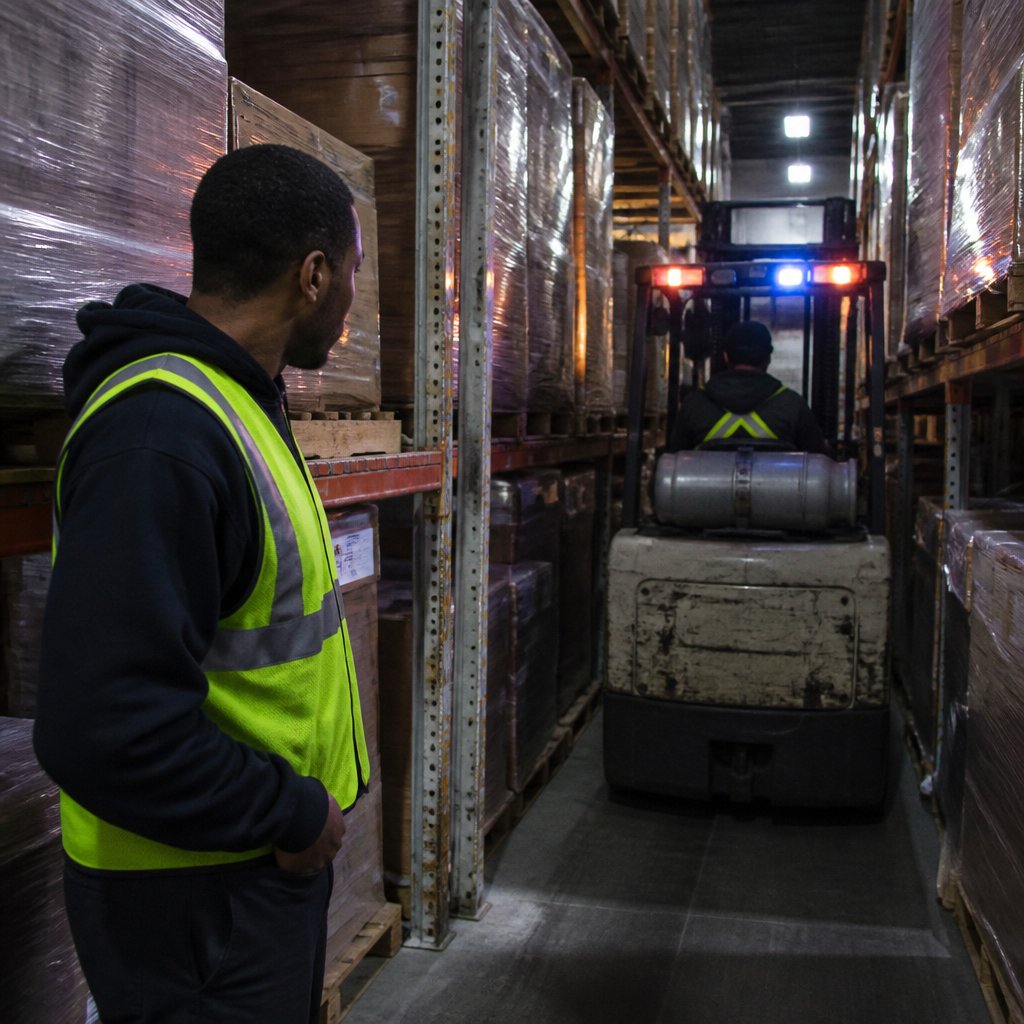
I worked the night shift at Pinnacle Distribution's Building C — a warehouse the size of a football field, stacked thirty feet high with pallets of consumer goods. The aisles between the racking were supposed to be twelve feet wide. Ours were nine. Someone had added extra racking during a holiday expansion and never pulled it back out. Nine feet doesn't sound narrow until you're driving a forklift through it at speed and the margins disappear.
Everyone who worked Building C knew the aisles were too tight. The forklifts scraped the racking daily. You could hear the metal grinding from the break room. Supervisors knew. The site manager knew. Nobody said anything because the extra racking meant more storage meant more throughput meant bigger bonuses for management.
The Pallet That Almost Killed Marcus
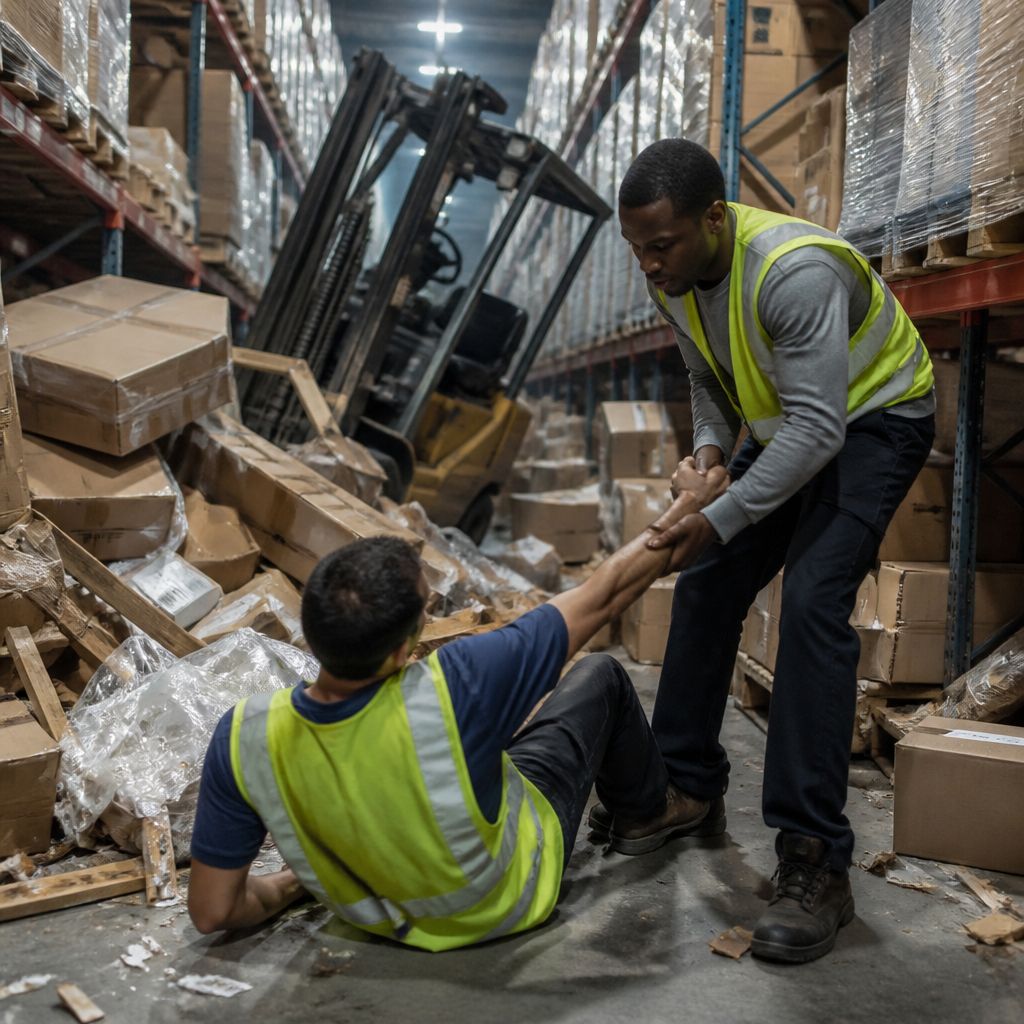
A Tuesday night in November. A forklift driver named Terrence was pulling a pallet from the third tier when his mast caught the racking on the opposite side — the aisle was too narrow to fully extend without encroaching on the other rack. The impact shook the entire section. A pallet on the second tier shifted, then fell. Eight hundred pounds of boxed kitchen appliances crashed to the floor six feet from where Marcus Webb was standing with a scan gun.
Marcus dove. He made it. Barely. The pallet hit the concrete where he'd been standing and split open, scattering blenders and air fryers across the aisle. Marcus lay on the floor shaking. Terrence sat in the forklift with his hands frozen on the controls. I stood at the end of the aisle and watched the dust settle and knew someone was going to die in this building if nothing changed.
I Filed the OSHA Complaint the Next Morning

I didn't tell anyone at work. I went home after my shift, sat at my kitchen table, and filed the complaint online through OSHA's website. I described the aisle widths, the near-miss, the daily scraping, and the fact that management was aware. I included the building address, my shift times, and my name. The form asked if I wanted to remain anonymous. I checked no. If I was going to do this, I was going to own it.
I thought that was the brave choice. It was. But brave choices have a way of costing more than cowardly ones. I'd learn that soon enough.
Five Days Later, I Was Gone
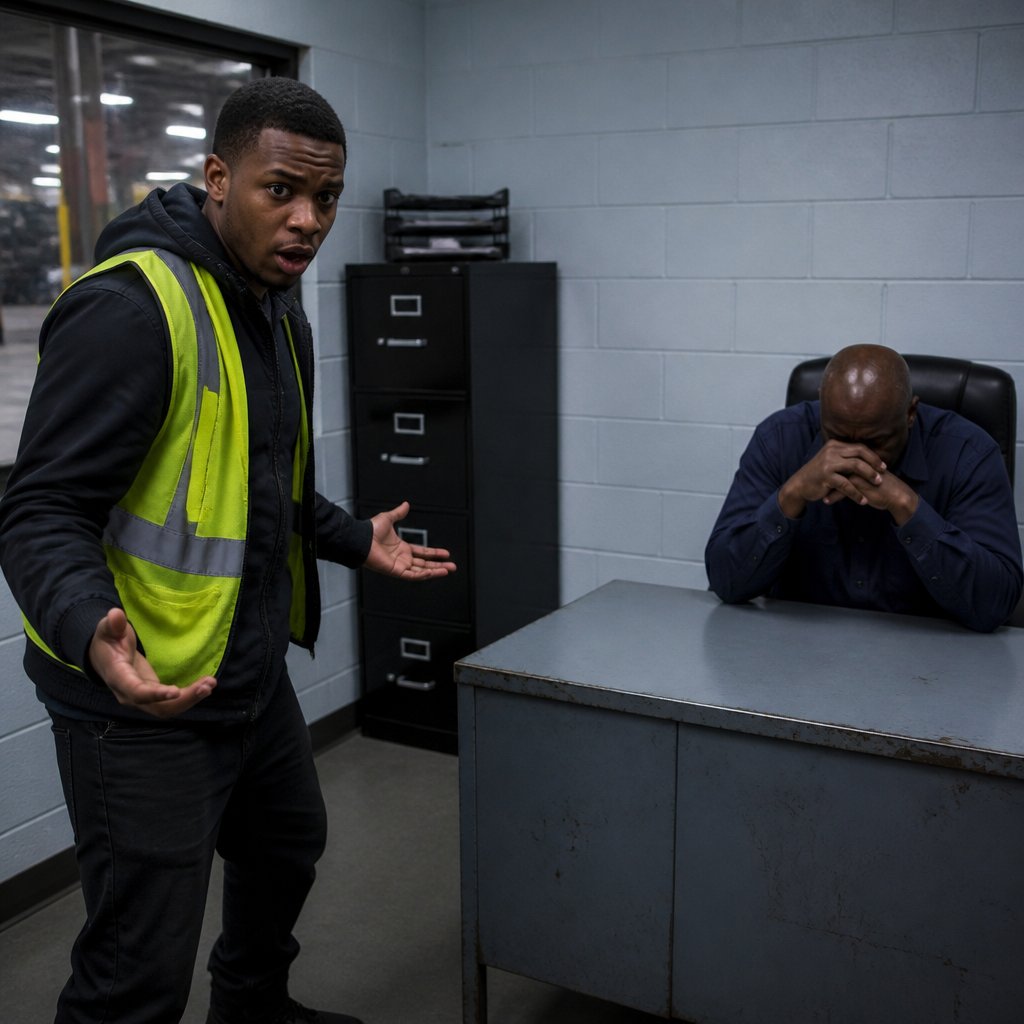
Monday through Thursday of that week were normal. Friday, my supervisor pulled me into the site manager's office. There were two people from HR on a speakerphone. They told me I was being terminated for "excessive unexcused absences" — specifically, three late arrivals over the past ninety days that constituted a pattern of attendance violations under company policy.
I'd been late once in three months. Once. Seven minutes, because of a traffic accident on the highway. I'd clocked in and my supervisor had waved it off. Now suddenly there were three incidents. I asked to see the documentation. They said it would be mailed to me. I asked if this had anything to do with the OSHA report. The room went very quiet. The HR voice on the phone said "This is strictly an attendance matter" in a tone that meant the conversation was over.
OSHA Confirmed the Violations

Two weeks after I was fired, an OSHA inspector visited Building C. He measured the aisles. He photographed the scrape marks. He interviewed workers. His report confirmed what everyone already knew: the aisles were three feet below the minimum required width for the type of forklifts in use. Pinnacle was cited and fined $18,000. They had thirty days to widen the aisles or face additional penalties.
I read the report from my apartment, where I was now spending my days sending out resumes and watching my savings drain. The violations I reported were real. The danger was real. OSHA agreed. And I was the one without a job.
The Lawyer Said Retaliation Was Hard to Prove

My attorney, James Okonkwo, specialized in employment law. He was honest from the start. He said the timeline was suspicious — OSHA complaint on a Wednesday, fired the following Friday — and that retaliation was the obvious inference. But proving it required showing that the stated reason for termination was pretextual, and that the real reason was the protected activity of reporting safety violations.
The problem: Pinnacle had documentation. Three attendance write-ups with dates and supervisor signatures, all filed in the week between my OSHA complaint and my termination. They were obviously fabricated after the fact — but the documents existed. Someone had taken the time to backdate them and get them signed. Proving they were fake would be a fight.
Three Years of Motions and Delays
Pinnacle's legal team — a corporate firm with deep pockets — did what deep pockets do: they delayed. Motion to dismiss. Motion to compel arbitration. Appeal of the arbitration ruling. Motion for summary judgment. Each one took months. Each one required James to respond, research, argue. He was working on contingency, which meant every hour was money he might never see.
Three years. I spent three years waiting while my case crawled through the system. I got another warehouse job after six months — less pay, longer commute, but I needed the income. Every few months I'd get a call from James with an update that amounted to: still waiting. Still fighting. Still going.
The Key Witness Wouldn't Testify

James had found a former Pinnacle supervisor who was willing to say — off the record — that the attendance write-ups were backdated and that the site manager had explicitly said "get rid of the OSHA kid" after learning about the complaint. It was the smoking gun. But when it came time for a sworn statement, the supervisor backed out. He still worked in the industry. He was afraid of being blacklisted.
Without that testimony, our case rested on the timeline and circumstantial evidence. Strong, but not a slam dunk. James told me we could still win at trial, but it would be a coin flip. After three years, a coin flip felt like a lifetime gamble.
The Settlement Was $35,000

Pinnacle offered $35,000 the week before trial. James said they were scared enough to pay but not scared enough to pay fairly. He said he thought a jury could award $150,000 to $200,000 — but there was the coin flip. The missing witness. The backdated documents that we couldn't definitively prove were fake without someone on the inside saying so.
I took the $35,000. After James's contingency and three years of expenses, I got $21,000. For three years of my life. For doing the right thing. For reporting a safety hazard that OSHA confirmed was real. Twenty-one thousand dollars and a reference that said "not eligible for rehire." Marcus Webb — the guy who almost got crushed by the pallet — still works at Pinnacle. He told me the aisles are wider now. So at least there's that.
Was the $21,000 settlement enough for your sacrifice?