



Fresh Red Paint On My Curb
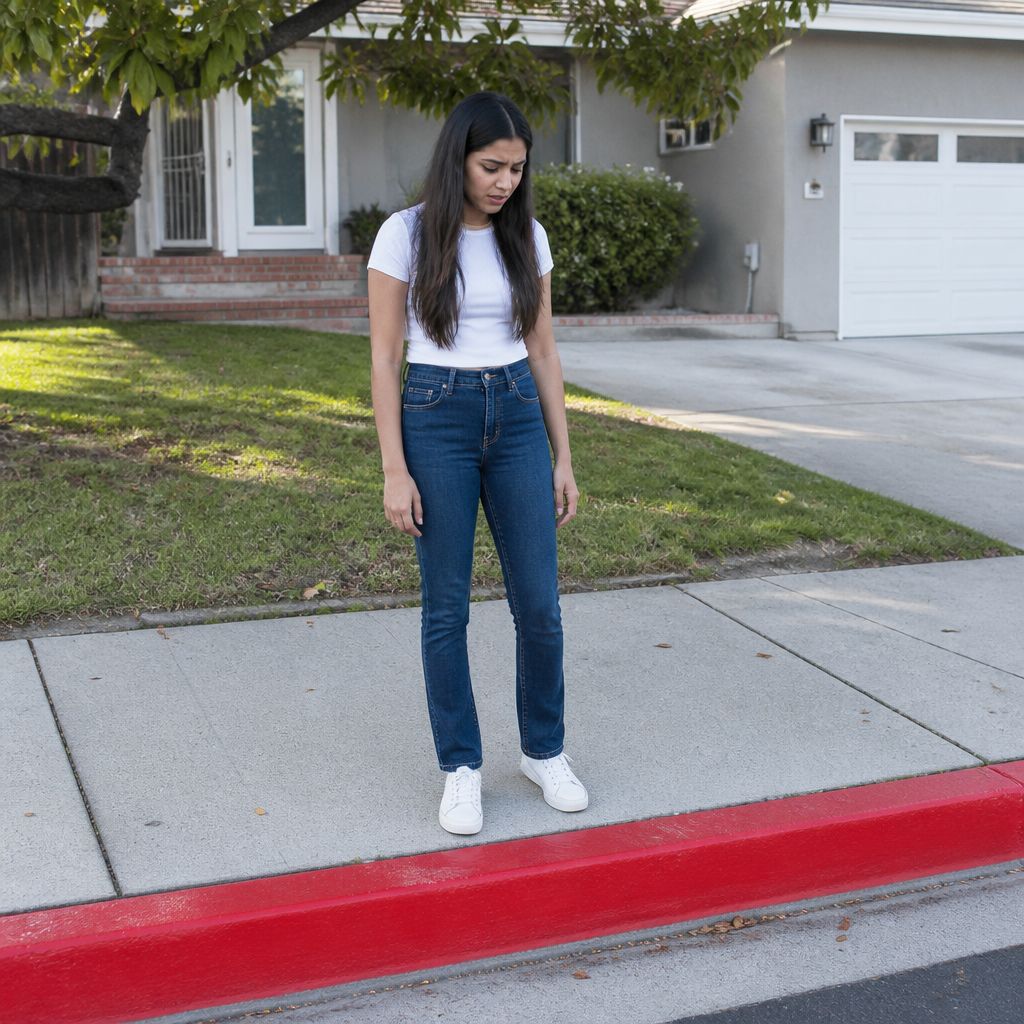
I pulled into my driveway after work and immediately noticed something was off. The curb right in front of my house was freshly painted bright red. Next to it, a crisp stencil read “NO PARKING.” The paint still smelled sharp and new, like oil and solvent. What struck me was that there had been no notice, no crews in sight, no cones, nothing to suggest this was a planned city project. I stood there, staring at the red swath along my own frontage, wondering who decided I wasn’t allowed to park in front of my own house anymore.
Carl’s Smirk Turns Threatening

I ran into Carl, my neighbor who lives in the house next door, just as I was inspecting the red curb. He had this smirk on his face, like he’d been waiting to see my reaction. Without any preamble, he told me it was "city-approved," and that I’d "learn the hard way" if I parked in front of my house. It wasn’t a mystery anymore; it was a warning. He stood on his porch wearing an old flannel shirt and cargo shorts, arms crossed, clearly enjoying the tension he was creating. I had no idea what he meant by “city-approved” or how he could claim that, but suddenly it felt like a direct challenge rather than some innocent mistake.
Citation On My Windshield
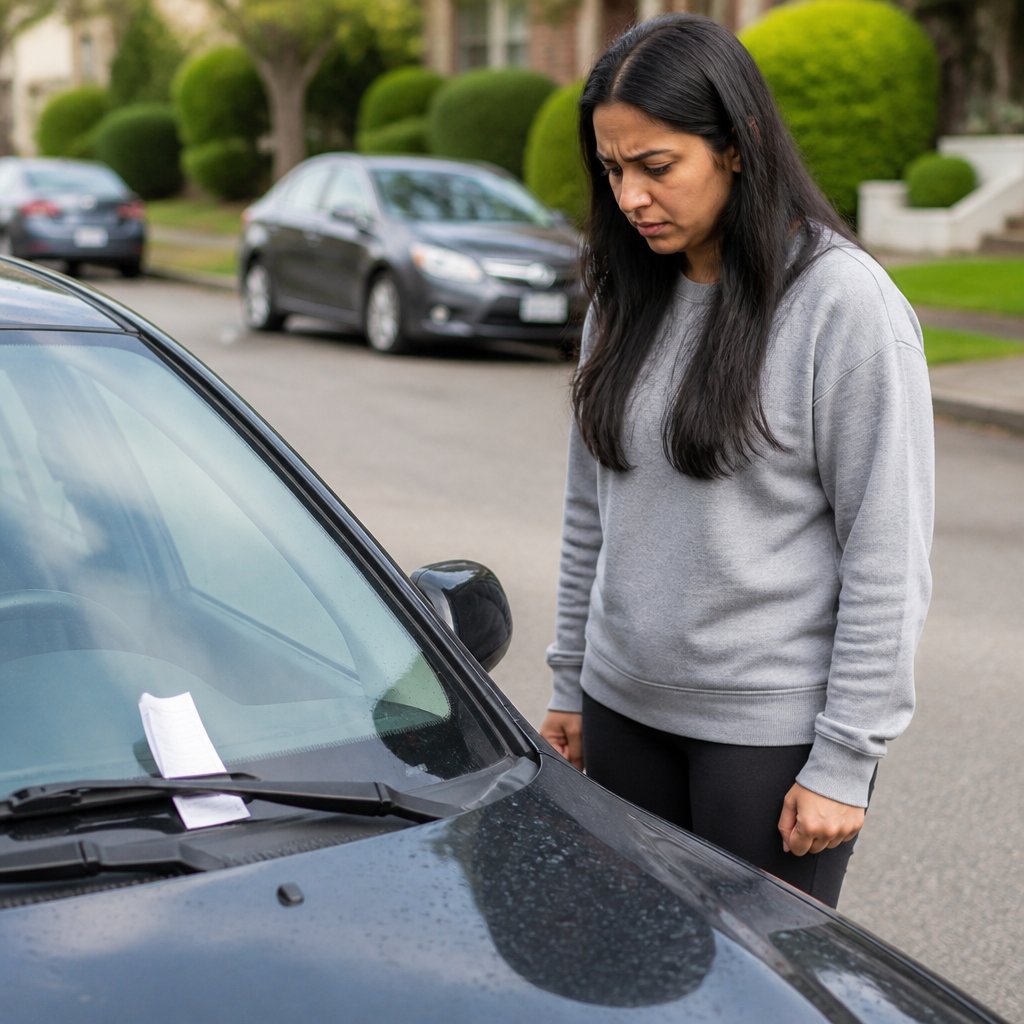
A few days later, I found a citation tucked under the windshield wiper of my car. It said I was cited for "blocking a fire lane." I’d never seen or heard of a fire lane on my street before, let alone one designated right in front of my driveway. The paperwork was official-looking but vague. There was a citation number and a fine, along with a due date that loomed closer every day. The curiously freshly painted red curb was now functioning like law, yet I had no idea who authorized it or how it came to be. The fine ticked like a countdown on my dashboard, making a vague injustice feel all too real.
Nothing In Deed Or Plat

I spent the evening pulling up my property deed and the city plat maps. I scanned every page carefully, looking for any reference to a fire lane or no-parking zone along my frontage. There was nothing — no restrictions, no special designations, no easements that would explain the red curb. According to the official paper trail, my right to park and use the street frontage was intact. But the freshly painted curb told a different story. It was a mismatch between reality and what was written in my legal documents. This disconnect left me feeling blindsided in my own neighborhood, where paint on concrete suddenly carried more weight than years of recorded rights.
311 Request Amid Ticket Deadline

I filed a 311 request to ask who had authorized the red curb painting and the “NO PARKING” stencil. I was hoping the city would give me some answers about permits or orders. The response window they quoted, however, was longer than the deadline to pay or contest my citation. That meant I’d have to decide about my ticket before knowing whether the city had anything official backing the markings. It felt like the system was stacked against me, with timelines that didn’t line up and no clear source of authority explaining the curb’s sudden transformation.
Cones And Signs Narrow Access
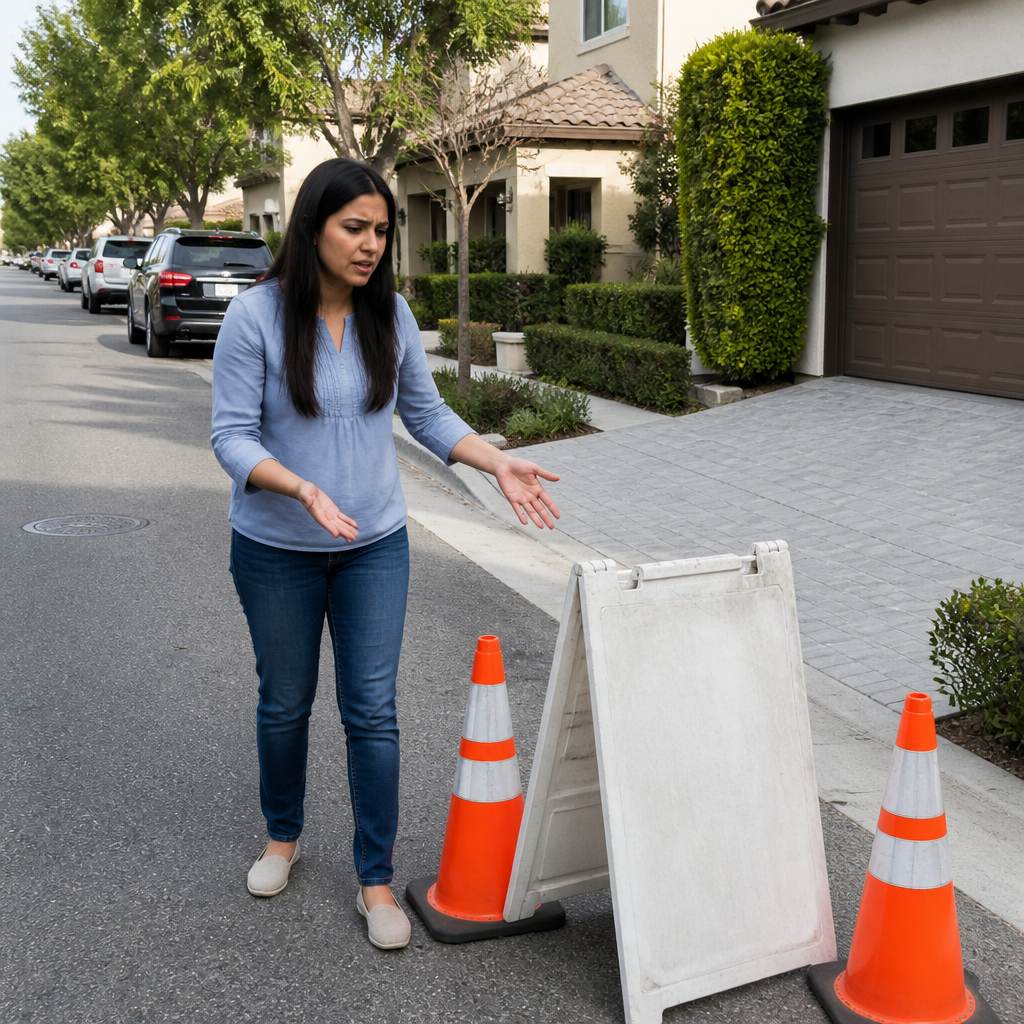
The next morning, I walked outside to find orange traffic cones and a folding “NO PARKING” sign set up on the street where my guests usually parked. The cones tightened the space in front of my driveway, making it harder to maneuver my car in and out. It felt like Carl was moving beyond paint and warnings to physical control of the curb space. He was effectively shrinking my usable frontage and parking access without any official permit or notice to me. The cones were plastic but they carried a weight that was all too real in the narrow suburban street.
Demanding Hearing And Evidence

I submitted a request for an administrative hearing to contest the citation. I also formally demanded the officer’s photos of the alleged violation and the specific ordinance they were enforcing. The city could punish me faster than it could provide me with explanations, but I wasn’t ready to accept that. I wanted to see the evidence and the legal basis for the citation. The document process was slow and bureaucratic, but I tried to keep track of every form and response. It was a small legal battle unfolding beyond my front porch, but I was determined to stand my ground.
Blurry Email With No Accountability

The city finally emailed me an attachment labeled something about "Fire access required per complaint." The photo was blurry and showed a red curb but gave no permit number, no work order, and no name of any city official who authorized the marking. It looked like someone had taken the photo from the street and sent it anonymously. Essentially, the city was saying "because someone said so," without any accountability. The lack of concrete documentation made the whole situation feel arbitrary and unfair. I wondered if there was any way to get a reliable answer or if this was just small-town politics masquerading as official action.
Survey Flags Show Overreach
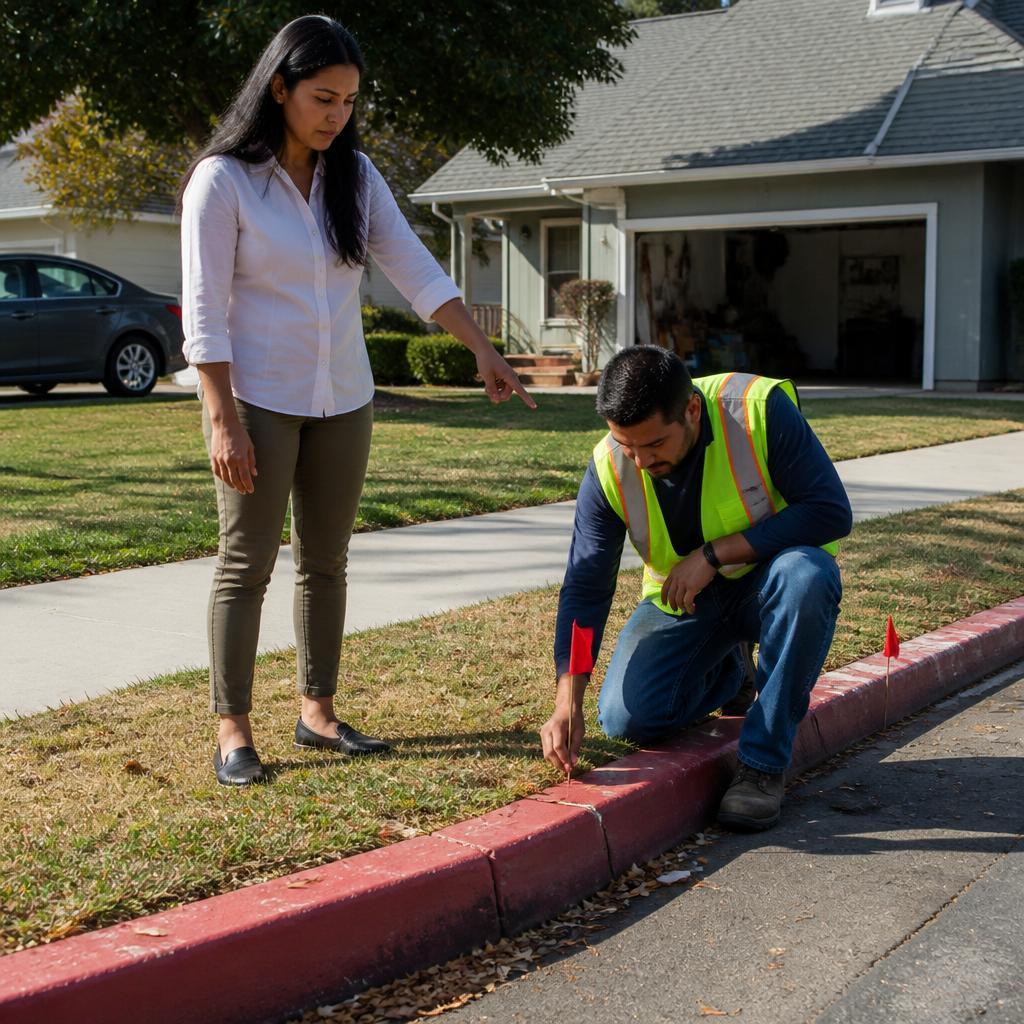
I hired a surveyor to come stake out the boundaries of my curb and driveway. When the flags went up, it became clear the red paint extended well beyond any plausible no-parking zone or driveway apron limits. The painted area stretched onto public street space and overlapped with the frontage I had every right to use. It looked like the red curb wasn’t just a marking but a deliberate overreach to claim space that wasn’t Carl’s or the city’s to restrict. Seeing the physical evidence in the yard gave me new hope but also raised new questions about who was responsible for this encroachment.
Carl Claims Surveyor Trespassed

Shortly after the flags went up, Carl confronted me angrily, accusing the surveyor of trespassing. He was now challenging the very act of marking the property boundaries, as if that was an illegal intrusion. Not long after, city code enforcement officers arrived, asking questions about permits for the flags and stakes. Suddenly, I found myself defending normal survey documentation as if it were a violation. What used to be a small parking dispute was spiraling into a clash involving neighbors and city authorities, each with their own interpretation of rules and rights.
A Written Demand Goes Out

I sat at my kitchen table one evening drafting a letter to Carl. The continual cones and makeshift signs he'd placed in the public right-of-way were not only obstructing my access but also causing confusion for neighbors. I told him to cease using those cones and signs immediately. I demanded he provide any official authorization he claimed for painting the curb, too. I wanted everything on record—no more verbal disputes. I included language about a potential future claim if he kept interfering with my property access. I made sure to keep the tone firm but polite, wanting to avoid escalating before I had to.
After mailing the letter, I stared out the window at the red-painted curb and the faded stencil Carl had made. The night was quiet except for the occasional car passing by and the rustling leaves. It felt like waiting for a storm to hit. Would Carl respond or just keep pushing his actions? The uncertainty weighed heavily on me.
A Lawyer’s Letter Crosses My Desk

A few days later, a typed letter arrived in my mailbox. It was from Carl—or at least from someone claiming to represent him. The tone was completely different: formal, legalistic, and threatening. The letter accused me of "obstructing emergency access" and warned that any future interference would lead to consequences. It reframed me as the problem, daring me to challenge the curb markings and enforcement. There was no mention of the cones or signs—just an insistence that Carl’s actions were justified and anyone opposing them was risking legal trouble.
I read the letter twice, feeling a tightening in my chest. The air in my living room smelled faintly of brewed tea, but I barely noticed. This was no longer just a neighbor dispute; it sounded like a prelude to court battles. I wondered if Carl had really consulted a lawyer or just found a template online. Either way, the writing was clear: he was escalating, and I needed to decide my next steps carefully.
Digging For Paper Trails

I decided to file a public records request with the city to find out if any official work orders, complaint logs, or authorizations existed for the curb paint. I suspected that if Carl had any legitimate backing, the city would have paperwork. If not, this could expose his unauthorized actions.
Walking to the city hall the following morning, I felt the cool breeze on my face and the sharp scent of freshly cut grass from the nearby park. At the service counter, I filled out the request forms, carefully specifying the address and the dates involved. The clerk nodded and promised to notify me when the records were ready. With that, I left feeling a mix of hope and apprehension. Would the city’s files clear up the confusion or deepen it?
A Second Citation Arrives

Before I even heard back about the records, a second citation came in the mail. This one was for "parking in a posted no-parking zone," citing the freshly stenciled curb paint near my driveway. It was frustrating because this citation was directly tied to the unauthorized markings Carl had added.
I sat at the dining room table with the letter in hand, the smell of brewed coffee still warm in the air. The weight of the fines and the possibility of increasing costs pressed on me. The city seemed to be enforcing the markings without question, multiplying my exposure to penalties. I realized this was no longer a small dispute—it was becoming a costly, ongoing problem. I needed a way to stop it before it spiraled further.
Starting A Daily Log

I began keeping a daily log, documenting every time my driveway access was blocked or interfered with. I kept photos of the painted curb, cones, and any enforcement notices, along with notes about times and dates. I saved receipts for parking fines and any related expenses.
Each evening, I sat on my front porch with a notebook, recording the day’s events under a fading orange sky. The neighborhood was quiet except for distant lawnmowers and occasional dog barks. The more I documented, the more overwhelming it felt, like I was building a case no one might ever see in time. Yet stopping felt impossible.
Records Show No Permit Approval

The city finally responded to my formal records request. I sat at the kitchen table, my fingers tracing the edges of their printed pages. The documents confirmed what I suspected: no permit for the curb painting was ever issued. There was no contractor order, no official approval, just a faint trail of paperwork ending abruptly. Most damning was the original 311 complaint report that supposedly sparked the city action. It was linked not to a neutral neighbor, but to an account tied to Carl’s email address. It seemed the whole story about the city’s official involvement was fabricated.
The smell of fresh ink from the printed pages mixed with the distant hum of lawnmowers outside. I kept rereading the files, struggling to believe that Carl had pulled this off under the city’s nose, or worse, by manipulating the city system itself. No official permit meant the red curb was illegal from the start, a self-made rule to block access. But with no permit and no contractor, how had enforcement officers been so quick to act on the painted curb?
Demanding City Inspection And Action
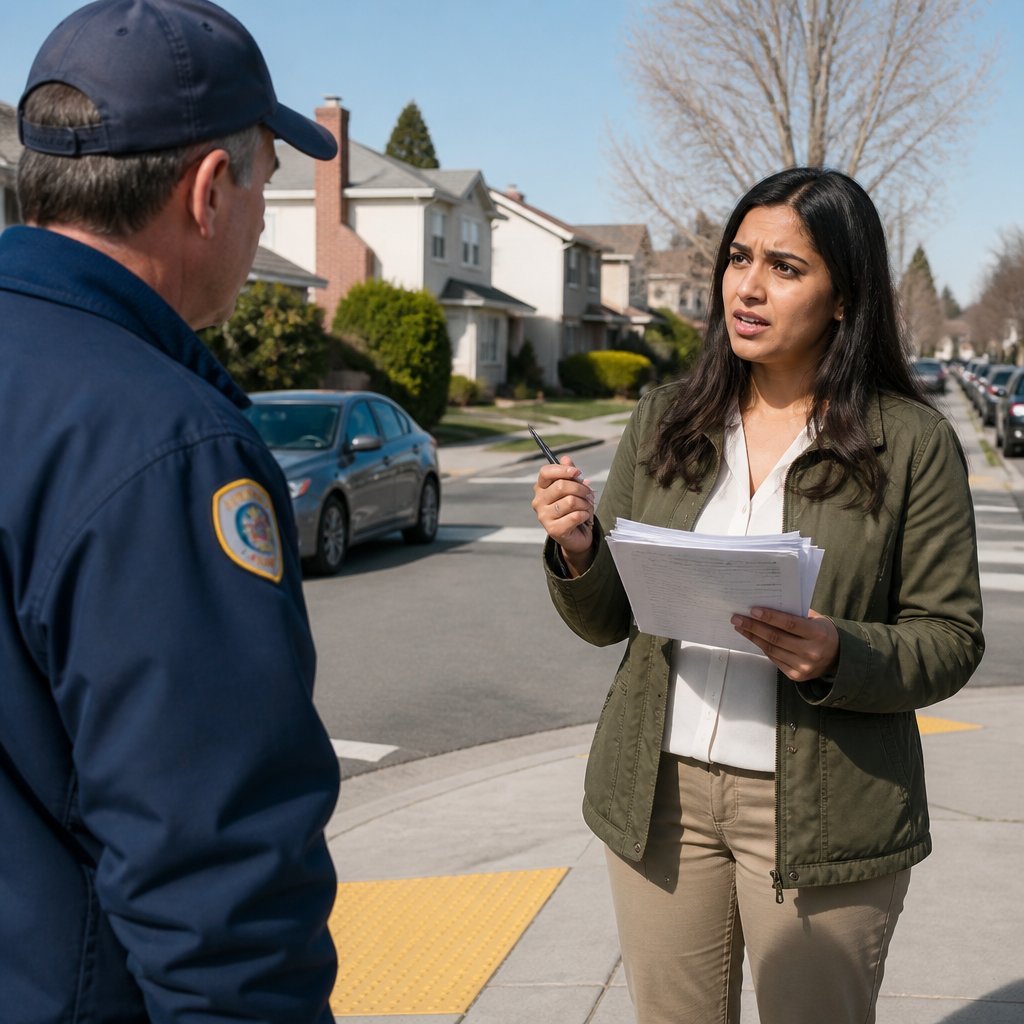
I forwarded the records to the city traffic engineer first thing the next morning. I wrote a clear demand: inspect the curb markings and, if unauthorized, order their immediate removal. I attached every file, every note tying Carl to the original complaint report. I hoped this would force the city to take responsibility for the false narrative and the unauthorized paint job obstructing my parking.
But the situation took a new twist. Carl, sensing the threat, filed a counter-complaint with the city. He claimed the curb markings impaired neighborhood sightlines and complicated deliveries to his property. It was a direct attempt to muddy the waters before our upcoming small claims hearing. I watched the email from Dana, our neighbor and friend, as she showed me Carl’s complaint. Carl’s angle was clear: shift the focus away from his unauthorized curb paint and onto safety concerns.
The scent of freshly cut grass filtered in through the open window as I stared at the screen, wondering whether the city would respond sooner to Carl’s new complaints than mine.
Site Visit Reveals Irregular Paint Job
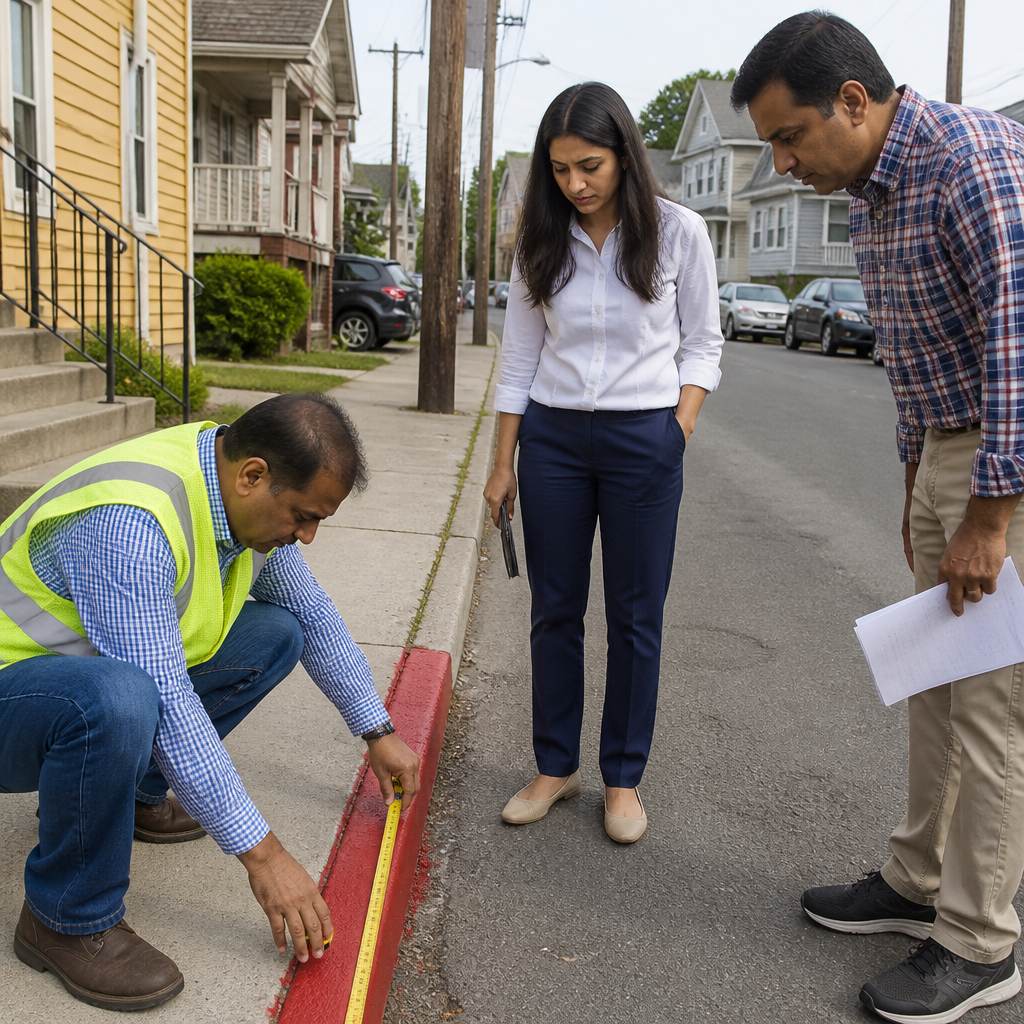
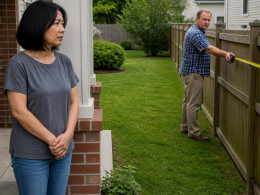
The city finally scheduled a site visit. I met the city inspector who arrived mid-morning. Carl was already there, gripping a stack of printouts, dressed in a plaid shirt and worn jeans. He tried to steer the conversation, pointing at his papers and muttering about safety and clearance zones. The inspector measured the red-painted curb with a tape measure and took notes, his brow furrowing.
The measurements didn’t add up. The painted curb didn’t match any official fire-lane or driveway clearance standard. The width was uneven, the stenciled no-parking message painted over rough concrete patches. Still, enforcement officers continued to issue citations during the “review” period, blocking my driveway access and my legal right to park.
The rough texture of the painted curb scraped slightly under my shoe as I paced nearby, frustrated by the slow process. The inspector glanced at me briefly but said little about the ongoing citations. It felt like they had no clear authority to pull back enforcement while they sorted it out.
Paint Ground Down, More Layers Found

Days before the small claims hearing, city crews ground down the red paint on the curb. As they worked, they uncovered a second layer of faded red paint beneath—evidence that the mark had been repainted before. It suggested Carl’s interference wasn’t a one-time stunt but a repeated effort to control parking.
Carl’s attorney made a brief appearance around the same time, sending me a cease-and-desist letter accusing me of harassment for photographing the curb. I’d been careful to only document public space, but the letter’s tone was aggressive. It felt like another attempt to intimidate me into backing down.
The gritty smell of dust and paint residue filled the air as I stood near the curb, camera slung over my shoulder but unused. I felt the weight of the escalating conflict and wondered if the city would finally recognize the pattern of unauthorized action and intimidation.
Judge Probes Interference Claims
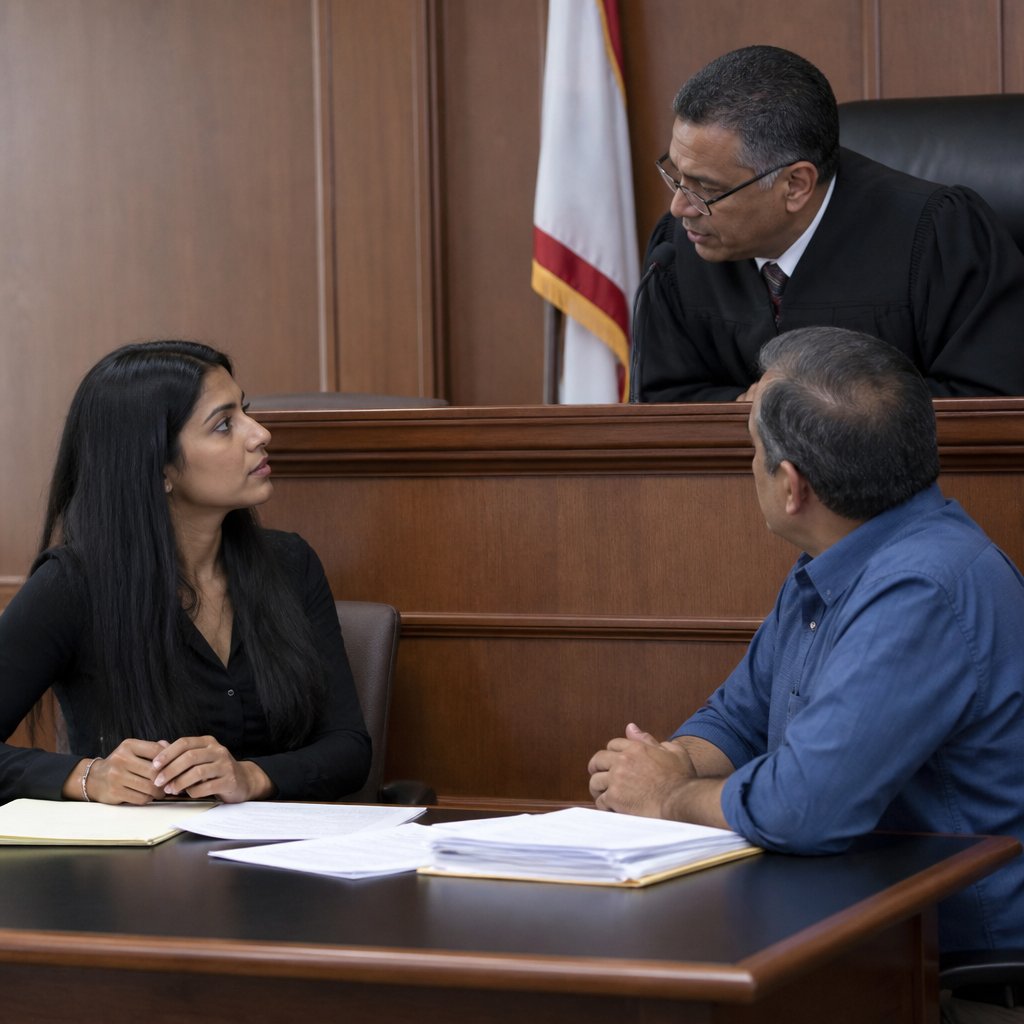
The small claims court was a modest room with peeling paint and a long wooden table. I laid out my timeline clearly: the unauthorized curb painting, the cones blocking my driveway, the complaint-triggered citations, and the city survey showing property boundaries. I presented the records tying Carl’s email to the original 311 complaint, proving his role in starting this mess.
Carl insisted all this was about safety. But his phone messages and screenshots, which I managed to obtain, revealed a clear parking-control motive. The judge listened carefully, flipping through the files. Then, leaning forward, he asked one final clarifying question about the interference aspect of my claim.
The faint echo of murmured voices drifted through the courtroom as I looked at Carl’s expression, and I realized the judge’s question was a turning point—one that might decide how this tangled dispute ended.
Was the neighbor’s red curb paint justified legally?