



Pink Flags At My Side Gate

One chilly morning, I noticed fresh pink survey flags planted by my side gate. I hadn’t asked for any survey work, so their sudden appearance puzzled me. The small flags fluttered lightly in the breeze, marking the ground near the chain-link fence that separated my yard from Greg’s. It felt like someone had quietly started redrawing the boundary lines without telling me.
The wooden fence post near the gate was rough to the touch, splintering under my fingertips as I examined the stakes and questioned their purpose. There was no sign of the survey crew, only the silent markers, standing like silent witnesses to an unseen claim. I wondered who had put them there, and why.
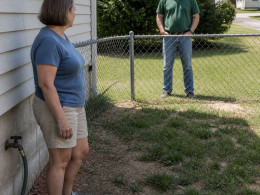
Later that day, I saw Greg across the fence, casually watering his plants in his navy-blue sweatshirt and worn jeans. I wanted to ask if he knew anything about the flags, but hesitated. Something about the quietness of it felt off. Were these markers harmless, or an early sign of a boundary dispute brewing?
Greg’s Claim Of A New Survey
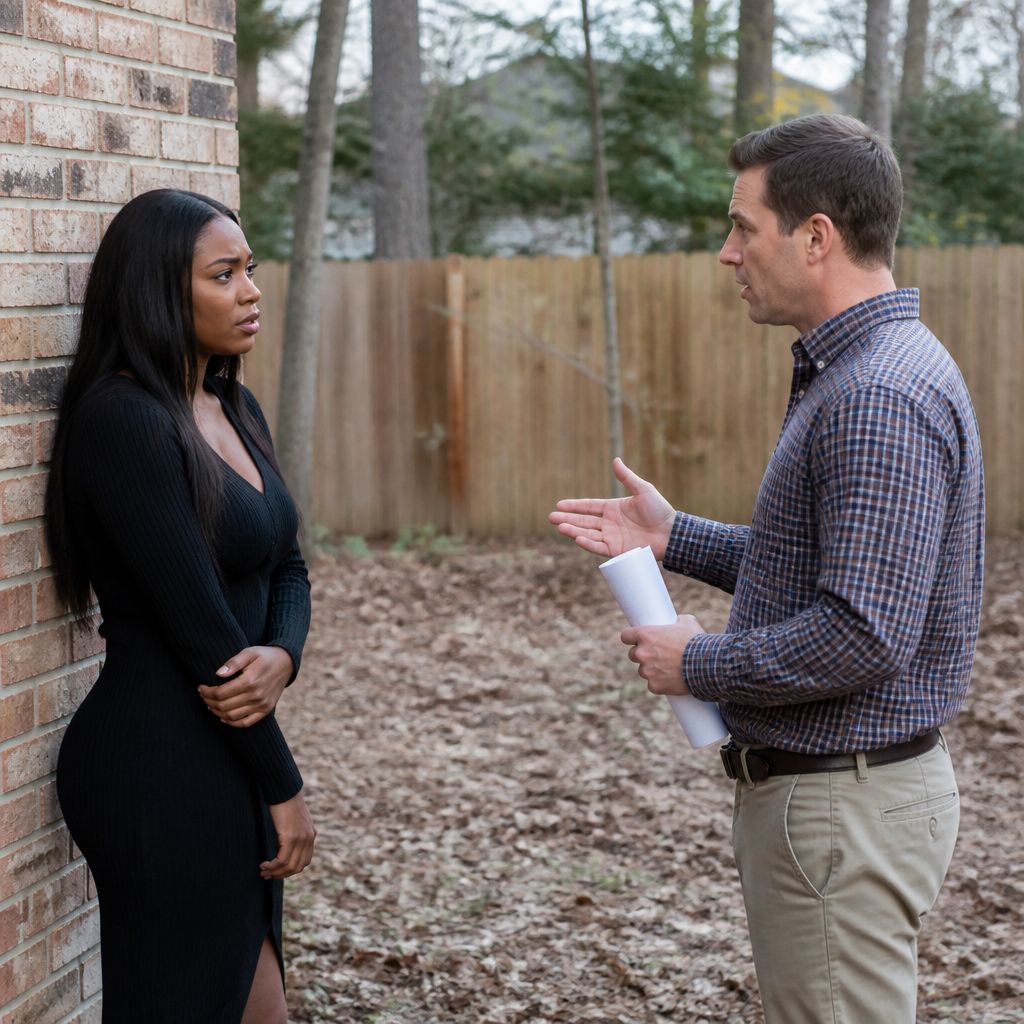
The next afternoon, Greg came over with an easy smile, dressed in a checkered button-down and khaki pants. He held a folded paper and said, "I had a new survey done. It shows your house crosses my property line by about eighteen inches."
I blinked, trying to process the calm way he delivered the news. Our neighborly chats had never included talk of property lines. Now, it was an ownership threat. He spoke like the line had shifted overnight and he simply wanted to be fair.
Outside, I felt the rough bark of the oak tree near the fence as I ran my fingers over it, grounding myself while Greg explained the survey details. His tone was steady, but under it, I heard the weight of an unspoken challenge. How could this be true? My bedroom wall, which I’d always believed was firmly on my land, was now in question.
The Sketch That Changed Everything
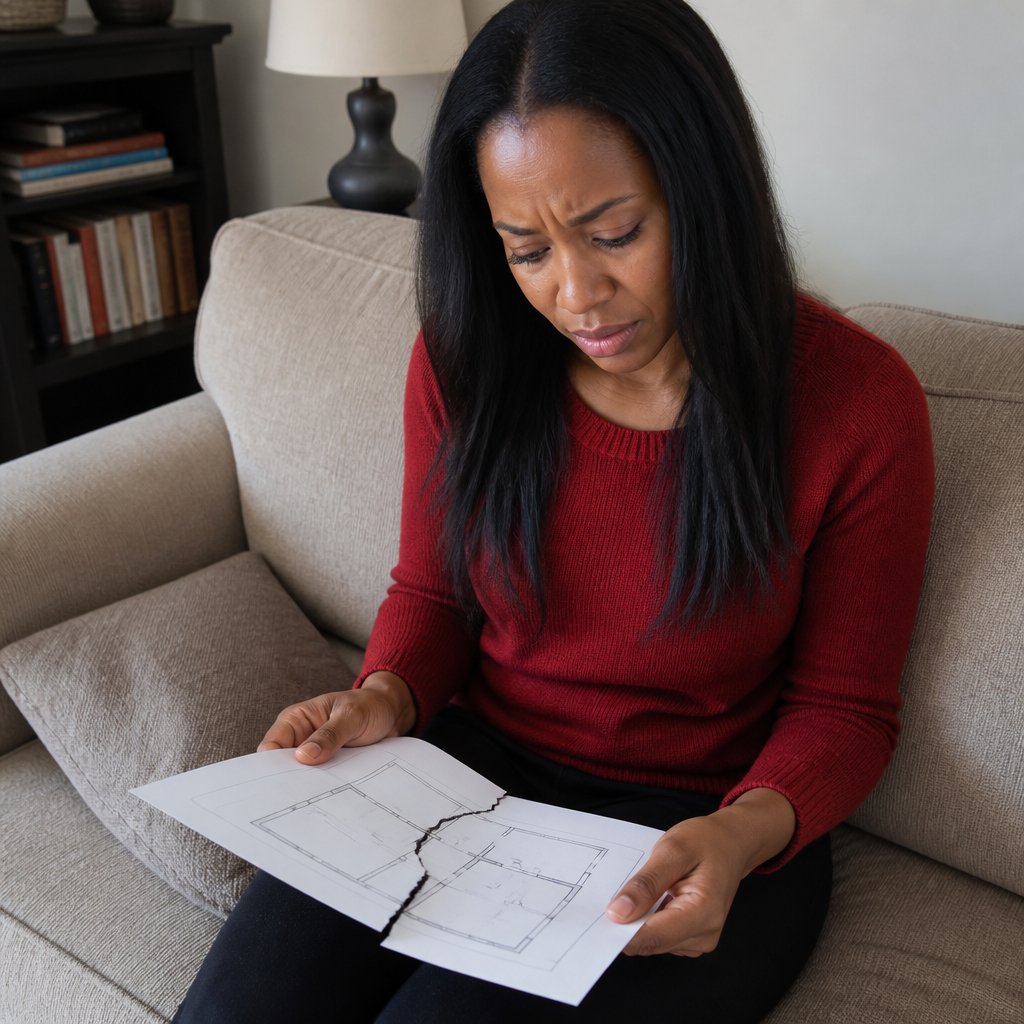
Greg sent me an email later that evening. Inside was a crude sketch: a bold boundary line slicing right through the footprint of my main-floor bedroom. It was rough, hand-drawn or scanned from a quick pencil draft, but the message was clear. The line cut into my home.
I sat in my living room, the rough weave of the couch fabric pressing against my legs as I stared at the printed page in my hands. The idea of losing part of my bedroom to the neighbor’s claim felt impossible to accept. Every corner of that room held memories and comfort.
My fingers traced the jagged line on the paper as anxiety settled in. The sketch wasn’t an official document, but it planted a seed of doubt. Could I really be losing part of the space I called my own?
Conflicting Surveys And Pins
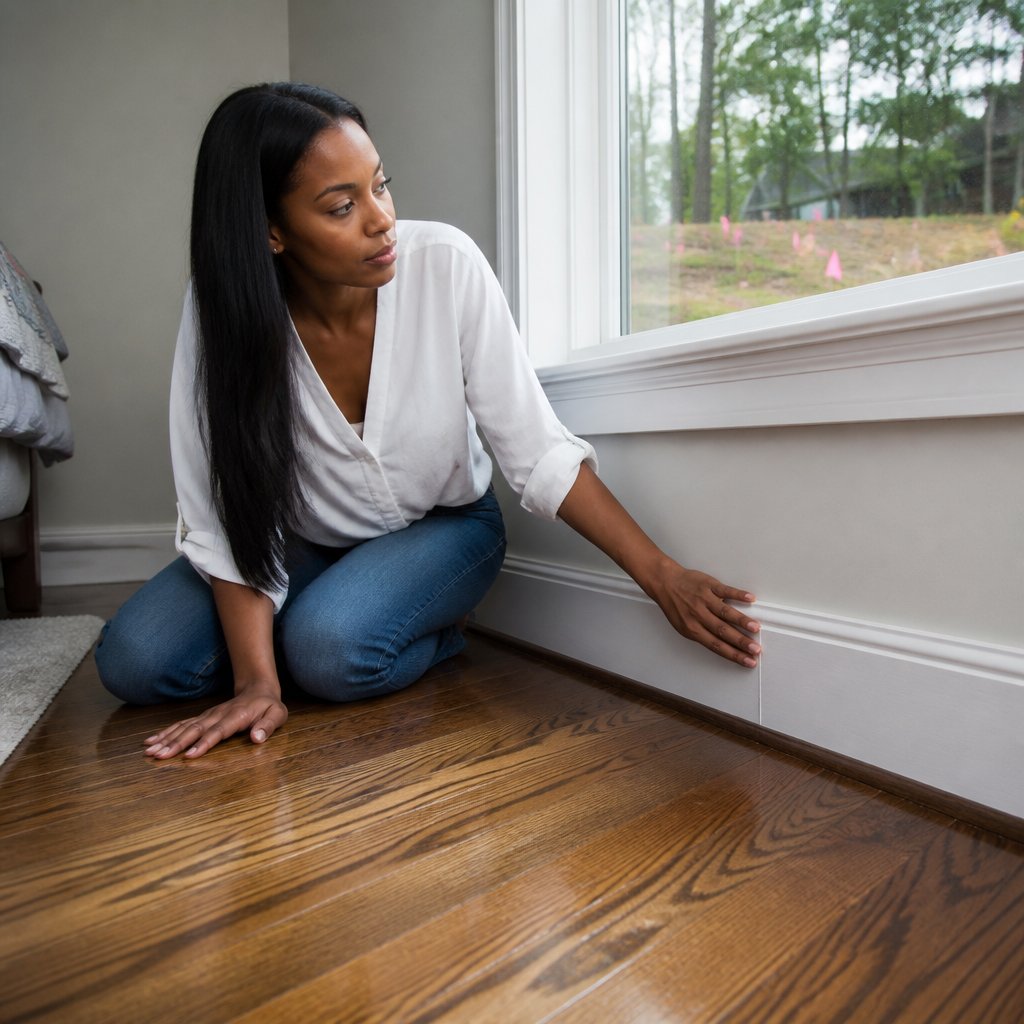
Determined to get clarity, I pulled out my closing survey and the recorded subdivision plat from the county office. Neither document matched Greg’s sketch or his claimed boundary. Still, the strange part was the physical stakes in the yard—those pink flags—that seemed to back his position.
I knelt by the corner of my bedroom wall, where the carpet met the baseboard. The cool smoothness of the polished hardwood floor under my bare feet reminded me how real this space was—and how tenuous ownership felt.
The contradiction gnawed at me. Paper said one thing, ground said another. How could the pins, possibly misplaced from a previous sale, suddenly rewrite my property line? It was maddening to have evidence pulling in two directions, with no clear answer in sight.
Mowing Over The Invisible Line

One morning, I looked out my kitchen window to see Greg pushing his mower across a narrow strip of grass I clearly knew to be inside my fence line. He was dumping clippings just outside my front gate, a pile that looked deliberate enough. I recognized the pattern immediately—it felt like bait. His blue jeans and gray T-shirt were smeared with dust, and he moved with that casual, territorial ease like he’d already claimed the area.
I stepped outside to confront him, but Greg just shrugged and muttered something about "fixing the lawn," acting as if the strip was his property now. The grass smelled freshly cut, but to me, the scent was suffocating. The fence behind him, a simple white picket, framed the scene—a boundary I had always respected until now.
This wasn’t just about grass clippings. It was a power play. But was the strip really his? Were the ground stakes misplaced, or the surveys flawed? I stood by my gate, watching Greg finish, the line between our properties blurring in the afternoon heat.
HOA Steps Into The Ring

A few days later, I received a letter from the homeowner’s association. The HOA was forwarding Greg’s complaint about an “illegal fence encroachment” on his side, even though the fence was clearly built by the original builder of our neighborhood. I sat at my kitchen table, the letter resting on a scattering of other mail, the smell of fresh coffee filling the room.
This was no longer just a neighborly dispute—it had escalated into HOA enforcement territory. The property line argument now had a formal regulatory weight, and the letter’s tone felt unusually stern. I reread the complaint carefully; Greg claimed the fence was crossing onto his lot, demanding its removal or an agreement.
I felt the pressure growing, the stakes shifting in ways I hadn’t expected. The dining room clock ticked quietly nearby as I considered my next move. Was this the beginning of an uphill battle not only with Greg but with the entire neighborhood board?
Surveyor Finds Missing Marker
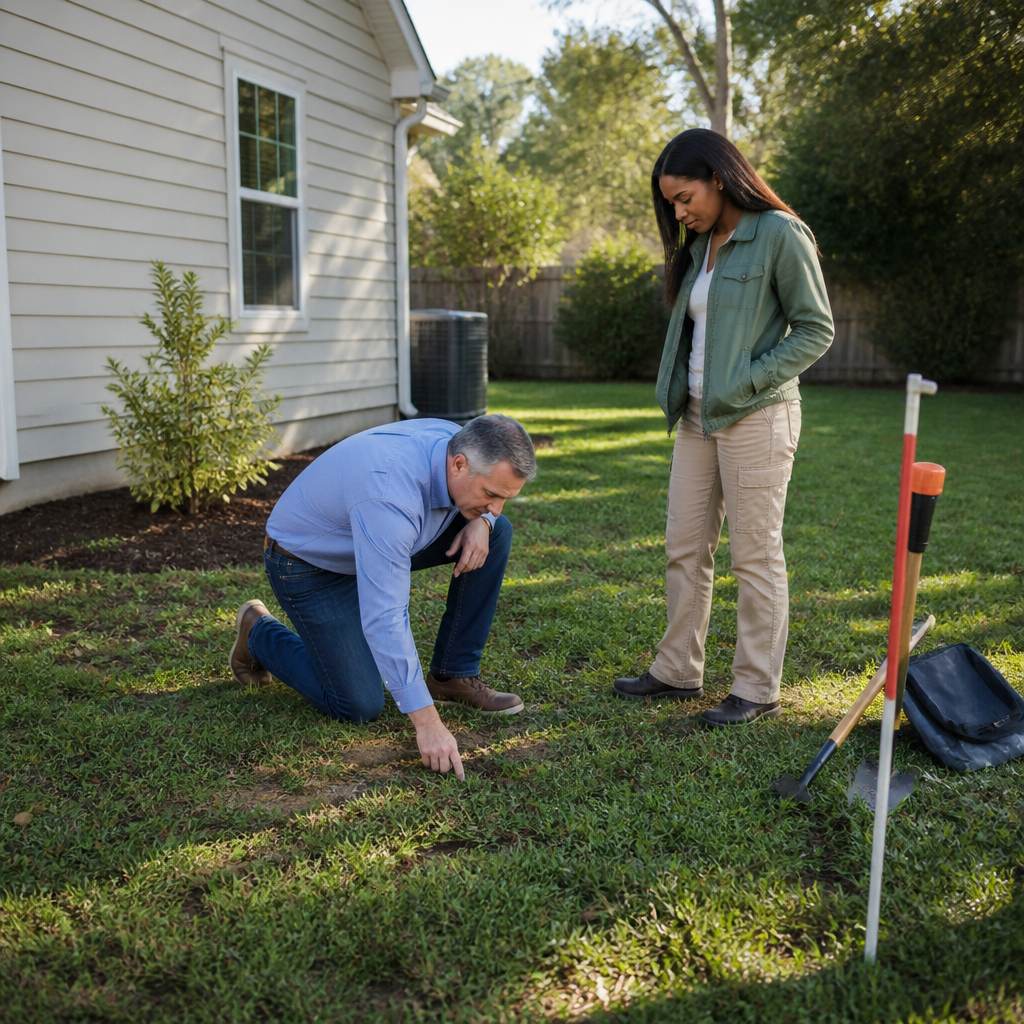
The surveyor I hired arrived mid-morning. He was a middle-aged white man with graying hair and a blue button-up shirt, carrying a heavy tripod and measuring tools. We met in the backyard near the bedroom wall in dispute. The air smelled like damp earth from an early spring rain.
As he paced the property, he frowned and pointed out that a key corner monument—the official survey marker—was missing. Without it, the stakes on the ground might not represent the true property line. He explained that the stakes looked like they had been referenced from a bad point, possibly a reused starting location from an old survey.
I followed his gaze toward the ground stakes, now feeling the legitimacy of the "evidence" crumble beneath us. If the markers on the ground were referencing a bad point, then the whole argument about the corner of my bedroom being over the line could be based on fabricated data. I watched the surveyor kneel down, brushing dirt away to search for any sign of the original monument.
Greg’s Garden Bed Standoff

Greg flatly rejected the stamped survey I’d presented. Instead of discussing the facts, he went ahead and built a raised garden bed along the disputed strip of land beside my house. It was narrow, about two feet wide, filled with soil and some scraggly plants. He installed a motion-activated camera pointed directly into my side yard, right by the corner of my bedroom wall. The camera was fixed on a metal stake hammered near the property line, its lens glinting in the afternoon sun. Greg said it was to monitor “trespassers,” but the clear target was me. The bed, the camera, they weren’t just about landscaping or security—it felt like a move to possess the land he claimed was his.
I stood in my driveway, watching the camera quietly click on as I walked past, its red indicator light blinking faintly. This wasn’t just a boundary dispute anymore. Greg seemed to be staging a kind of intimidation theater, laying claim by presence and reminding me daily that he intended to push this misaligned property line his way—no matter what the survey said.
Though I wanted to settle things logically, I couldn’t shake the feeling that this was going to get far uglier. How far would Greg push his motion-camera watch and garden bed standoff before he tried to force me out or demand payment for “encroachment” he claimed I made?
HOA’s Warning Adds Pressure

Days after Greg reported my survey flags to the homeowners association, I received a letter warning me about “unapproved exterior changes.” The letter said my survey flags were violations, accusing me of altering the property without permission. It was confusing and frustrating because the flags were just markers from a licensed professional surveyor, meant to clarify the boundaries. Now, I was the one under scrutiny.
I decided I had to prove the facts again, so I hired a second licensed surveyor. The new survey matched the first perfectly. Both showed the same property line, confirming that Greg’s claims were based on those misplaced old stakes. Holding the new, certified survey in my hands, I felt a mix of relief and rising tension. The HOA letter had made clear that Greg was using every angle to isolate me, and my side yard was under increasing pressure.
That afternoon, I stood in my backyard, feeling the rough texture of the surveyor’s paper in my hands, trying to steady my nerves. The distant bark of a dog echoed down the street, but inside, the situation was tightening like a noose. I wondered how long it would be before Greg escalated again, and whether the HOA’s involvement meant I was losing whatever leverage I had left.
Greg’s Small Claims Lawsuit Files

Greg took the battle into small claims court, suing me for daily “use of land” fees. He handed over photographs showing my bedroom window from outside, as if my home itself was proof of theft or trespassing. The photos showed the window framed by the disputed corner of the property, the curtain pulled back slightly. It was the most invasive move yet, casting my private space as part of the case.
I responded by filing a counterclaim for harassment and trespass. I also requested an order to keep Greg off my property, aiming to stop his ongoing intimidation. The court papers piled up, a stark contrast to the quiet neighborhood streets I walked often. The sound of my shoes on cracked pavement in the early morning felt oddly heavy, as if each step carried the weight of the case.
The judge’s upcoming decision would set the tone for the months ahead. If Greg succeeded in his claim, the implications for my home’s boundaries and my privacy would be serious. I wasn’t sure the evidence alone would convince the court, but the photographs and claims were hard to ignore.
The Handyman’s Revealed Confession
At mediation, Greg slid a pre-filled boundary-line agreement across the table without a word, treating it like a verdict already decided. I refused to sign anything without full clarity. Instead, I subpoenaed the survey company to get their records.
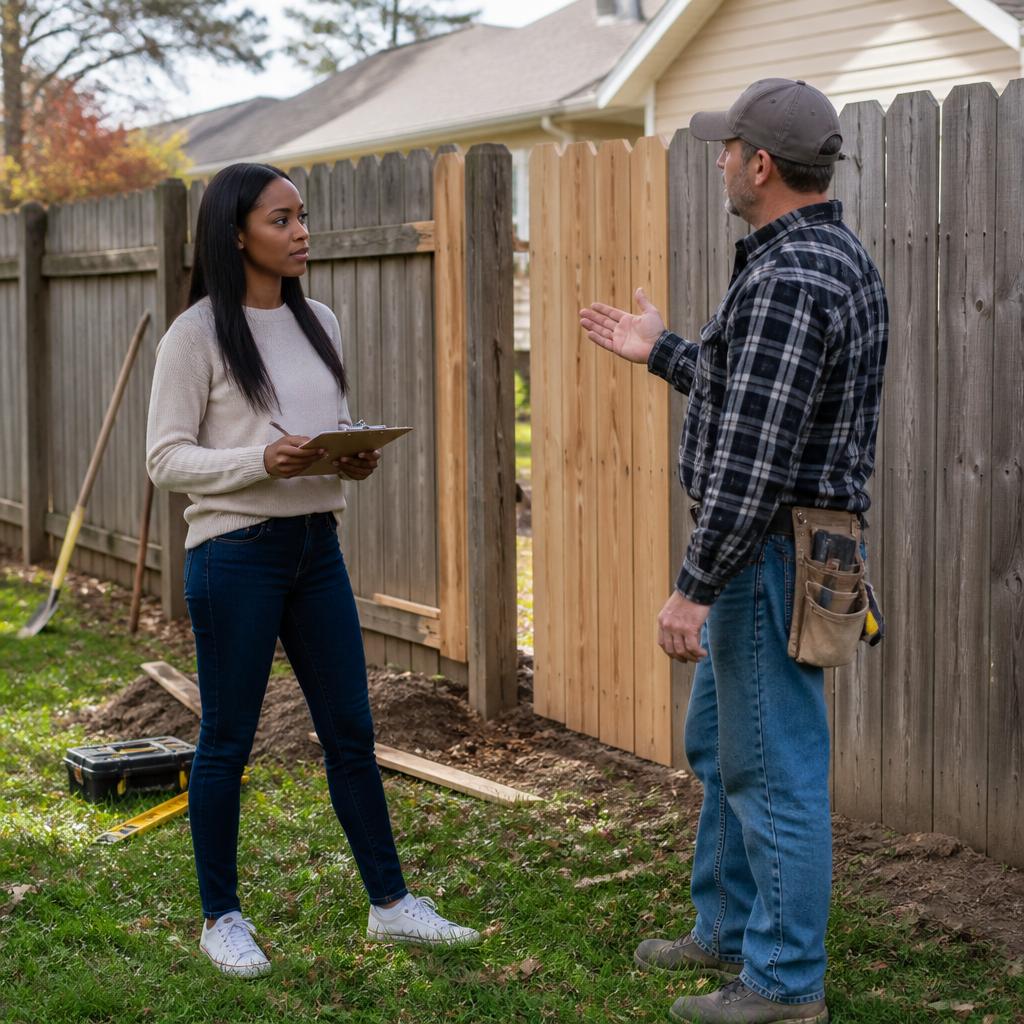
They told me they had never set the original stakes on my property. The mystery of the misplaced markers deepened. I tracked down the handyman who had done a fence repair years ago and found him working on another job. He was a middle-aged white man, wearing a faded baseball cap and a plaid shirt rolled up at the sleeves, his hands rough but steady.
He admitted he’d copied old stakes from a previous owner when replacing the fence. Those copied stakes were never confirmed by a licensed surveyor, but Greg used them as if they were official markers. It was a revelation: the foundation of Greg’s adverse-possession claim was built on a mistake, maybe even a misunderstanding. But with the mediation stalled and court dates looming, I knew the real fight was about to begin.
Should Greg have been held accountable for the mistake?