



The Cracks Started Small
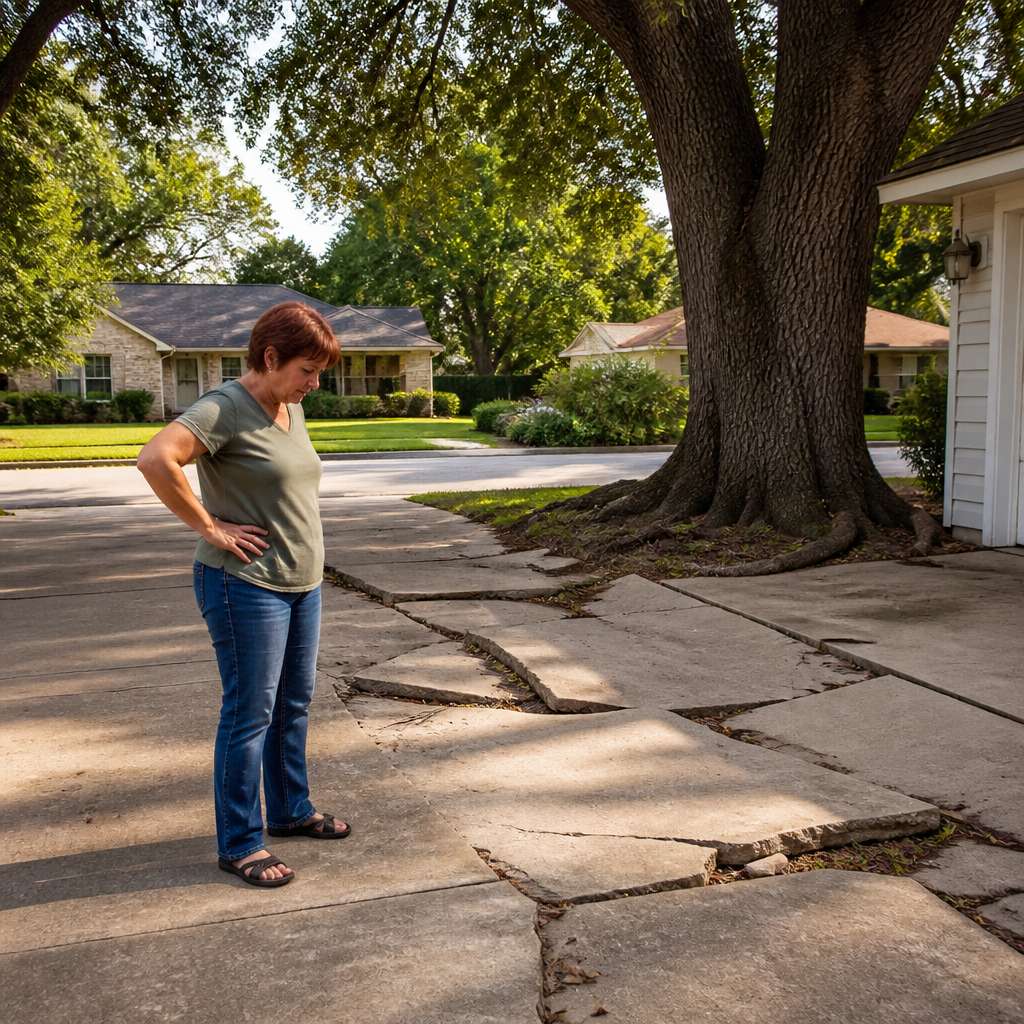
The first crack in my driveway appeared the spring after we bought the house. Hairline thin, running diagonally from the edge nearest the property line toward the garage. I didn't think much of it — driveways crack. But by the following year it had widened to half an inch, and two more cracks had joined it. The concrete was starting to lift and buckle in a pattern that pointed like a finger toward the massive oak tree near the property line.
That oak was enormous — sixty feet tall, trunk wider than my dining table. Its canopy shaded both yards. Its roots, apparently, didn't respect property lines any more than its branches did. A contractor I hired to assess the driveway took one look and said "tree roots" before he even got out of his truck.
Phil Said It Was My Problem

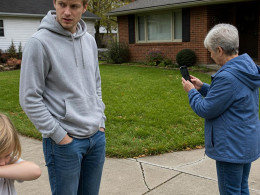
My neighbor Phil Demarest had owned his house for twenty years. He was a quiet guy — waved when he saw you, kept his lawn mowed, minded his business. When I knocked on his door and showed him photos of the driveway damage, he was polite but unmoved. He said the tree had been there since before he bought the house and that roots go where roots go. He suggested I talk to my insurance company.
My insurance company said driveway damage from tree roots wasn't covered under my homeowner's policy. Natural ground movement, they called it. The repair estimate was $14,000 to tear out and replace the damaged sections. That was not a number I had lying around.
Three Years of Getting Worse
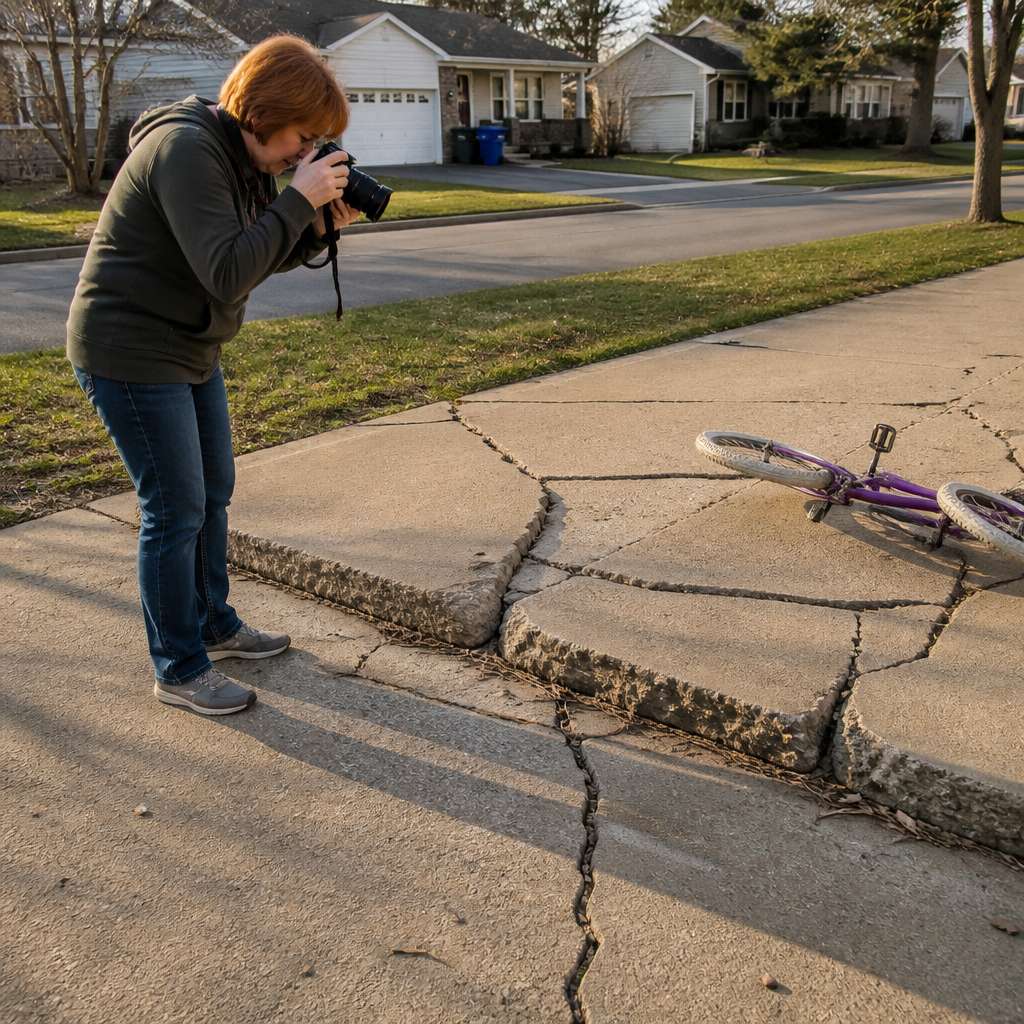
Over three years the damage spread. The cracks multiplied. A section near the garage lifted three inches, creating a trip hazard. My daughter caught her bike tire on it and went over the handlebars — scraped knees, no serious injury, but it scared me. Every winter the water got into the cracks and froze, making them wider. Every spring the roots pushed harder.
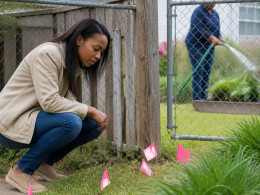
I documented everything. Photos every few months, dated and organized. Repair estimates from three different contractors, all ranging from $12,000 to $16,000. I sent Phil two letters — certified mail — asking him to address the root issue. He didn't respond to either one. The second one came back unsigned.
My Lawyer Said It Was Open and Shut
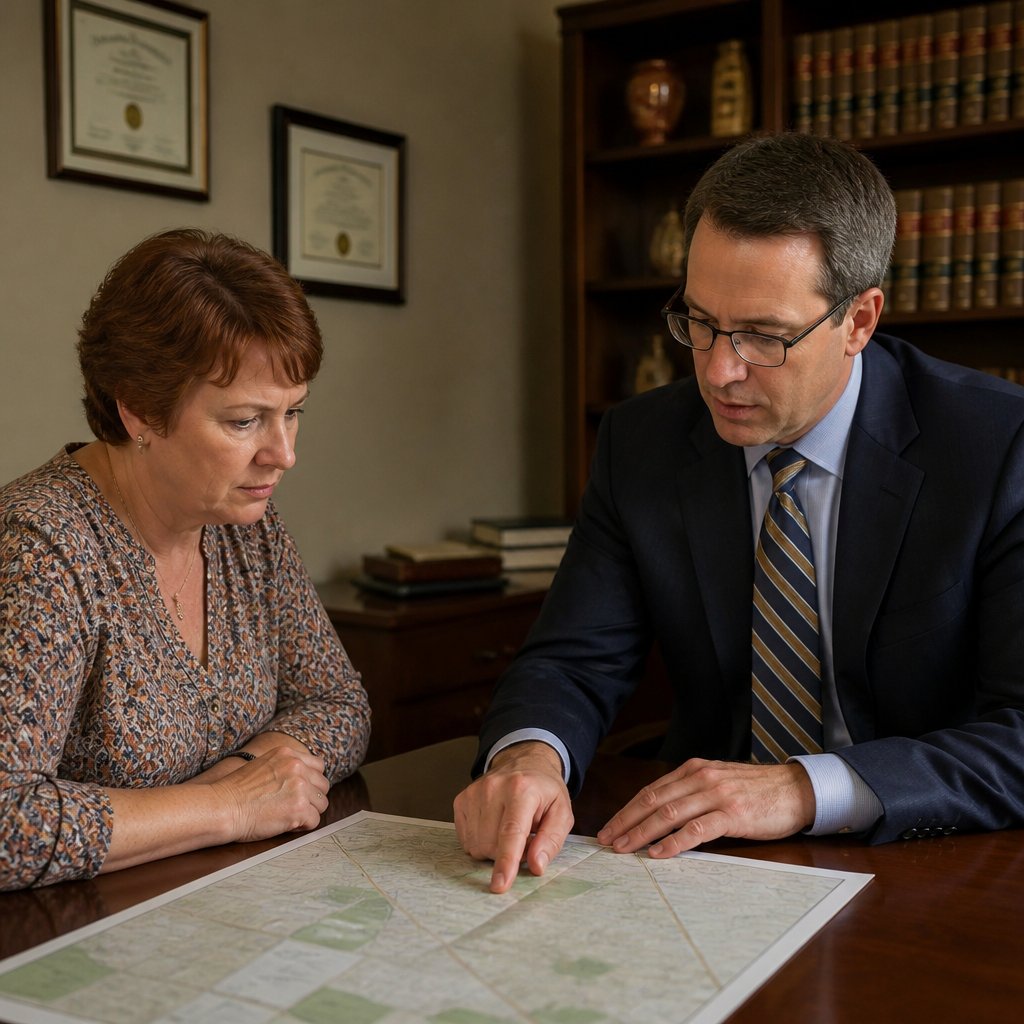
David Mercer was a property attorney with thirty years of experience. He reviewed my photos, my letters, my estimates, and the property line as shown on the plat map I'd pulled from the county. The oak tree was clearly on Phil's side of the line — you could see it on the map, solid circles for trees, right there on the Demarest parcel. David said root encroachment from a neighbor's tree was well-established grounds for damages in our state.
He filed a complaint seeking $16,000 for driveway repair, $2,000 for diminished property value, and an injunction requiring Phil to remove or contain the tree's root system. Total claim: $18,000 plus legal fees. David said Phil would settle for the repair cost to avoid trial. "Nobody goes to court over a tree," he said. He was wrong about that.
Phil Hired His Own Lawyer

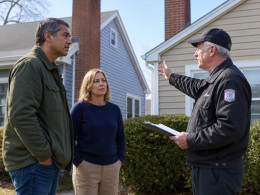
Phil didn't settle. He didn't even call. His response came through his attorney — a woman named Diane Kossuth who specialized in property disputes. Her answer denied everything: denied the tree was Phil's, denied the roots caused the damage, denied Phil had any obligation to respond to my letters. I read the response with David and felt the first flicker of doubt.
David wasn't worried. He said defense attorneys deny everything as a matter of course — it's boilerplate. The tree was obviously on Phil's property. The plat map showed it. The roots were obviously causing the damage. Three contractors confirmed it. "She's just doing her job," David said. "The facts are the facts." I nodded. Facts were facts. Weren't they?
Diane Kossuth Had a Surveyor
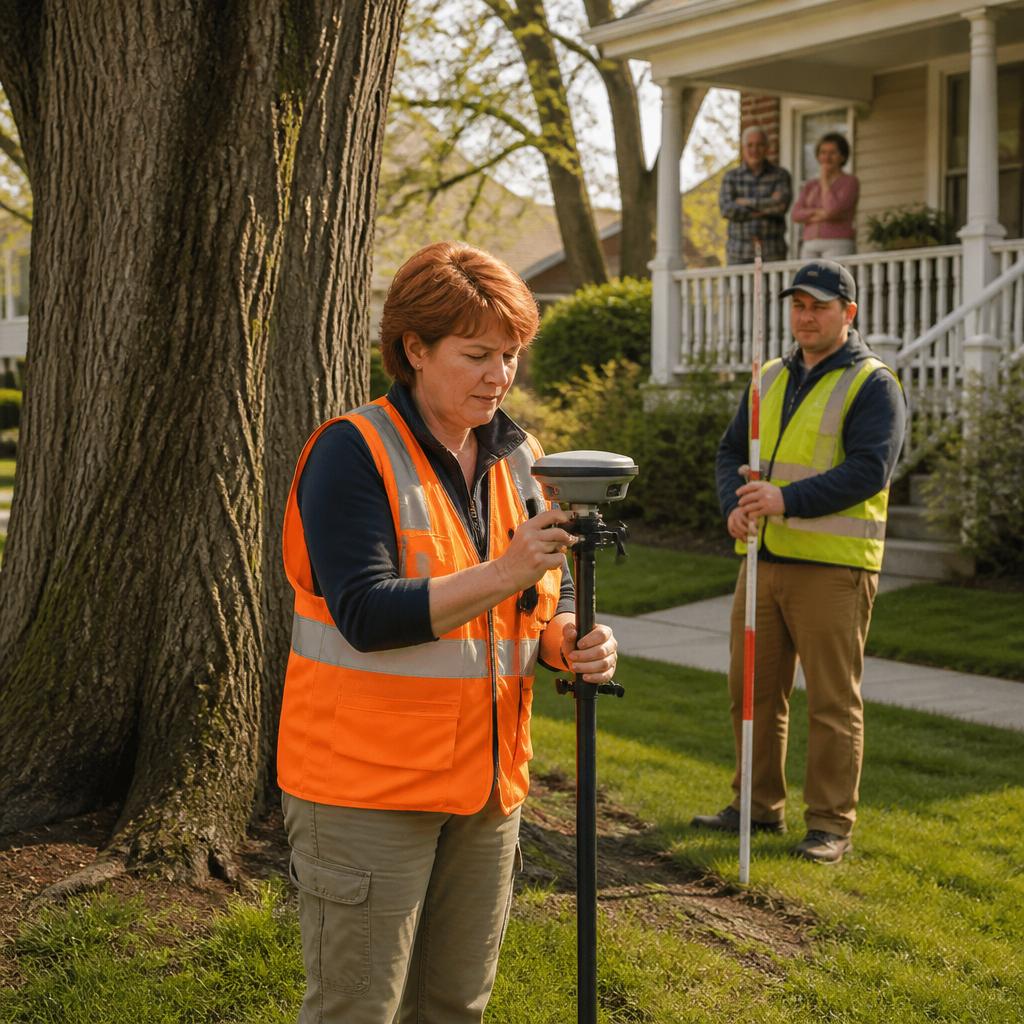
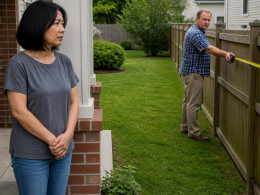
During discovery, Diane requested a professional land survey. David said fine — we had the plat map, and a survey would just confirm what we already knew. We'd split the cost. The survey was scheduled for a Tuesday morning in April. A licensed surveyor named Ed Thorpe arrived with his equipment, his assistant, and a GPS unit that looked like it cost more than my car.
He spent three hours measuring, marking, and checking coordinates. David and I watched from my porch. At one point Ed stood at the base of the oak tree for a long time, looking at his equipment, then at the tree, then back at his equipment. He called his assistant over. They remeasured. David's coffee had gone cold and he hadn't noticed.
The Property Line Wasn't Where We Thought
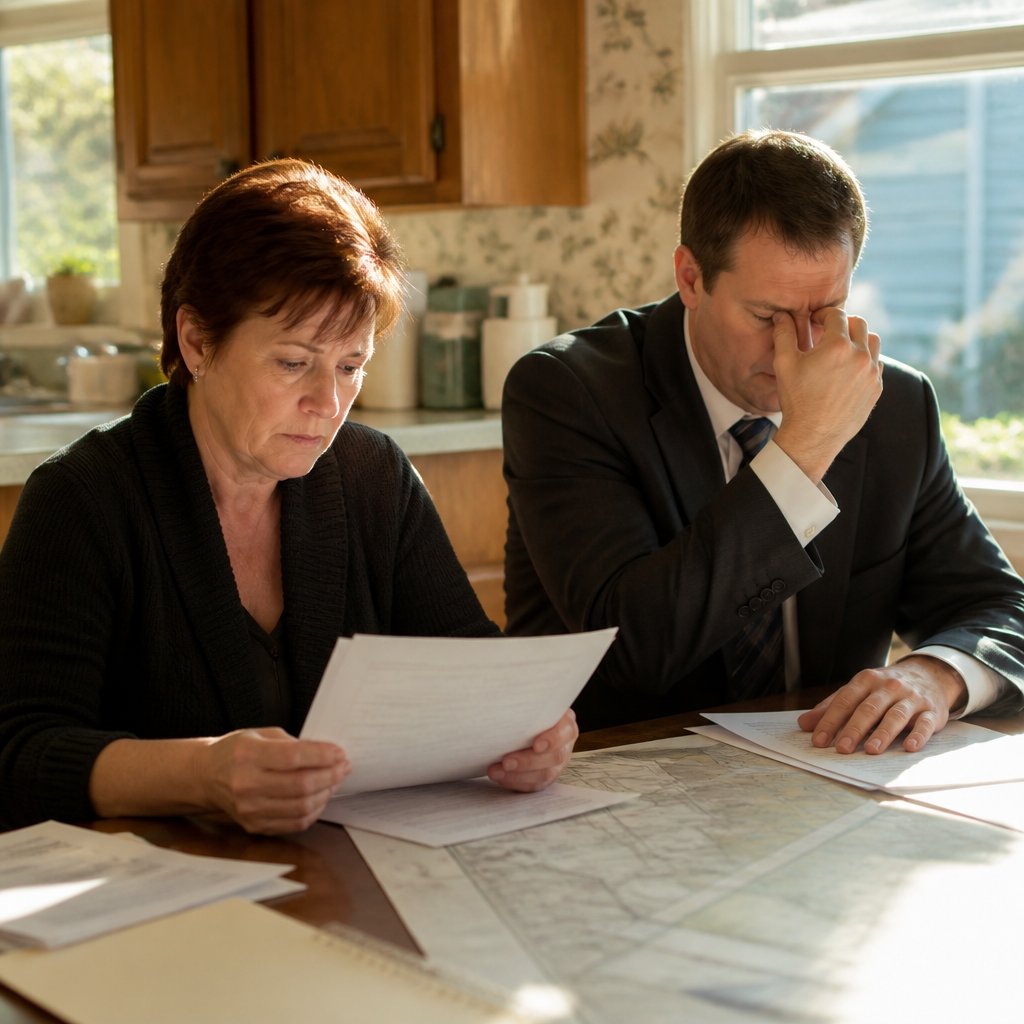
Ed Thorpe's survey report arrived four days later. I sat at my kitchen table with David and read it. The plat map I'd pulled from the county was from 1987 and was based on an older, less accurate survey. The actual property line, as determined by GPS-verified boundary markers, ran eighteen inches further into my yard than the plat showed.
Eighteen inches. That was all it took. The oak tree — all sixty feet, all that massive trunk, all those roots — was not on Phil Demarest's property. It was on mine. Centered perfectly on my side of the line by exactly six inches. My tree. My roots. My driveway. My problem.
David Went Very Quiet
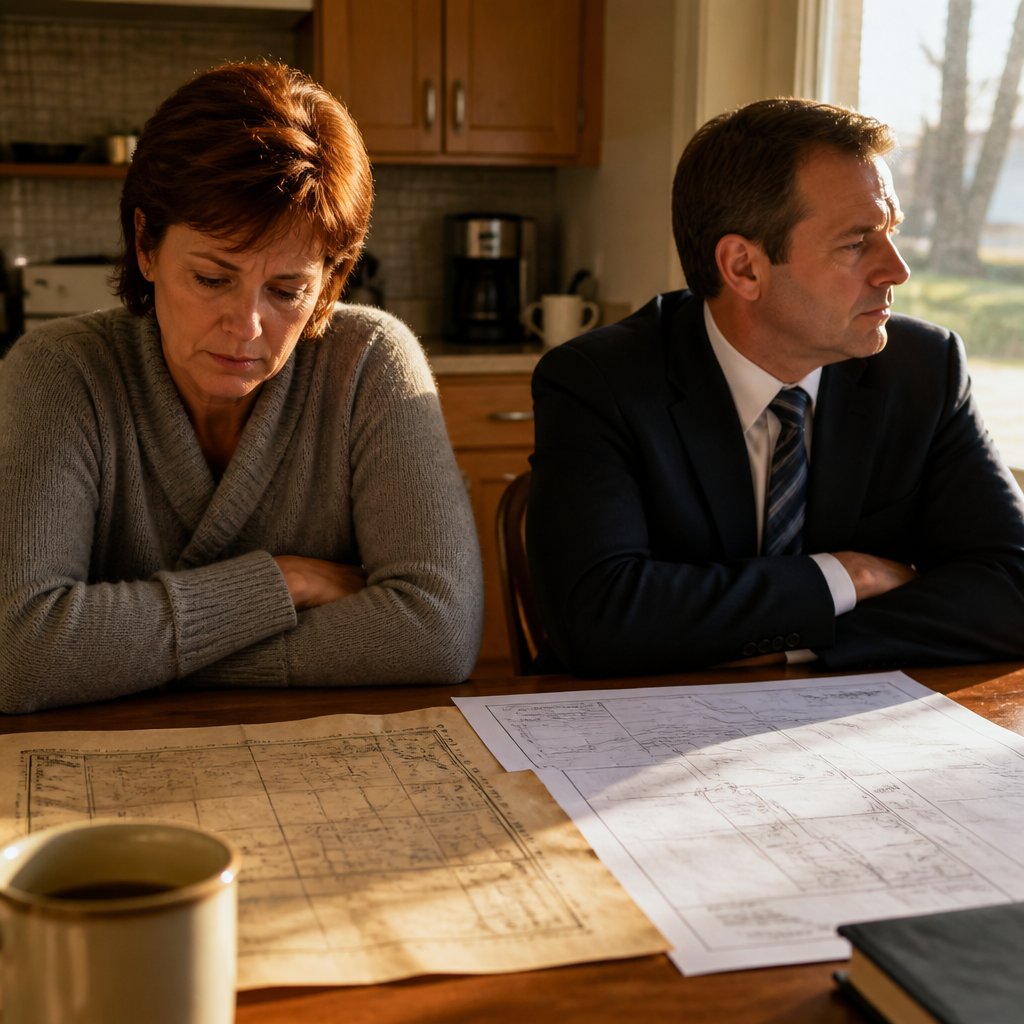
David read the report twice. Then he looked at me and said something I'll never forget: "The plat map was wrong." Four words that turned my $18,000 claim into nothing. If the tree was on my property, Phil had no liability. His roots weren't encroaching — my roots were growing under my own driveway. I wasn't a victim of my neighbor's negligence. I was the owner of a tree that was destroying my own property.
I asked David if there was any angle. Any argument. He was quiet for a long time. Then he said we could argue that the plat map constituted reasonable reliance — that I'd acted in good faith based on county records. But he wasn't confident. And Diane Kossuth, he said, was going to have the time of her life with this.
Diane Filed a Counter-Motion
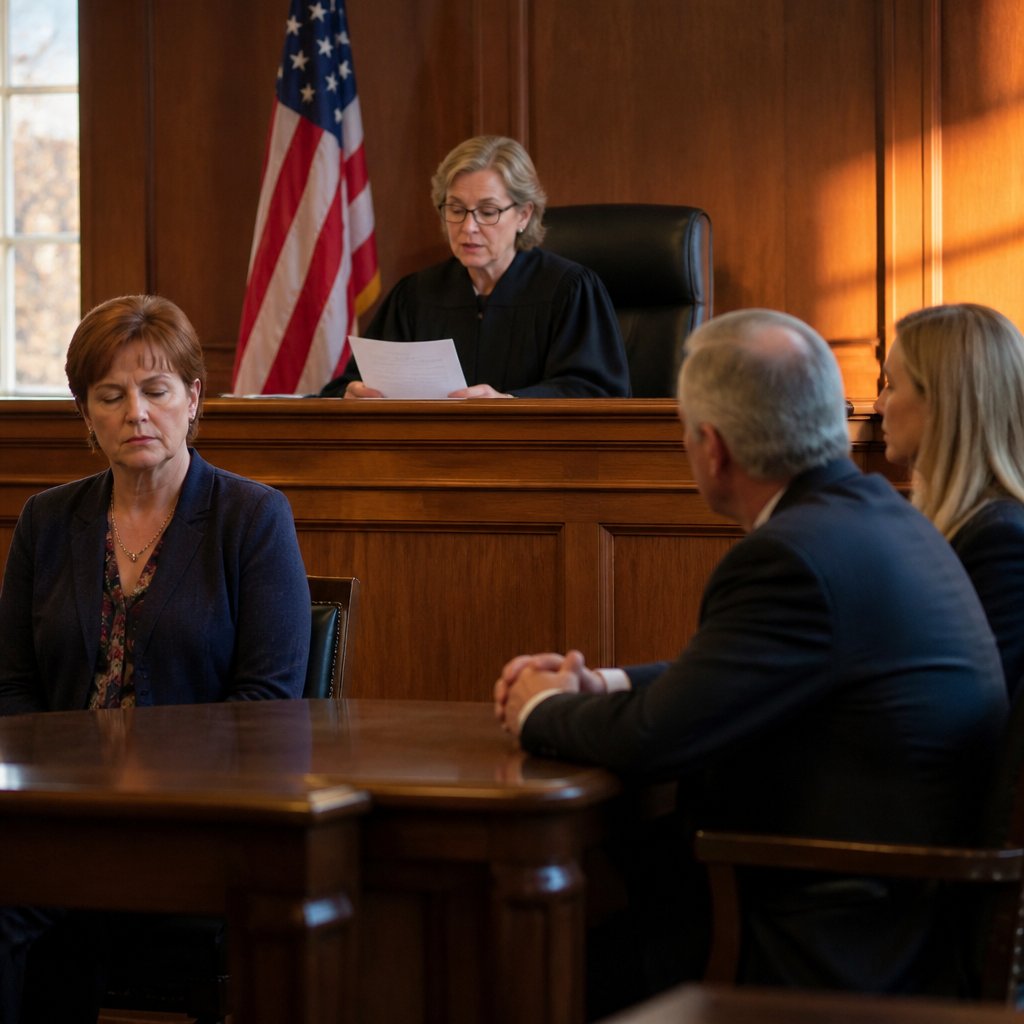
Diane Kossuth didn't just move to dismiss — she filed for attorney's fees and costs. She argued that the lawsuit was filed without adequate investigation, that a simple survey before filing would have revealed the property line issue, and that her client had been subjected to unnecessary legal expense. Phil's legal bills were $8,700.
David fought it, but the judge sided with Diane. He said that while my reliance on the plat map was understandable, I had a responsibility to verify the property line before filing suit — especially since the tree's exact position was the central issue. He ordered me to pay Phil's legal fees. I'd filed a lawsuit to get $18,000 for my driveway. I was now paying $8,700 for my neighbor's lawyer.
The Tree Is Still There
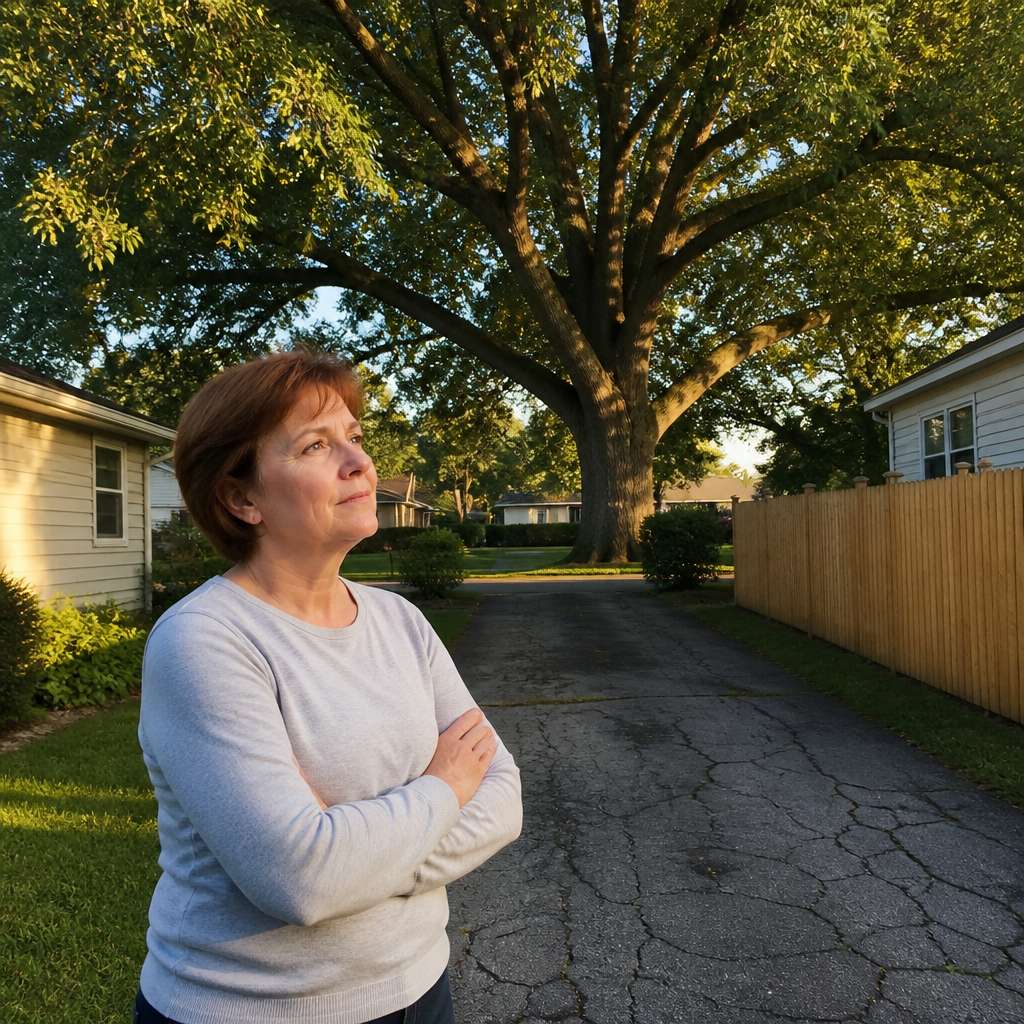
I paid Phil's legal fees on a payment plan. My driveway is still cracked. The tree is still there — my tree, as it turns out — dropping leaves in the fall and sending its roots wherever it pleases. Getting it removed would cost another $8,000 to $10,000, and even then the roots already under the driveway would need to be ground out before new concrete could go in.
Phil and I don't talk anymore, which is probably for the best. He put up a new fence along the actual property line — eighteen inches further into my yard than the old one. It's a nice fence. I look at it from my cracked driveway every morning and think about plat maps and surveys and the eighteen inches that cost me $8,700 and a neighborly relationship. The oak provides beautiful shade, though. I'll give it that.
Was the $8,700 worth the lost neighborly relationship?