




Barcode Scan Meant Safety
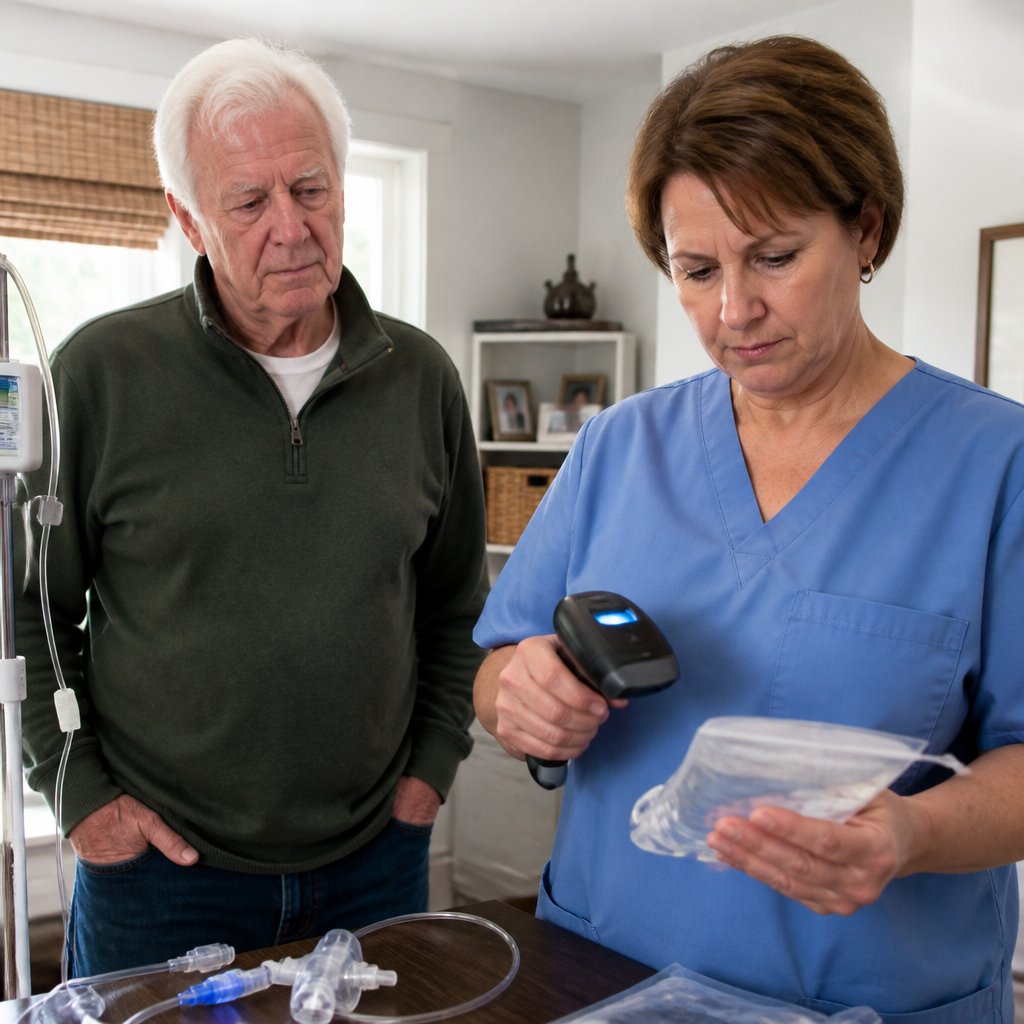
During the training for home infusion equipment, I was shown how the barcode scan serves as a so-called “closed-loop” safety check. The nurse explained that the barcode on the medication bag links directly to the patient’s order in the pharmacy database. If the scan turns green, it means the medication matches the prescribed order exactly. It gave me some confidence—at least until later.
But I learned the hard way that the system also means if something goes wrong with the medication itself, the caregiver is often the first person suspected. The barcode scan is rarely questioned once it confirms a match, even if the underlying product might be flawed. This setup frames caregivers as gatekeepers responsible for catching any errors the pharmacy or system misses.
That day, as my wife received the infusion, I watched the nurse carefully scan the bag’s barcode. The green light immediately lit up on the handheld scanner display. The beeping sound was reassuring, but it also marked the start of a journey where that same green light would later become a frustrating symbol of blind trust and missed errors.
New Label, Same Green Light

A few days later, a new delivery arrived. The medication bag looked almost identical, but I noticed the label layout had subtle differences—some text was rearranged, and the concentration details were formatted differently. Nothing that a casual glance would catch, but to me, it felt off.
The nurse scanned the barcode again before starting the infusion. The scanner beeped and flashed green just like before. The app or device gave no indication that anything was amiss. The barcode matched the order record, so the system verified the medication as correct.
But I wondered how the barcode could still verify the product if the label itself had changed so much. Was it possible the barcode only encoded order information and not the actual concentration compounded in the bag? I tried to raise questions, but the green light seemed to close the case before it even began.
That difference in the label layout haunted me. What part of the process was relying solely on automated verification without a second physical check?
First Symptoms During Infusion
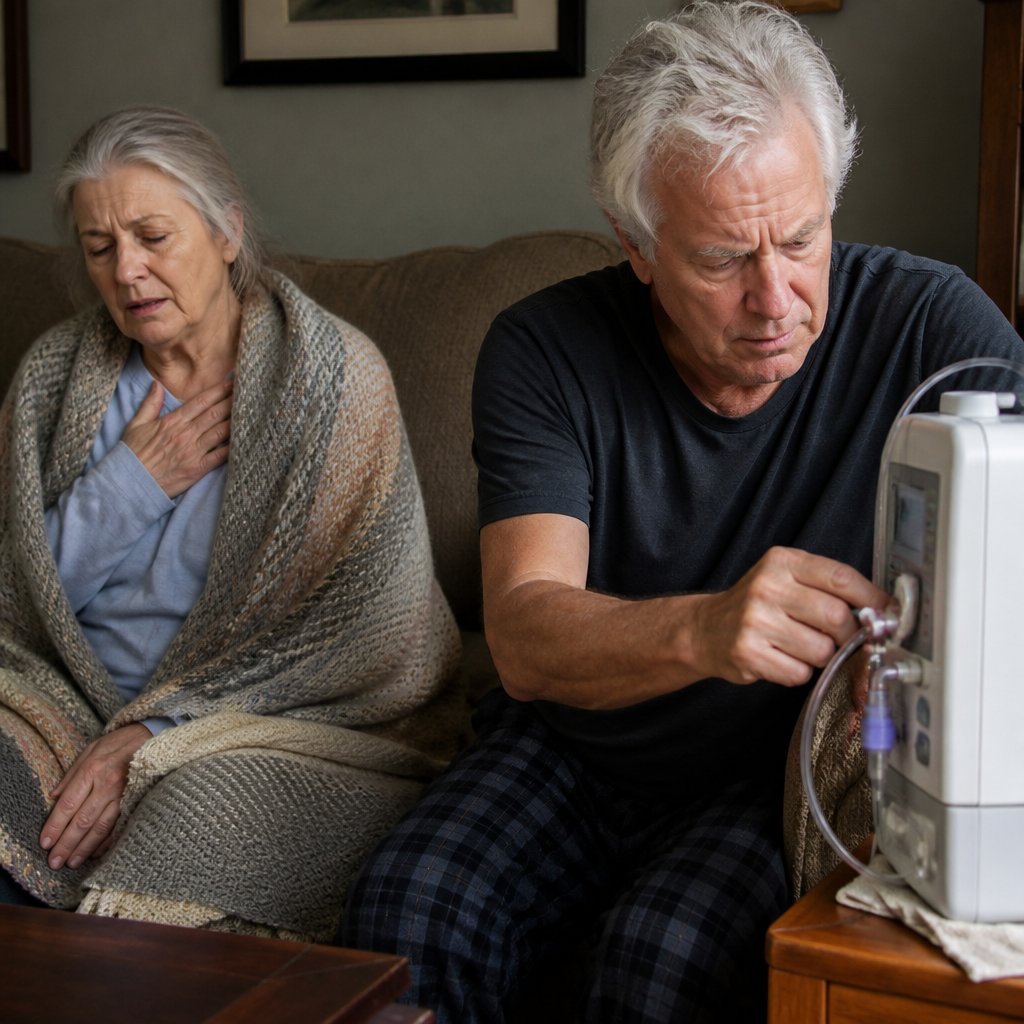
Midway through the infusion, my wife complained of tingling in her fingers. It was followed by nausea and a tight feeling across her chest. I called the after-hours nurse line immediately. The nurse instructed us to slow the infusion rate and monitor her symptoms closely. She didn't advise taking her to the hospital or stopping the infusion entirely.
I documented everything—the time of symptom onset, the after-hours nurse’s instructions, and how the symptoms persisted. But the guidance felt dismissive, as if we were being told to tolerate discomfort without a clear plan.
The tape on the infusion pump made a soft clicking as I adjusted the rate, the faint hum of the machine filled the room. Each beep the pump made seemed heavier with the uncertainty of what was actually happening inside that bag.
The after-hours team’s protocol didn’t include verifying the potassium levels or checking the accuracy of the compounded medication. I feared this delay might worsen her condition, but I had no proof or medical leverage to force further action.
Urgent Care Delays Testing

We went to urgent care after the symptoms worsened. The physician ordered a metabolic panel to check her electrolytes, including potassium. But they delayed drawing the blood sample for hours, busy with other patients. Eventually, they sent her home with a diagnosis of anxiety and dehydration.
No one verified the potassium level connected to the infusion before the next bag was administered. The discharge paperwork mentioned none of the infusion details; the clinical notes framed her symptoms as psychosomatic rather than linked to the medication.
Walking out of the clinic, the sterile smell of antiseptic lingered in the air. The fluorescent lights buzzed overhead, amplifying the coldness of the place. The nurse handed me prescriptions without discussing the infusion or possibility of a compounding error.
I felt the dismissal keenly. Was anyone actually looking at the root cause or just patching symptoms? The lack of potassium verification before continuing the infusion left us vulnerable but unnoticed.
Pump’s Occlusion Alarm Sounds

Later that evening, the infusion pump suddenly started beeping loudly with an “occlusion” alarm. We checked the tubing and flushable line; nothing was kinked or blocked. The line was clear, and the fluid appeared to flow freely.
The alarm suggested a mechanical problem, but the clear line hinted that the problem was within the fluid itself. I inspected the bag closely; it looked normal, but that nagging doubt about concentration came back.
The pump’s alarm echoed sharply in the quiet bedroom, making the moment tense. The nurse reprogrammed the device and flushed the line again, but the alarm returned. This pointed to the possibility that the fluid’s composition might be causing increased resistance or affecting the pump’s sensors.
We called the after-hours nurse line again, but no one suggested stopping the medication or verifying the compound. The alarm felt like a warning nobody acknowledged.
A Pharmacist’s Quiet Concern

During a routine medication check, a hospital pharmacist noticed something unusual. The potassium chloride label on my wife’s infusion bag looked odd—different font sizes, unclear concentration markings. She quickly jotted a note in the patient’s electronic chart indicating her concern about the label’s clarity. But within hours, that comment vanished from the record, as if someone had deleted it. This suggested an early attempt at institutional self-protection, hiding any trace of doubt about the medication’s accuracy.
I requested to see the pharmacist but was told such notes were confidential or sometimes removed during record updates. I couldn’t tell if her concern was about the concentration or simply a formatting error. The disappearing comment felt like a red flag buried, not a warning raised.
The faint smell of antiseptic filled the hospital pharmacy break room when I overheard a technician muttering about "label inconsistencies" before a supervisor called him away. The scent hung in the air, sterile yet unsettling, as if masking deeper problems.
BrightPath’s Calm Scheduling Call

A day after my wife’s cardiac event landed her in the ICU, I received a call from BrightPath, the home-infusion pharmacy. They were scheduling the next potassium chloride delivery as if nothing had happened. I told them she was now in intensive care after a serious adverse reaction. The representative immediately asked for the lot number of the last infusion batch, then fell silent.
Their sudden quiet suggested internal alarm. No questions about the cardiac event’s cause. Just a request for a batch identifier, then silence. I pressed for details, but the voice on the other end remained tight-lipped, offering only that a supervisor would call back.
The sterile buzz of the hospital ICU monitor was the backdrop to this call, its rhythmic beeping a harsh reminder of the situation’s urgency. Each beep marked time passing without answers.
Compounding Records Denied Again

I formally requested the compounding record for that potassium chloride batch from BrightPath. They refused, citing "internal quality material" protected by company policy. This refusal blocked the critical proof needed to verify the actual concentration compounded versus what was ordered.
Without the compounding worksheet, I was forced back into uncertainty. The burden shifted squarely onto me and my wife’s medical team to prove the pharmacy’s fault, with no direct access to the documents that could confirm or deny the label’s accuracy.
The faint metallic scent of ink lingered as I flipped through unrelated medical files in the hospital’s patient advocacy office, frustration mounting with every denied request. The silence of the empty office felt oppressive, underscoring the walls closing in on our fight.
Discharge Paperwork Shifts Blame

The discharge paperwork from the hospital suggested my wife’s cardiac event might be due to "possible noncompliance" with the infusion pump rate settings. This language was surprising and troubling—it appeared to blame the caregiver rather than investigating the medication itself.
It was frustrating that before any product testing or pharmacy investigation occurred, the narrative was already turning against me. The discharge summary documented that the pump’s rate had been manually altered, though I had followed every instruction precisely during home care.
The scratchy sound of a pen moving over paper filled the quiet hospital room as the discharge nurse explained the paperwork. The ink pressed hard into the page, a stark contrast to the softness of the accusation it conveyed.
Insurance Questions ICU Charges

The insurance company challenged the medical necessity of the ICU charges. They requested detailed justification for the extended stay, citing conflicting reports about the cause of the cardiac event. This forced me to start building a parallel record—compiling chart notes, lab results, and infusion pump logs—to support the claim before any evidence could disappear.
The financial pressure added urgency. I sat in the hospital cafeteria, sorting through scribbled notes and lab printouts, trying to correlate timelines. The clatter of dishes and murmurs of other diners surrounded me, but I was lost in a world of medical codes and billing jargon.
Each bite of cold coffee reminded me how long this fight might last if the insurer pressed the issue further.
Investigator Spots Label Detail

A state board investigator requested photographs of the infusion bags. When I examined the label closely for the investigator, I noticed the concentration line was printed smaller than usual—easily missed without careful inspection. This subtle label design choice could hide a lethal difference in potassium chloride concentration.
This detail struck me as critical. If the pharmacy relied on label design to obscure concentration differences, it would explain how the barcode system "verified" the product incorrectly. The small print made it hard for caregivers and even hospital staff to see the true concentration at a glance.
The rough texture of the plastic bag’s label felt coarse under my fingertips as I took the photos, the faded ink contrasting against the sterile white background.
Replacement Bag Arrives Unchanged

BrightPath shipped a replacement potassium chloride bag with a new label style. The concentration line was now printed in a similar font size and location matching the prescription. However, when I scanned the barcode, it still showed as "verified" green, just like the previous faulty bag.
This felt like a system reset—an attempt to correct the visual label without admitting any error in the compounding or scanning protocols. The barcode system continued to confirm the product as correct, despite the earlier event.
The faint plastic scent of the fresh infusion bag filled the small home office where I inspected it, an everyday smell that now carried heightened significance and wariness.
Memory Gaps Raise Doubts

After my wife was discharged from ICU, she began having memory gaps about the days around the cardiac event. She asked if I might have hung the wrong bag during home infusion—inadvertently suggesting caregiver error.
This was painful but revealing. If she doubted my actions, so might hospital staff or legal investigators. Unless I could conclusively prove the failure was in the pharmacy’s compounding and verification, caregiver blame would seem plausible.
The quiet ticking of the wall clock in the living room echoed as she asked the question softly, her eyes searching mine for answers I didn’t yet have.
Cleanroom Footage Reveals Critical Error

I got hold of the cleanroom surveillance tapes from the day my wife’s infusion was prepared. The video showed a pharmacy technician pulling a concentrated potassium chloride solution into a bag clearly labeled for a lower concentration. The label and the actual volume drawn didn’t match, but the system’s barcode scanner was only verifying that the bag’s barcode matched the order—not the actual concentration inside.
The technician then applied a green "OK" sticker after the scanner beeped approval. It was proof that the barcode system ensured identity but missed dose verification entirely. The green sticker signified quality control approval, but it was based solely on matching barcodes, not on any chemical or volumetric check.
That footage was a game changer. I knew I had to get it admitted at trial, but the pharmacy’s lawyers were pushing hard to exclude it, arguing chain of custody and relevance. The judge was leaning toward their side, putting me under tremendous pressure to settle. I had to figure out how to fight for that tape’s inclusion before it was too late.
Was the judge right to consider excluding the footage?