




Who Showed Me That Video?

It was just after lunch when my coworker, Mark, pulled me aside near the break room. He looked uneasy, holding his phone low enough so others wouldn’t see. "Is this real?" he asked, showing me a graphic video. The face in the video was unmistakably mine, though the scenes were impossible and humiliating. I froze, the faint hum of the vending machine nearby filling the silence. It was clear this wasn’t just some random internet thing—it was already circulating inside our office walls.
The Thread Filled With Laughs

Back at my desk, I checked the Teams chat thread. The channel was flooded with laughing emoji reactions under a message that once contained a link. Now the link was gone, like it had vanished into thin air. The laughter made my stomach churn. It was harassment, sure, but public enough that everyone knew, yet instantly deniable since the evidence was wiped. The faint smell of coffee lingered from my mug as I scrolled up and down the chat, trying to grasp who’d shared it first.
Manager Passing The Buck

I booked a meeting with my manager, Lisa, in her glass-walled office. She wore a crisp white blouse and black slacks. When I brought up the video and the Teams thread, she shifted uncomfortably in her chair. "This isn’t really my area," she said, pushing her glasses up her nose. "You should talk to HR about this." Her tone made it clear this was a “people issue,” not a security problem. The faint click of her pen punctuated the moment. I realized the company was distancing itself from responsibility.
HR Frames It As Drama

At HR’s intake office, I sat across from Janet, a middle-aged Black woman with short curly hair and glasses. She wore a patterned blouse and gold hoop earrings. Janet folded her hands and sighed. "This sounds like personal drama," she said, suggesting I just block people sharing the content. It felt like they were putting the responsibility on me to stop the harassment. The dull hum of the air conditioner filled the room as I clenched my fists beneath the table, realizing I was hearing the company’s dismissal firsthand.
No Legal Involvement Promised
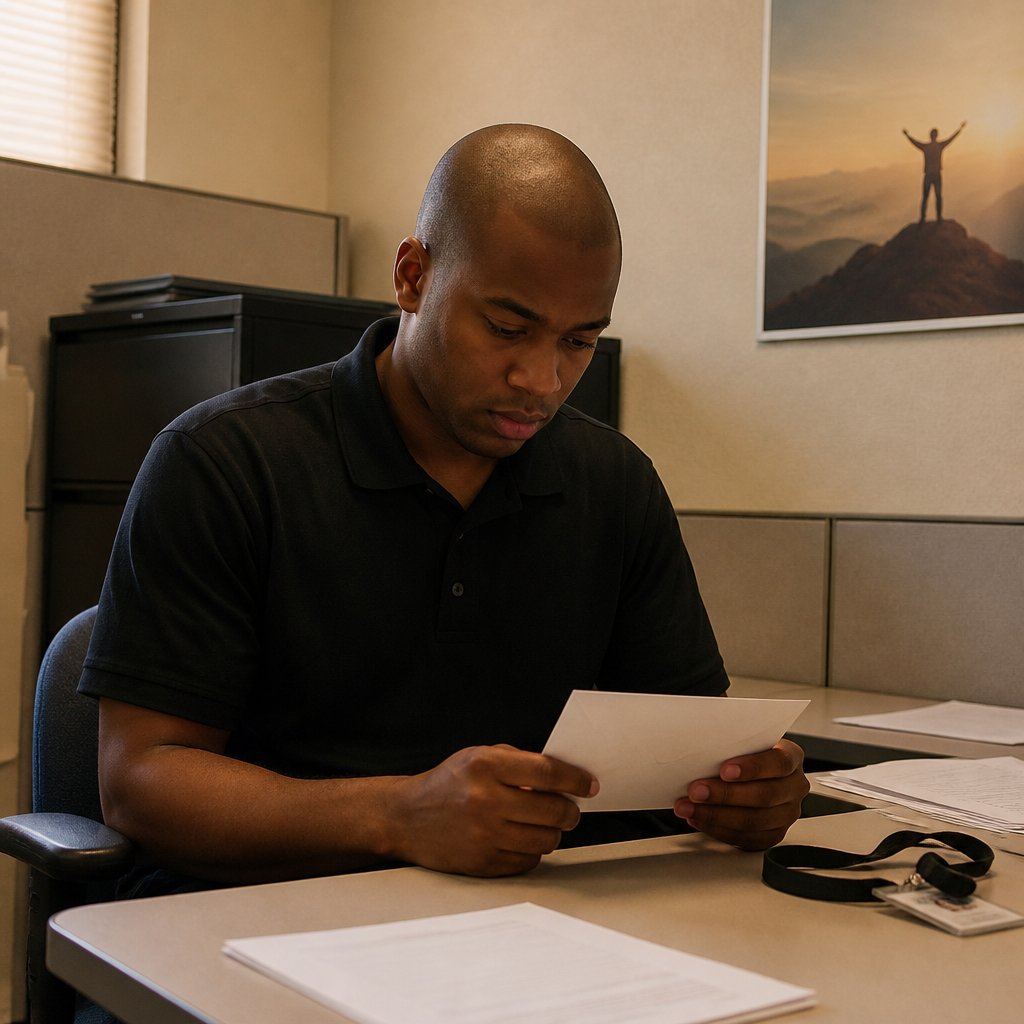
I emailed HR asking for a litigation hold to preserve all evidence. The reply came back from Janet quickly. "Legal won’t be involved," she wrote in her response. It was a cold dismissal. I felt the weight of that decision—no law team to look into this meant the company was choosing to control exposure rather than seeking the truth. My badge jingled faintly as I shifted in my chair, frustration mounting. The message was clear: I was on my own.
Physical Intimidation Begins
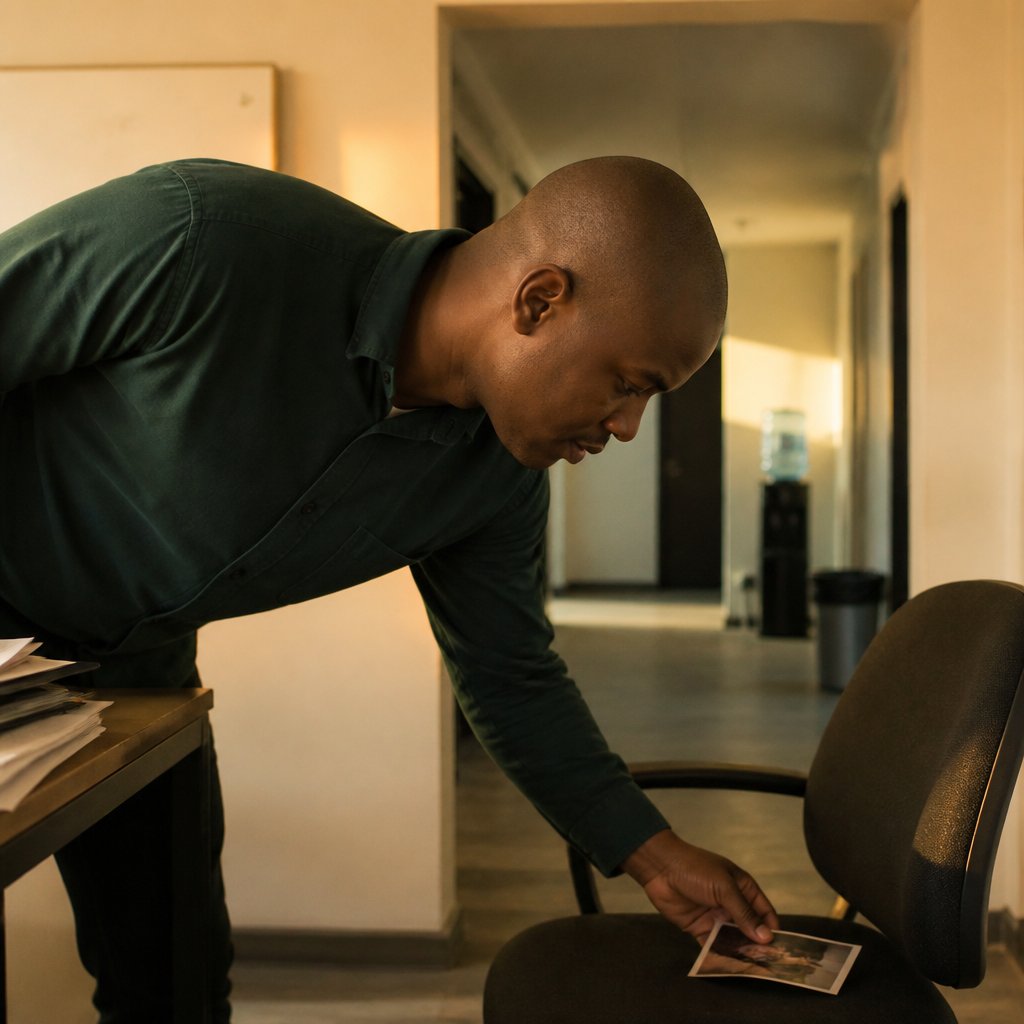
That morning, I found a printed still from one of the deepfake clips left on my desk chair. The paper was glossy and cold to the touch. Someone had written my name on the filename in sharpie. The quiet hum of the office printer echoed down the hall as I stared at the image. It was no longer just digital harassment—it had crossed into physical intimidation. My pulse quickened as I looked around, wondering who had left it and whether it was a warning.
IT Security Shuts Down Ticket

I opened a ticket with IT Security to investigate the harassment and preserve logs. Within an hour, it was closed with a note calling it a "user training issue." The quick shutdown felt coordinated, like someone was making sure the trail disappeared before I could push further. The click of the office door closing nearby echoed as I read the update. It was clear that official channels weren’t going to help me find justice.
I Catch Darren Smirking
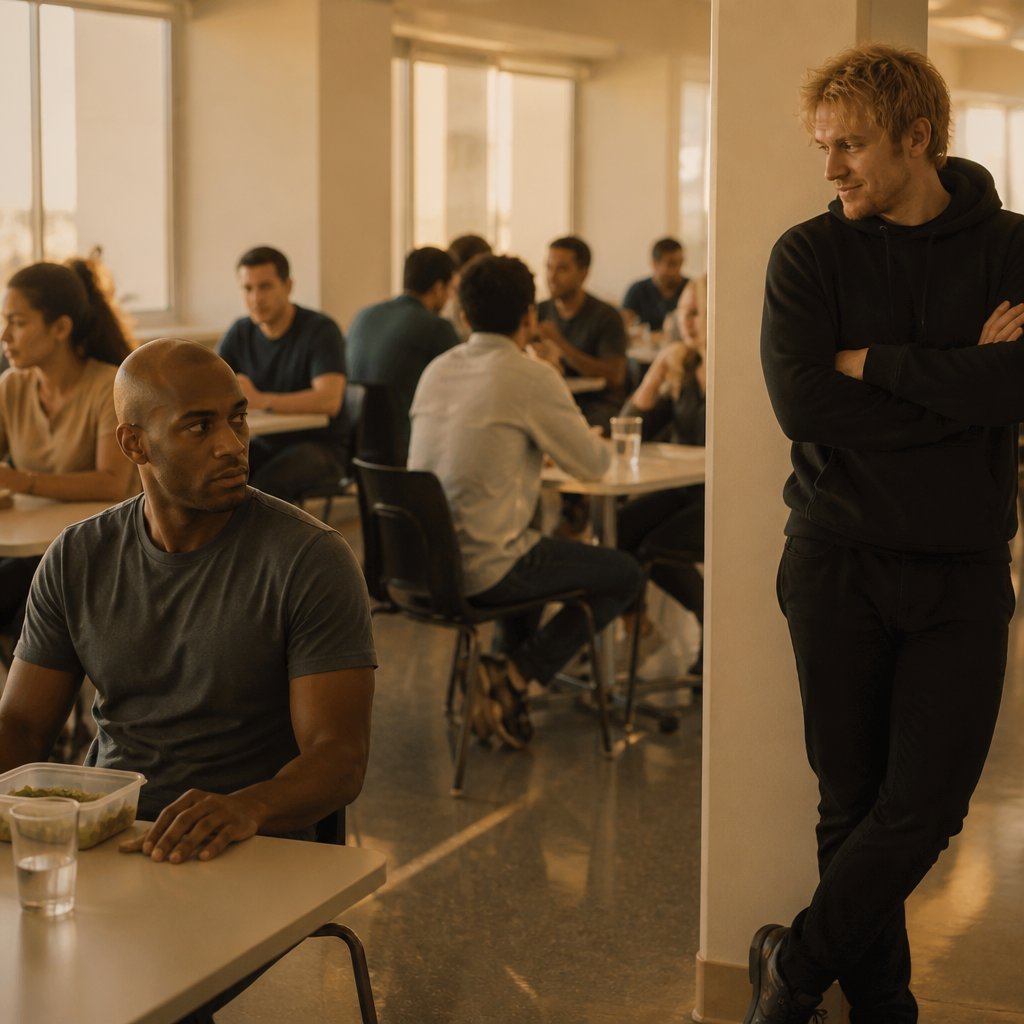
During a team lunch in the cafeteria, my phone buzzed quietly on the table. I glanced up and caught Darren, a white guy with messy blond hair and a smirk, staring at me from across the room. He had on a black hoodie and jeans, leaning casually against a pillar. The corner of his mouth twitched like he was enjoying some inside joke. My stomach tightened. Suddenly my suspicion wasn’t vague anymore—it was focused on Darren as a likely source of the harassment.
Shared Drive Has ‘Memes’ Folder
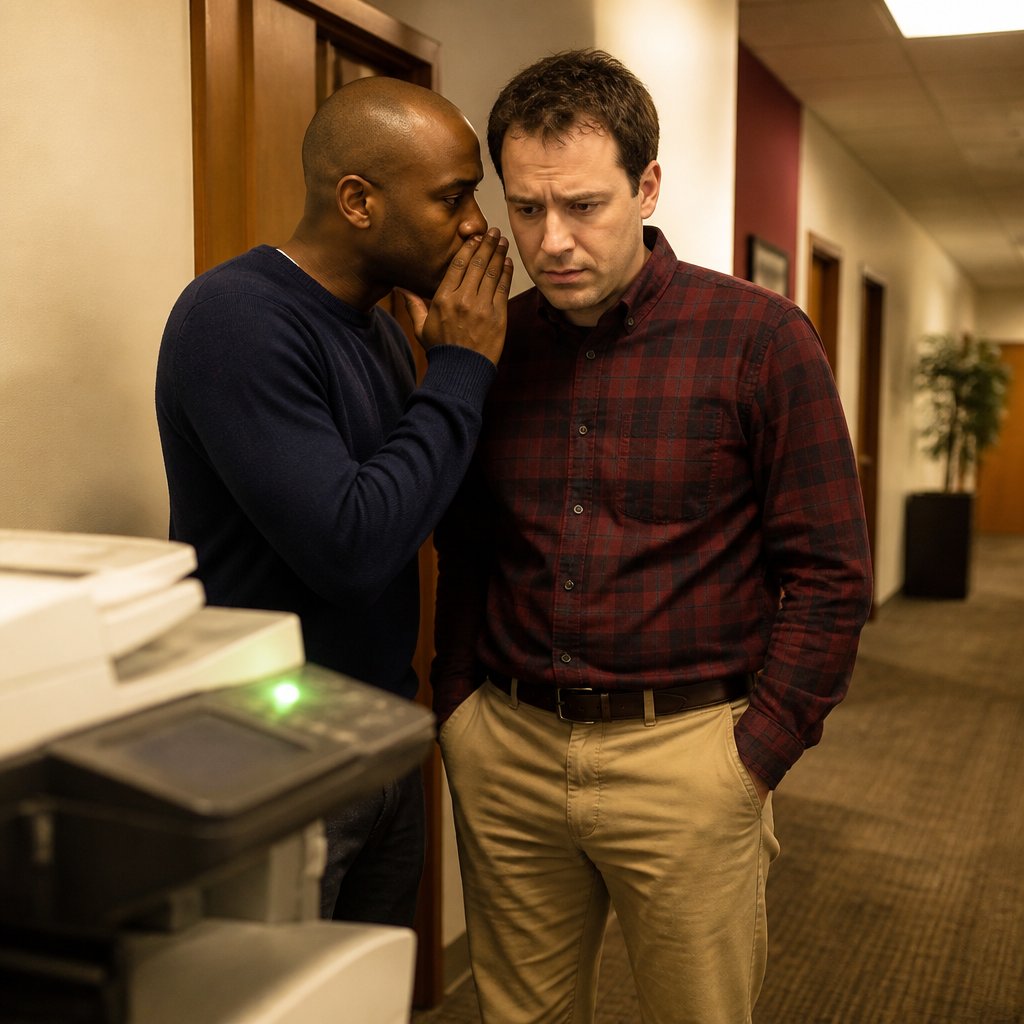
A coworker whispered to me at the copier station. "Darren’s been showing people a shared drive folder called ‘memes.’" He wore a dark red flannel shirt and khaki pants. The sterile click of the copier filled the pause as I processed the words. If company systems were being used for this harassment, it meant the problem was even harder to control. It also meant Darren had help or at least unchecked access to keep spreading the abuse.
Access Denied To Shared Drive

When I tried to open the shared-drive path to the ‘memes’ folder, I was met with an “access denied” message. My permissions had suddenly changed overnight. The cool plastic of my office chair creaked beneath me as I slammed my fist down, the room silent except for the muffled click of keys from distant desks. It was obvious someone was actively blocking my attempts to see the contents, shutting me out of the digital trail I needed to prove what was happening.
Sudden Desk Move Near Closet
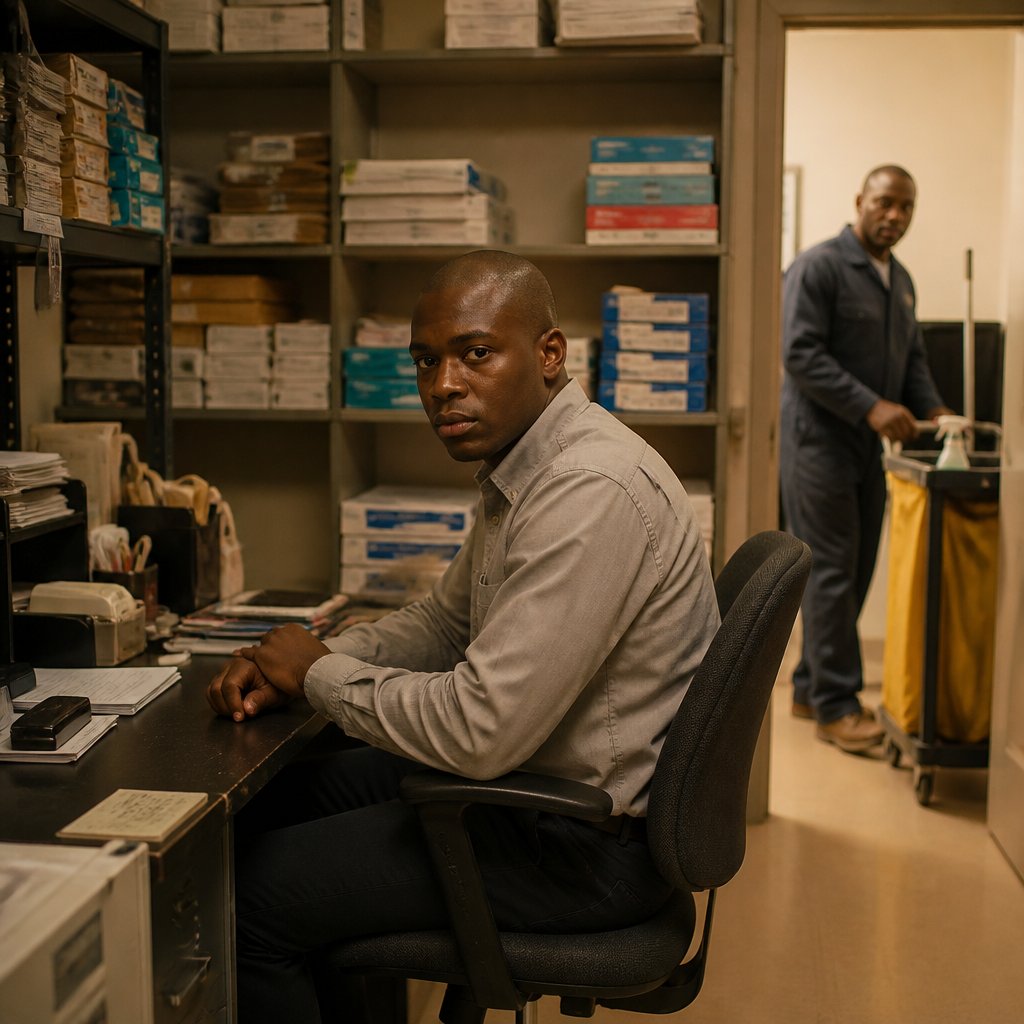
One Monday morning, my manager called me into his office with a tight smile. He said I needed to be "less distracted" during client calls, so they were moving me away from the main team area. I had no say. By the afternoon, I was packing up my things to sit at a cramped hot desk wedged near the supply closet. The air always smelled faintly of paper and toner. The door rattled every time someone grabbed folders, making it impossible to focus.
My calendar was updated too. All future client calls were reassigned to other team members. No explanation beyond vague references to "team dynamics." It felt less like support and more like isolation. Other employees avoided the area, casting uneasy glances. I caught a janitor watching me suspiciously as he wheeled his cart past.
I asked my manager if this was disciplinary or temporary. He replied, "It's about reducing distraction." The phrase felt like a mask for punishment. I had no recourse and no clear timeline. Sitting there, I realized the retaliation wasn’t subtle anymore, just poorly disguised.
Forced To Retell Explicit Details

HR arranged a meeting in a glass room on the third floor—blinds wide open to the hallway. I had to recount the humiliating deepfake content to two HR representatives and a silent observer. The words stuck in my throat but I said them anyway, trying to keep my voice steady while describing explicit scenes and the humiliation they caused.
The glass made me feel exposed, like an exhibit. People walked by outside, visible but unaware of the spectacle inside. I caught the faint scent of stale coffee mixed with the faint antiseptic smell in the room. The HR rep scribbled notes and asked me to be precise. My cheeks burned under the gaze of the observer, who didn’t say a word but watched intently. I wanted the whole thing over, but they kept prodding for more details.
When I paused, one of the HR staffers said, "You need to be thorough so we can understand the impact." The blinds never closed. I wondered if anyone outside was watching, hearing, even laughing. This wasn’t just investigation; it was humiliation on display.
Written Up For Speaking Up

After the meeting, I told HR I needed time to process and that the tone of their questioning felt accusatory. They didn’t take it well. A few days later, I received a formal write-up. The reason: "unprofessional tone during discussions." I read the document twice, disbelief growing. My complaints about harassment were twisted into a disciplinary record.
The write-up sat in my personnel file now, a black mark for something I hadn’t done. I met with my manager, who gave a noncommittal shrug and said the company was "maintaining standards." The words felt like a leash tightening. I wore a white shirt and jeans that day, trying to appear calm, but inside I was simmering.
Other coworkers avoided eye contact when I passed. I caught the faint smell of someone's lunch—curry—wafting from the break room as I walked down the hall, but the warmth didn’t reach me. My attempts to raise the issue were turning into proof I was the problem.
Badge Access Suddenly Denied
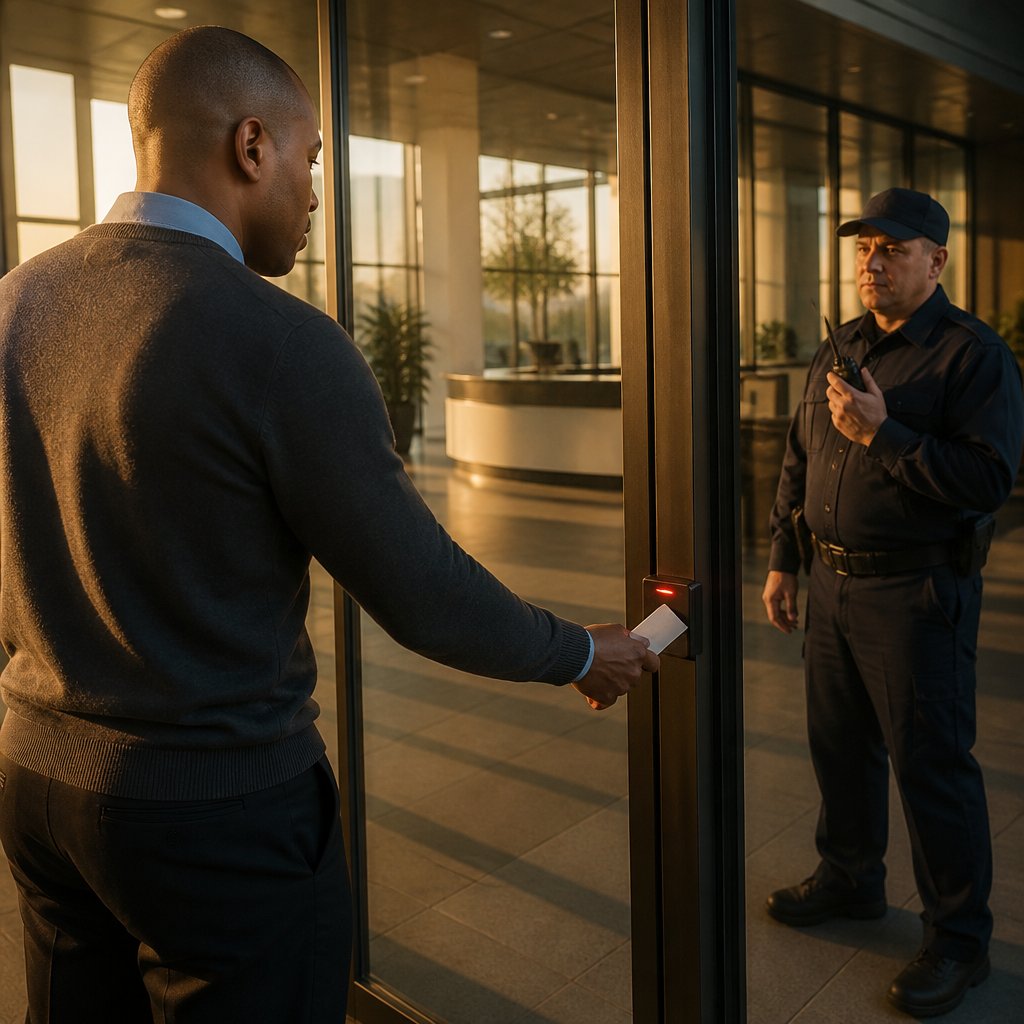
One morning, I swiped my security badge to enter the main office wing. The reader beeped red, a harsh buzz filling the quiet lobby. The security guard at the desk shook his head. "Access was adjusted by request," he said quietly, scanning the badge again with a scanner.
I felt a cold wave of disbelief. No warning, no notification. Who would request this? I showed my ID, waited while he made a call. "Sorry, buddy," he said. "I can’t override it. You’ll have to use the side entrance."
Walking around the building, the scent of freshly brewed coffee from the nearby café couldn’t lift my mood. The side door had an old, worn mat and was poorly lit. Passing by, I noticed a few coworkers glancing over, whispering. The physical barrier was more than security—it was a statement. HR’s reach was deeper than I thought.
New Deepfake Uses Break Room Scene
A fresh deepfake video emerged, this time showing my face overlaid on someone filmed in the company break room. The video logo was altered to include the company emblem, making it appear like official footage. Rumors spread fast—"She made it at work," some whispered. The accusation stung because I never entered the break room during those hours.
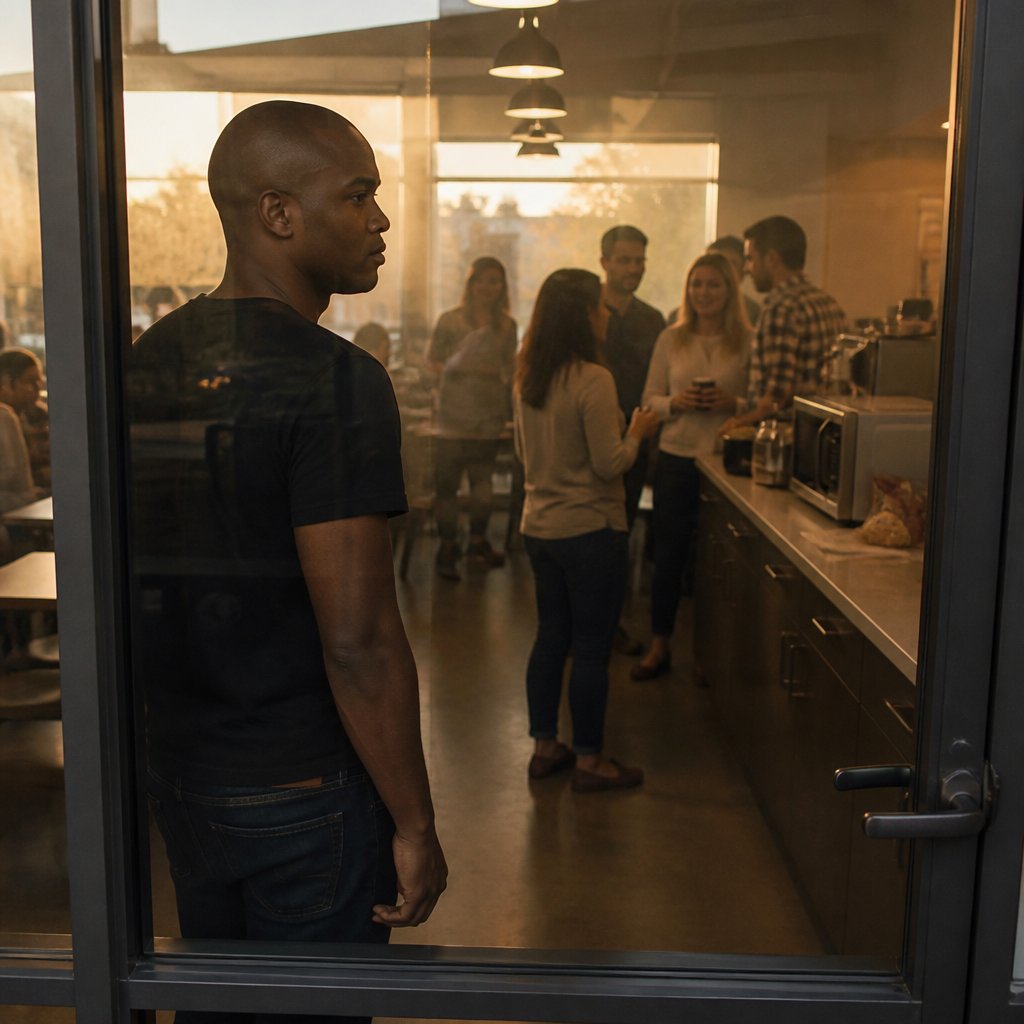
I walked past the break room that afternoon, wearing a black t-shirt and dark jeans. The faint smell of burnt popcorn hung in the air from the microwave. The usual chatter from coworkers stopped as I passed. I could see the coffee machine and the cluttered counter clearly through the glass door.
My manager avoided eye contact when I mentioned the video, and HR remained silent. The break room, once a neutral space, now felt like a staged crime scene. The malicious narrative shifted closer to home, making it harder to defend myself.
Facilities Blocks Camera Footage
I requested security camera footage from the break room and surrounding halls, hoping to catch someone tampering or entering suspiciously. Facilities responded coldly. They said HR had instructed them not to release any footage related to my requests. No exceptions.
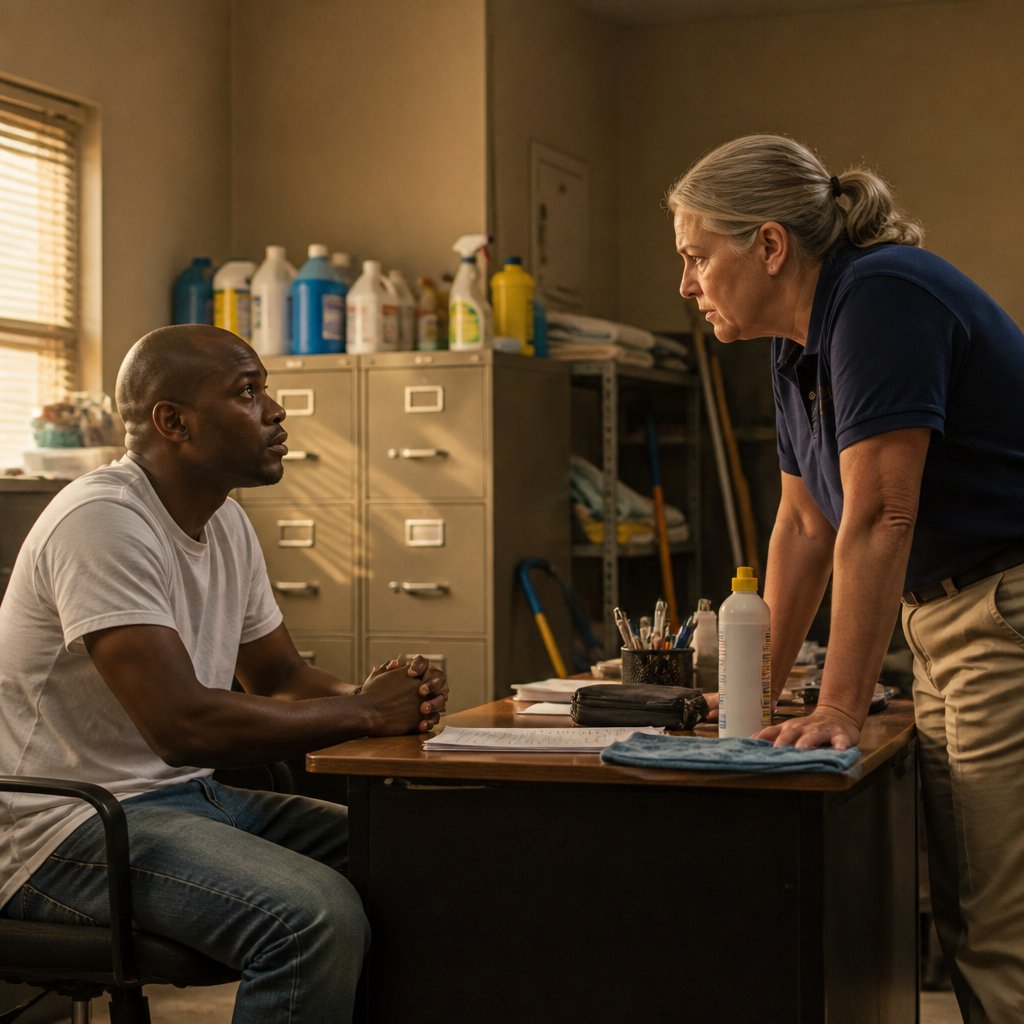
I went down to the facilities office, sitting across from the supervisor, a white woman in her 50s with steel-grey hair tied back, wearing a blue polo shirt and khaki pants. The cramped room smelled like cleaning chemicals and old coffee. She wouldn’t budge, repeating the same phrase: "It's company policy."
The message was clear—evidence suppression was official. I left with a sinking feeling. This wasn’t just about one person anymore; it was a systemic cover-up. I could almost feel the weight of erased footage hanging over me.
Discovery Hit Unexpected Barriers

After filing complaints with the EEOC and state agencies, the formal discovery phase began. I expected this to be the moment the company could no longer hide the truth. But early on, they claimed that critical logs—camera footage, Teams backups, email archives—were "unavailable." Every request came back with excuses: system errors, accidental deletions, or purges due to retention policies. Yet something didn’t add up. I suspected they were deliberately obstructing the process.
Then subpoenas forced their hand. Forensics experts uncovered tagged security camera footage that hadn’t been disclosed initially, along with deleted backups from the Teams platform. Most damning was an email from Marla, the HR manager, instructing IT to close the ticket related to my harassment report and avoid making discoverable notes. That email was a smoking gun for intentional cover-up.
I sat in a bland conference room, my hands pressed against the cheap laminate table. The faint hum of the air conditioning filled the silence around me, broken only by the rustle of papers. Despite all this, the company publicly insisted they had cooperated fully. But the evidence said otherwise, and I was pushing harder than ever.
Depositions Shift The Story

The depositions changed everything. Darren, the co-worker in the crosshairs, denied any involvement at first. He was calm, rehearsed. But when confronted with metadata from the machine that created the videos—tracing back to his work computer—and his badge logs showing he had exclusive access during key times, his story faltered. His eyes darted, voice cracked, but he stuck to his denials.
Meanwhile, a technician from IT admitted in her own testimony that she had done favors for HR. She described pressure from Marla to close tickets quickly, avoid documenting complaints fully, and shield certain employees from investigation. It was clear HR wasn’t just indifferent—they were actively protecting someone.
I remember waiting outside the glass-walled HR office after the session, the faint buzz of the water cooler in the background. The frustration was palpable. The company’s position was weakening, and soon they floated an offer: a lowball settlement with gag orders designed to silence me.
New Victim Joins The Fight
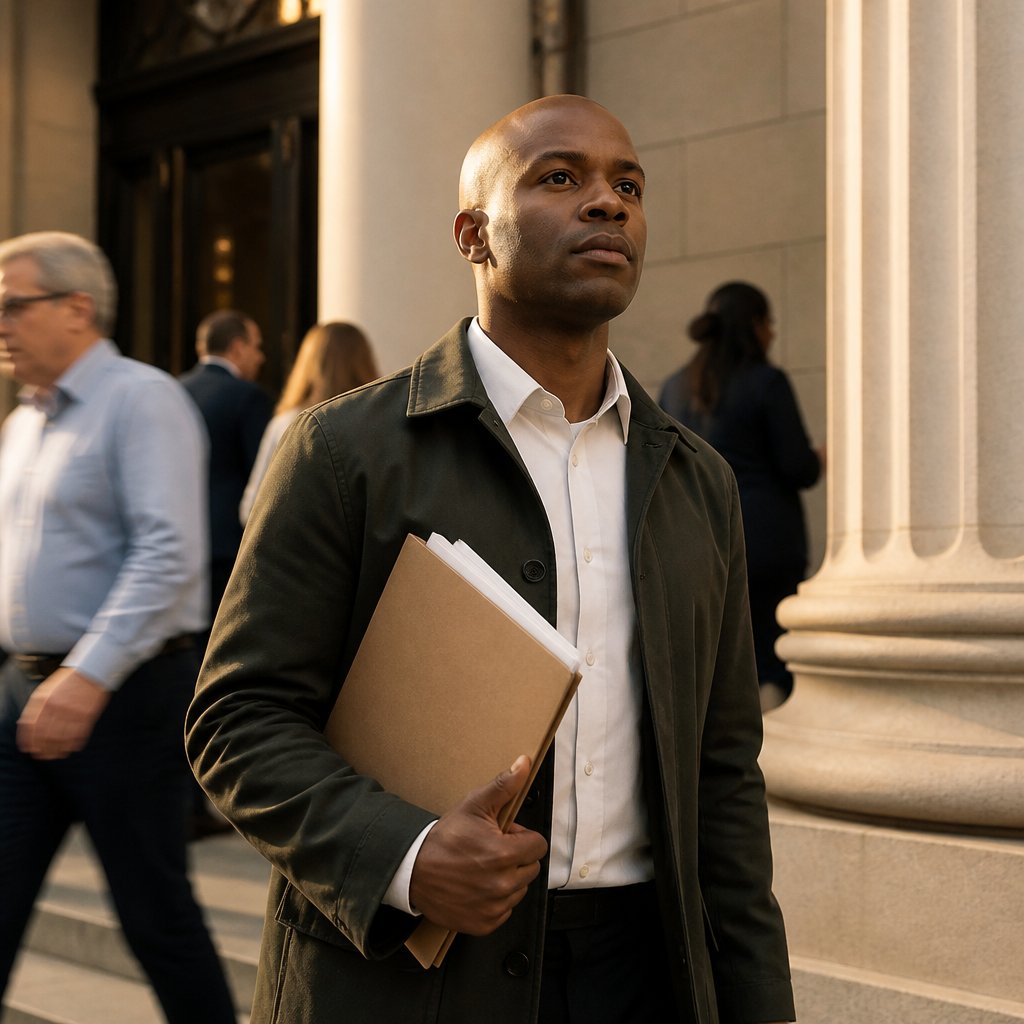
I rejected the low offer outright. Settling without justice wasn’t an option. Not long after, a second employee came forward with similar experiences—deepfake images and harassment using their face. Their courage rippled through the case, strengthening the claims and putting even more pressure on the company.
Then the judge got involved. She ordered the company to produce all records related to evidence retention and any content cleanup after receiving the complaint letters. The company scrambled but couldn’t fully hide the fact that some materials had been deleted post-notification. This risked sanctions and shifted the legal landscape sharply in my favor.
At the courthouse steps afterward, the cool wind stirred the papers in my hand. The judge’s words echoed in my mind: “Transparency is required.” The company’s scramble was visible, but they weren’t finished trying to control the narrative.
Mediation Brings New Leverage

The mediation session was tense. I came prepared with a binder meticulously organized with emails, badge logs, security footage tags, and clips from depositions. Laying these out on the table cornered the company representatives. Their earlier confidence cracked as executives shifted tone, realizing the evidence was overwhelming.
As I flipped through pages, a faint whiff of stale coffee from the conference room's air purifier mingled with the scent of printed paper. The lawyers’ faces were tight, exchanging glances. Negotiations reached a critical point, but the final terms weren’t settled yet. The company was buying time, trying to recalibrate their approach.
Despite the pressure, I felt the weight of responsibility. This wasn’t just about me; it was about holding a system accountable that had tried to silence and erase the harm. But would this leverage translate into a fair resolution?
The Final Badge Reveals Control

The final agreement arrived after weeks of back and forth. The settlement included a substantial payout, a neutral job reference, a rewritten harassment policy with mandatory training, an external audit, Darren’s termination, and Marla’s resignation. It felt like a victory on many fronts.
But then Security handed me a new exit badge. It was the same style and shape as mine but freshly issued. When I asked why, they told me my original badge had been quietly deactivated months ago without notice. That small act revealed how deeply they controlled the narrative—and how long they had tried to erase me from the workplace.
I held the new badge in my palm, its smooth edges cool against my skin. It wasn’t just a pass to exit the building; it was a stark reminder of the silent battle beneath the surface. The question lingered: even with the settlement, how much had really changed inside those walls?
Was HR justified in dismissing the deepfake incident quickly?