




New Hires Out-Earning Veterans

It started with whispers in the break room. Around the worn coffee maker and cracked laminate table, newer employees talked carefully about their pay. I caught fragments: how some of the fresh hires were pulling in numbers that made my jaw drop. People didn’t say it outright, not on any email or chat, but the rumors were thick enough you could almost cut them with a knife.
These were folks barely past orientation, while I’d been grinding here for nearly a decade. Yet no one wanted to say it out loud where management might hear. It felt like a secret everyone shared but nobody would put in writing. The tension hung in the stale air, mixing with the faint scent of burnt coffee grounds and unwashed mugs.
Posting Raise Numbers Publicly

I couldn’t let it slide. The silence felt like a wall built to keep the truth hidden. So I typed out the percentages I’d gathered—raise figures from recent cycles—into the #ops-general chat. It wasn’t much, just numbers, but it was enough to break the bubble.
I hit send and waited. The hum of the office computer fans filled the near-empty cubicle as I sat back, hands folded. People started replying. Some shared their raise info, others typed questions, and a few just reacted with emojis. The thread was alive, everyone cautiously opening up about salaries, comparing raises openly for the first time.
The break room buzz was now a digital storm. The air smelled faintly of old printer toner and stale microwave popcorn, mixing with the distant clatter of janitors cleaning nearby.
Screenshots Flood The Channel

The replies didn’t stop. Screenshots of pay stubs, raise letters, and handwritten notes poured in. People were risking a lot just by sharing. The thread was no longer casual talk—it was evidence. I realized the chat log could be used legally, in a labor dispute or HR complaint.
But that also meant I’d painted a target on myself. I felt the weight in my chest as the office noise faded into the background—the low hum of air conditioning, the tap-tap of keyboards, and the distant echo of footsteps down the hall. There was no turning back now; the conversation was public and official.
Manager Orders Thread Deleted

Then my direct manager slid into my DMs. The message was short and cold: "Delete that pay thread. Now." I stared at it for a long moment. I’d expected this reaction, but it still hit hard.
I typed back, refusing to budge. I asked what exact policy I’d violated, daring them to name one. The silence was deafening after that. There was a crackle of nervous tension in the shared office space—the smell of cleaning solution lingered faintly from the janitorial cart parked nearby.
It was clear they wanted control, but I wasn’t going to surrender control of the conversation without a fight.
Thread Disappears, Permissions Flip

Suddenly, the thread was gone. Like it had never existed. I refreshed the channel twice, then tried again. The messages were erased, and permissions on the channel had changed. I couldn’t post or even react anymore.
Curious, I checked the admin logs quietly later that day. The deletion traced back to an account labeled as HR admin—not my manager’s personal profile, but something more official. The hum of the server room buzzed faintly through the thin office walls as I digested what it meant.
This wasn’t just about silencing me; it was a coordinated effort to erase the record.
Dana Sends Ambiguous Meeting Invite

Later that afternoon, Dana sent out a meeting invite with no agenda. Just “Policy Reminder” in the subject, held in HR-2B. The tone felt scripted—too vague to prepare for but clearly not casual.
No emails hinted at what was coming. I glanced around the office as I walked by, the faint scent of disinfectant and lingering printer ink filling the air. A few coworkers looked equally uncertain, their faces guarded but curious.
The meeting felt like a trap. Everyone knew that when HR summoned you with cryptic titles, it rarely ended well.
Why I Started Collecting Proof

After that meeting, I couldn’t shake the feeling that the story was already being rewritten behind my back. I started keeping careful records—screenshots of chat threads, audit logs showing who deleted what and when, even invite metadata from calendar events where these topics were discussed. Every detail mattered. I thought about the break room chatter, the whispered office rumors, the quiet looks from coworkers when I passed by. It all felt like part of a wider campaign to shift the narrative about what had happened.
I spent late nights compiling these pieces, knowing that if I didn’t, I’d be at the mercy of whatever version management pushed. It wasn’t just about saving my job anymore; it was about having proof if they tried to spin the story or blame me for policy violations that didn’t exist.
The hum of the fluorescent lights in the otherwise empty conference room echoed as I scrolled through deleted messages marked only by the faintest timestamp, each one a missing puzzle piece. I realized I wasn’t just fighting for myself; I was fighting to expose the truth before it disappeared completely.
IT’s Sudden Permission Cleanup

The next morning, I found out IT had cut off my access to several key dashboards without warning. They called it a "permission cleanup," but I knew better. These were the tools I used daily to track project progress and team performance. Suddenly not having them made me look unprepared and incompetent in meetings. I emailed IT for explanations but got vague, canned responses.
When I went to the break room, the hum of the coffee machine was oddly loud compared to the silence between coworkers. Nobody met my eyes. The access restrictions felt less like maintenance and more like a setup. It was as if they were quietly removing my ability to do my job, piece by piece, without telling me.
I tried to log into one dashboard during a team meeting, but the screen just flashed an error. The jaws of the room tightened around me in that moment, and I could feel the weight of their watching eyes. My ability to contribute was being sabotaged—and I was powerless to stop it.
Written Warning Without Evidence

A few days later, Dana called me into her glass-walled office. She handed me a formal written warning. The document cited the deleted pay discussion thread as the reason for discipline. But when I asked to see the evidence, she said it wasn’t available because the messages had been deleted.
Dana wore a navy blazer over a white blouse, her expression unreadable. The hum of the building’s air system filled the room as I tried to grasp how they could penalize me based on evidence I couldn’t even view. It felt like a trap—punished for something they erased before I could defend myself.
I left her office, the warning letter heavy in my hand, realizing this was the beginning of a deeper campaign against me. The rules weren’t just being enforced; they were being rewritten on the fly to fit their narrative.
HR’s Refusal To Explain Rules

I scheduled a meeting with HR to understand what policy I had allegedly violated. Instead of answers, I got vague statements. They kept saying, “We don’t debate policies.” When I pressed for specifics, they wouldn’t point to any rule banning pay discussions.
The HR representative, a woman with shoulder-length black hair wearing a dark green cardigan, sat behind a plain desk cluttered with files and a half-empty water bottle. The hum of the office printer punctuated the silence as I repeated my questions, growing more frustrated with each non-answer.
It dawned on me that HR wasn’t just dodging the issue; they were quietly building a retaliation file against me. The refusal to clarify gave them the cover to claim policy violations while shutting down any challenge I made.
Coworkers Suddenly Distance Themselves

After the “policy reminder” meeting, I noticed the atmosphere around me had shifted. Coworkers who once exchanged friendly greetings now avoided eye contact or hurried past. Some admitted quietly that managers had “checked in” on them, asking about their conversations with me.
One afternoon in the small break room, the faint smell of burnt popcorn lingered as I overheard two teammates whispering and glancing over their shoulders. They talked about how afraid they were to be associated with me now. The name I carried around the office felt like a warning sign.
This sudden isolation was as deliberate as it was painful. The company was quieting the chorus of voices that might have supported me, and I was beginning to realize how expertly they were playing the game of fear and silence.
Impossible Performance Metrics Assigned

A Performance Improvement Plan landed on my desk one morning, dated a full week before the pay thread incident. The targets it laid out were impossible—unrealistic deadlines, metrics no one else was held to. It felt like the timeline itself had been altered to justify the punishment.
I sat in my small cubicle, the faint smell of old pizza from the neighboring desk lingering in the air. The weight of the PIP felt like a noose tightening around my work. I kept rechecking the dates and numbers, my mind racing to understand how this could have been prepared before the issue even happened.
It was clear now: they were retroactively constructing a case against me, distorting history to make their claims stick. The rules weren’t just vague; they were being bent to crush me.
Metadata Exposes Retaliation Plot

During a tense HR meeting, I managed to sneak a look at the PIP PDF’s metadata and filename. It was labeled “PIP_template_final2” and showed creation dates after my pay chat post—definitely not before. When I pointed this out, the room fell silent. HR abruptly ended the meeting.
The small conference room smelled faintly of cheap office coffee, and the quiet was deafening. The HR reps avoided my gaze as I held up the printed metadata details, my heart pounding. Their sudden retreat spoke volumes more than any apology or explanation ever could.
This confirmed my worst fears: the documentation was forged after the fact to justify their retaliation. They were manipulating files and timelines to build a case against me, and I was running out of ways to fight back.
Security Checks My Badge Relentlessly
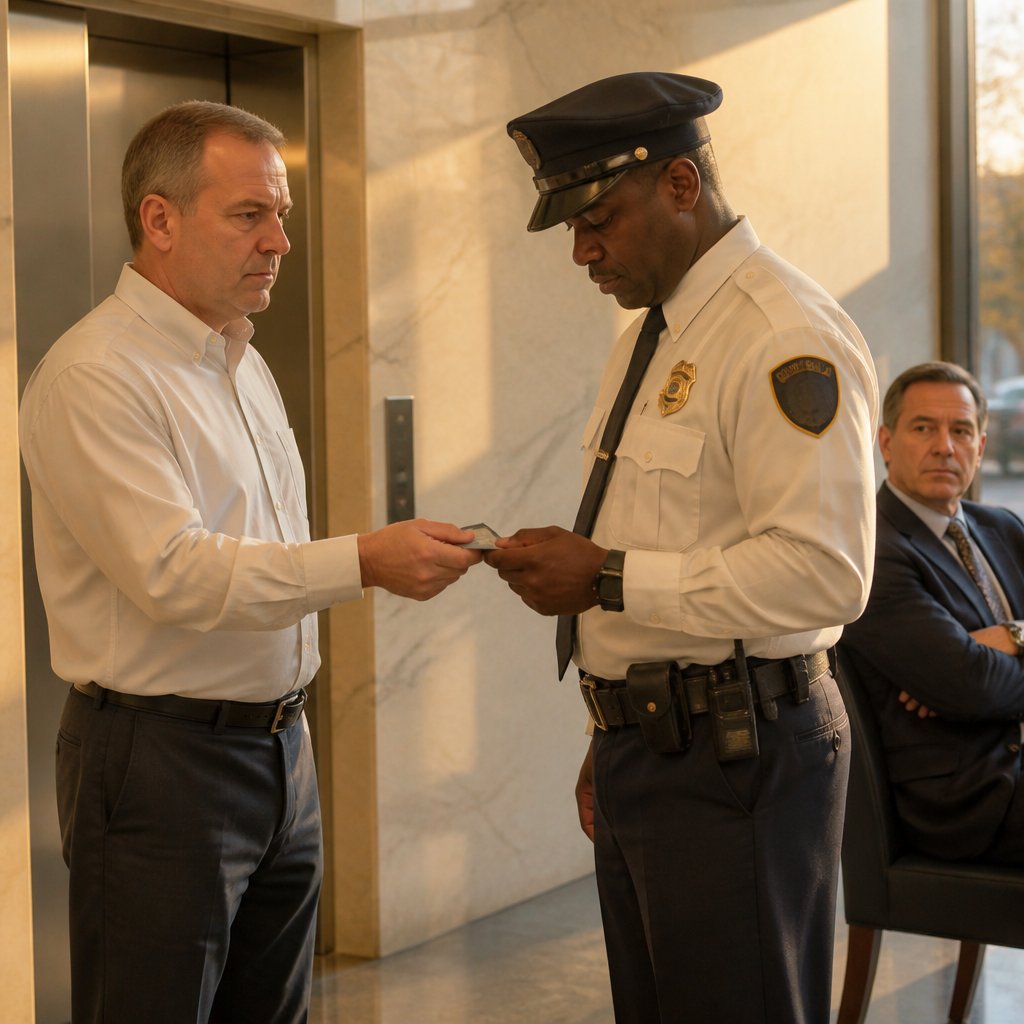
From that day on, security started double-checking my badge every time I tried to use the elevator. The guard scanned it slowly, eyes narrowing as if waiting for it to fail. It was the same VP who’d glared at me during a meeting about “misinformation” that week, sitting stiffly across the table.
I waited in the sterile lobby, the faint scent of disinfectant assaulting my senses, watching my badge struggle to get through the reader. Each beep felt heavier, like a countdown to exclusion. The VP’s cold stare lingered in my mind, a reminder that this was no longer about performance—it was personal.
My access was being stripped away piece by piece, and the quiet humiliation was designed to isolate me completely. I realized that the fight was far from over, and even the simplest act of moving through the building had become a battleground.
HR Prepares For Litigation Early

Before I’d even raised any formal complaints, HR quietly asked IT to export my Slack and email data under "litigation hold" terms. I found out through a trusted coworker. It was clear they were preparing a defense before any accusations were publicly made.
In the small, windowless HR office, the faint smell of toner from a freshly printed report filled the air. The HR rep wore a crisp white shirt and looked dispassionate as she spoke in vague terms about compliance. I realized they were playing chess several moves ahead, anticipating my actions and trying to box me in legally.
I felt boxed in and outnumbered. Their preemptive moves told me this wasn’t about rules or policy—it was about controlling the narrative and silencing dissent before I could take any action.
Badge Stops Working, Locked Out

After my internal retaliation complaint got dismissed, my badge stopped working entirely. One morning, I found myself stuck in the lobby, the automatic doors locked behind me. Security treated me like a trespasser, checking my ID again and again.
The sterile lobby smelled of floor cleaner as I stood there, confused and humiliated, while a security guard held my badge close to the reader, waiting for it to turn green. Around me, employees passed without a glance, their footsteps echoing against the marble floor in sharp contrast to my frozen stillness.
I realized then that this was no accident—it was the final push to shut me out completely. I wasn’t just isolated anymore. I was being locked out in every sense, and I had no idea what would come next.
Fired In A Cramped HR Office

I was called into a tiny HR office, the kind with a single fluorescent light buzzing overhead and peeling beige paint on the walls. Dana, the HR director, sat stiffly behind the small desk, her eyes cold. Next to her was a man in a dark suit—outside counsel. They didn’t waste time. Dana opened a laptop and read from a script. They said I’d violated company policies and were terminating my employment effective immediately. Then Dana slid a severance release document across the desk, thick and official-looking, demanding I sign it today, the same day. I stared at the paper, the official tone of it, the suddenness of it all. My hands were clenched tight in my lap, the room smelled faintly of stale coffee and cleaning spray. They said this was the best option for all parties. I wanted to argue, to explain, but I was already cut off. I glanced out the tiny window by the door; the hallway was empty, no one to hear me. The weight of the moment pressed down, and I realized this was the last conversation I’d have in that building. Yet, something about the severance offer didn’t feel right, but I didn’t know exactly what. The laptop screen glowed dimly to my left, reflecting the hard lines of their faces and the harshness of their words.
Screenshots Kept Me Fighting

Back home, I sat at my kitchen table, the silence thick around me except for the hum of the refrigerator. I pulled out my phone and, for the first time since leaving, looked at the screenshots I’d taken of the pay discussion thread. The evidence was still there, safe. As I scrolled, a chill ran through me—these messages were proof I hadn’t broken any rules. I opened my laptop and started the filing process with the NLRB. The forms felt cold and bureaucratic, but this was my lifeline. Then, out of nowhere, a letter arrived—company counsel demanding I destroy all evidence related to the discussions. It was threatening, formal, and clear: "Cease and desist." My hands trembled slightly as I held it. Later, rumors spread among coworkers; whispers that the company lawyer warned them not to talk about anything related to me or the pay thread. I could almost hear the fear in their voices, and I wondered who else was being silenced. The quiet tension was suffocating. I realized I was fighting alone now, but with these digital fragments in my possession, I had a chance. Yet, how far would they go to make sure no one spoke? The scent of burnt coffee lingered faintly from the mug beside me, untouched.
Performance Claims And Hidden Emails

The company challenged my charge by spinning a story about my performance and hostile conduct, painting me as the problem. They scrubbed my personnel file, wiping out references to the pay chat discussions. I requested all internal communications, and after a long wait, I got a crucial email—the kind you don’t expect to find. It instructed HR to “cite performance—don’t mention the pay chat.” The message was clear: they were covering their tracks. Holding the printout, I felt a mix of relief and anger. The email was typed on a generic office letterhead and showed a timestamp from a few days after my discussion. The office where I reviewed it smelled faintly of paper and toner. This proof shattered the company’s story, but I knew they’d deny everything. The battle lines were drawn sharper now. I wondered if anyone in HR was uncomfortable with the orders or if everyone was just following scripts. The printed email’s edges were slightly curled from being carried in my briefcase, like a secret I wasn’t sure I wanted to carry anymore. The tension thickened, and I sensed the fight was far from over.
Threats Over Pay Discussions

During the hearing, several coworkers came forward to testify. They described being warned by HR that discussing pay publicly could lead to termination. One recalled a tense break room meeting where an HR representative emphasized that such conversations were against company policy. Yet, the judge pointed out a glaring inconsistency: the written policy prohibiting pay talk wasn't posted until after I was fired. That raised serious questions about whether the policy was retroactively applied to justify my termination.
The lawyer for the company struggled to explain why the break-room policy notice appeared only recently. I sat quietly, feeling a mix of vindication and uncertainty. If the policy was crafted after my firing, it suggested the company was scrambling to cover their tracks. But who else in management knew? Who had ordered the post-firing policy update? The judge seemed to sense the murkiness here too.
As the testimonies wrapped up, the judge mentioned the decision would come soon. The tension in the room thickened. It felt like a waiting game, and the unknowns remained many. Did the testimony sway the outcome? Would the company’s strategy unravel? I was left wondering what would come next.
NLRB Rules Against Company

Weeks later, I received the official ruling from the National Labor Relations Board. They found the company's rules against discussing pay unlawful. They confirmed that my termination was retaliation for protected concerted activity. The decision ordered the company to reinstate me, provide back pay, and post a public notice to all staff acknowledging the violation. It felt like a major victory, but I knew the fight wasn’t over.
True to form, the company immediately filed an appeal. They sought to delay compliance, hoping to drag the process out and avoid the public admission of wrongdoing. Their legal team sent a series of formal letters to the NLRB arguing procedural points. Meanwhile, the notice remained absent from the break rooms and hallways. I walked past the empty bulletin boards every day, the silence a reminder that the company resisted accountability.
Despite the delay tactics, I remained determined. The ruling was clear. The company’s retaliation and illegal rules left no room for negotiation. But with the appeal in motion, the path forward was suddenly less certain. How long would the stall last? Would they ever actually post the notice?
Quiet Settlement Offer Made

About a month after the ruling, my lawyer called with an unexpected update. The company wanted to settle quietly. Their offer included a confidentiality agreement and a no-rehire clause. Essentially, they wanted to pay me off in exchange for silence and no future employment. That felt like an attempt to bury the story and erase the consequences.
I thought about the implications. Accepting meant I’d lose the chance to expose the company’s wrongdoing publicly. It also meant no reinstatement, no apology, and no official notice to the staff. I told my lawyer to reject the offer unless the company agreed to post the NLRB notice and officially rescind the unlawful rule. The stakes were higher than my personal settlement.
My refusal sent ripples through the legal backchannels. I wondered if the company anticipated my response or if this was just the beginning of another prolonged battle. The silence on their end was unsettling. Would they come back with a better deal? Or dig in their heels for a fight? I watched the clock, knowing the next move could change everything.
Notice Appears By Microwave

One morning, walking past the break room, I noticed something new. A printed NLRB notice was posted by the microwave, taped neatly to the bulletin board. For the first time since the ruling, the company had complied, publicly admitting their illegal policies and retaliation. It was a small but significant victory.
Shortly after, an all-staff email went out restoring the right to discuss pay openly. The message was carefully worded but unmistakable: the company admitted wrongdoing in writing. Coworkers who had stayed silent started to speak up, their cautious expressions softening. The atmosphere shifted, even if uneasily.
Despite this compliance, the tension lingered. Who within management authorized the notice? Would the company truly change their culture? And what about the fallout for employees who had helped me? The victory felt fragile, as if the story wasn’t over yet.
Was the company's response to the raise inquiry justified?