



The Gate Was Open Again
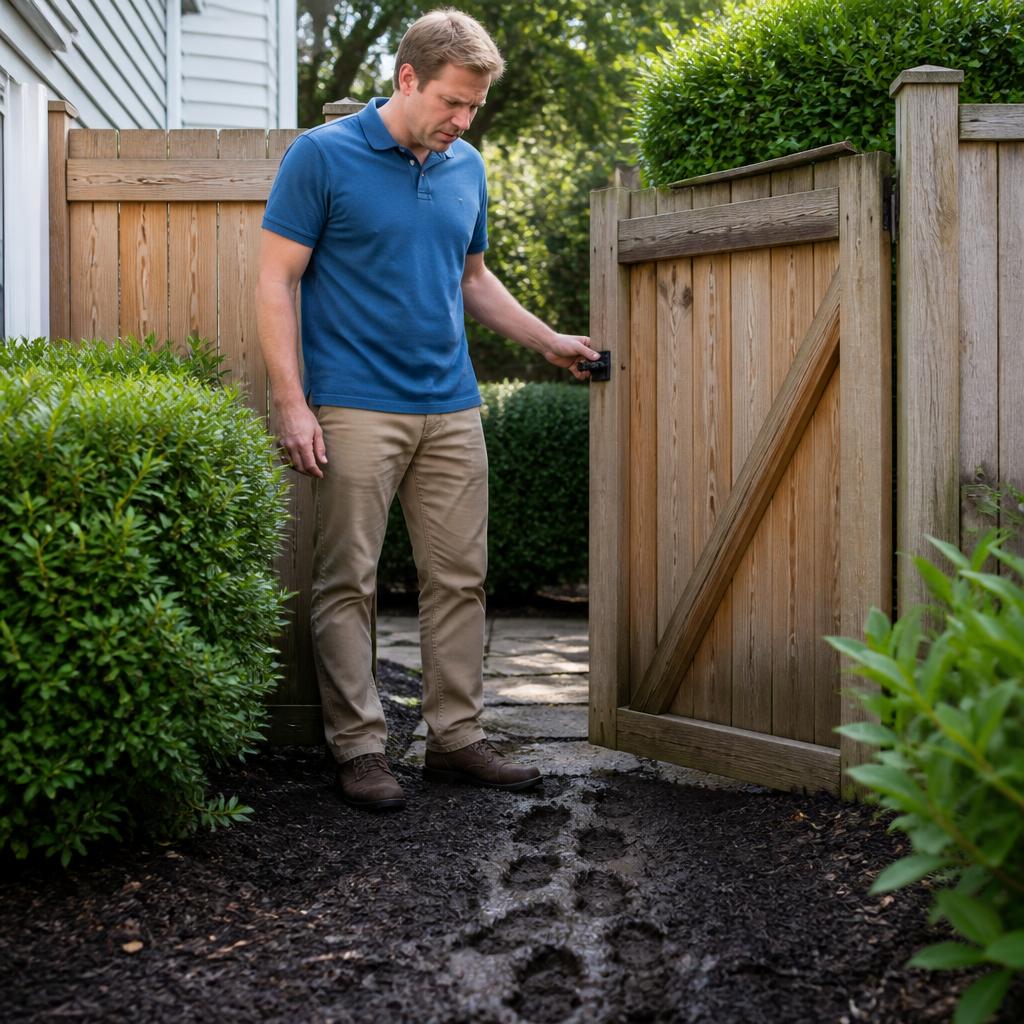
It was the fourth Tuesday in a row when I noticed the side gate was unlatched again. I stepped outside and saw fresh boot prints pressing into the dark mulch along the side yard. The prints showed a familiar tread pattern, one I had come to recognize over the past few weeks. Someone was coming through regularly without asking. I checked the latch carefully; it hadn’t been a careless oversight. The gate was closed but not secured, as if left open deliberately. My shrubs bordering the walkway showed slight trimming marks that hadn’t been there a day before. That small corner of my property starting to feel less like mine.
The air smelled faintly of damp earth and pine from the nearby trees, but the presence of those boot prints brought a chill that wasn’t from the weather. It looked like whoever it was had a routine on Tuesdays. I hadn’t been able to catch anyone in the act yet, but the evidence was piling up. I had to figure out who was entering my yard, why, and on whose authority.
Security Footage Reveals Rick
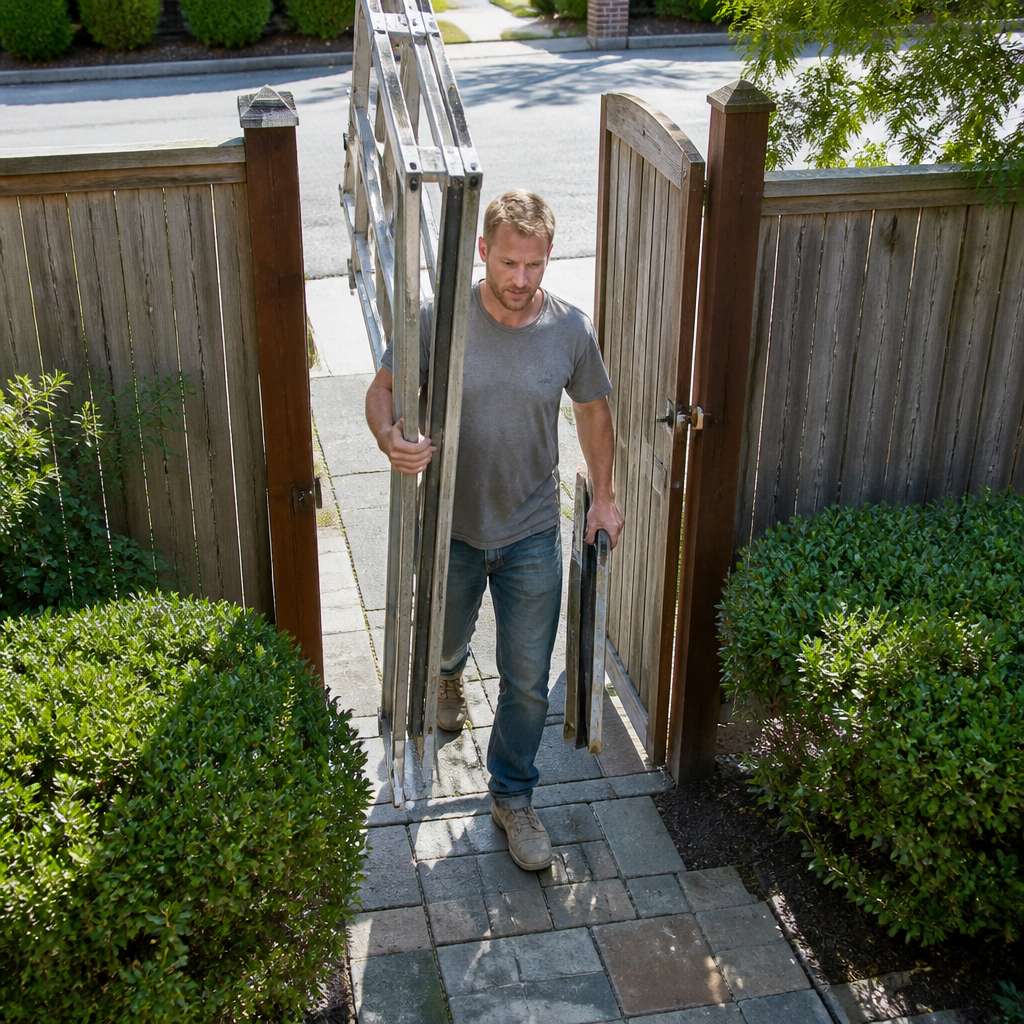
I finally managed to get hold of some security footage from the front porch camera covering the side gate. Watching it gave me a sinking feeling. The man stepping through the gate was none other than Rick, the contractor hired by my neighbor Mark to fix his siding. He was carrying a long ladder and some panels, moving deliberately into my yard without hesitation. Rick wore a faded grey t-shirt and jeans, the kind of work clothes a contractor would wear on a humid spring afternoon. He didn't even pause to check if the gate was open; he just unlatched it and stepped inside.
Up close, you could see sweat dots on his forehead and dirt smudged on his hands. His face was calm, almost casual, as though he had permission to be there. The camera angle showed the side yard clearly, including my trimmed shrubs and the pavers that led up to the siding. Rick carefully set down his ladder right on my stone walkway. I watched the video over and over, disbelief growing. This wasn’t a one-time mistake; it was a routine.
Rick Claims Mark’s Permission
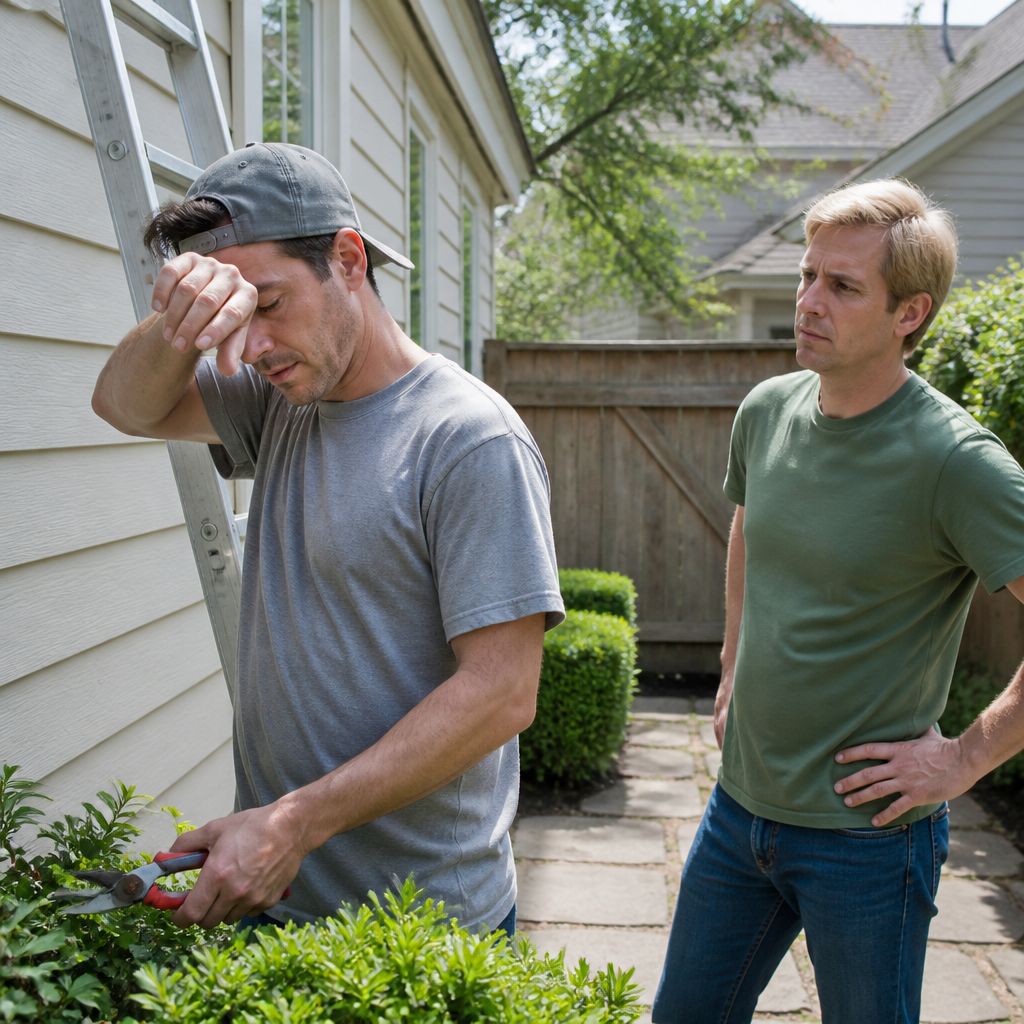
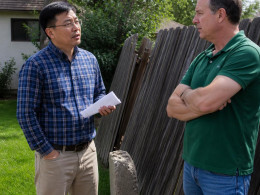
Later that day, I confronted Rick as he worked near the siding. He was wearing a baseball cap turned backward and had a hammer tucked into his belt. I asked him firmly why he kept entering my yard without permission. He paused and shrugged, wiping sweat from his brow. "Mark said it’s fine," he said casually. His tone was dismissive, as if Mark’s word was a universal pass.
Rick didn’t seem to understand that my property was not a public space or an implied easement just because Mark wanted repairs done. He continued setting up his ladder against the wall, stepping lightly onto my pavers and trimming back a corner of a bush without asking. His boots made a faint crunch on the small gravel near the fence line. It felt like I was invisible, as if my requests or boundaries didn’t matter to him.
His attitude suggested he thought permission was transferable or that Mark’s desires overrode my property rights. I could feel the tension rising but didn’t want to make a scene in front of the workers. Still, I knew I had to make it clear this wasn’t acceptable before things escalated further.
Mark Sends A Defiant Text

I received a text from Mark that afternoon. His message was short but packed with legal jargon: he called it an "emergency" repair and claimed he had a "right to repair" the siding. Mark’s tone was authoritative, implying that the law was on his side and that I was overreacting. My phone lay face down on the kitchen counter as I read and reread his words, the faint smell of fresh coffee lingering nearby.
Mark’s insistence that he had a legal right to enter my property ignored several points I had raised about property boundaries and notice. The phrase "right to repair" sounded like a shield he was wielding to justify repeated trespass. I felt my frustration build; the situation was becoming less neighborly and more adversarial.
The kitchen felt smaller and more claustrophobic as I tried to think through my next steps. I knew I needed to respond carefully, but Mark’s confident tone made me wonder if he planned to push harder. The question was whether he really had a legal basis or was just bluffing.
Note On The Gate Vanishes
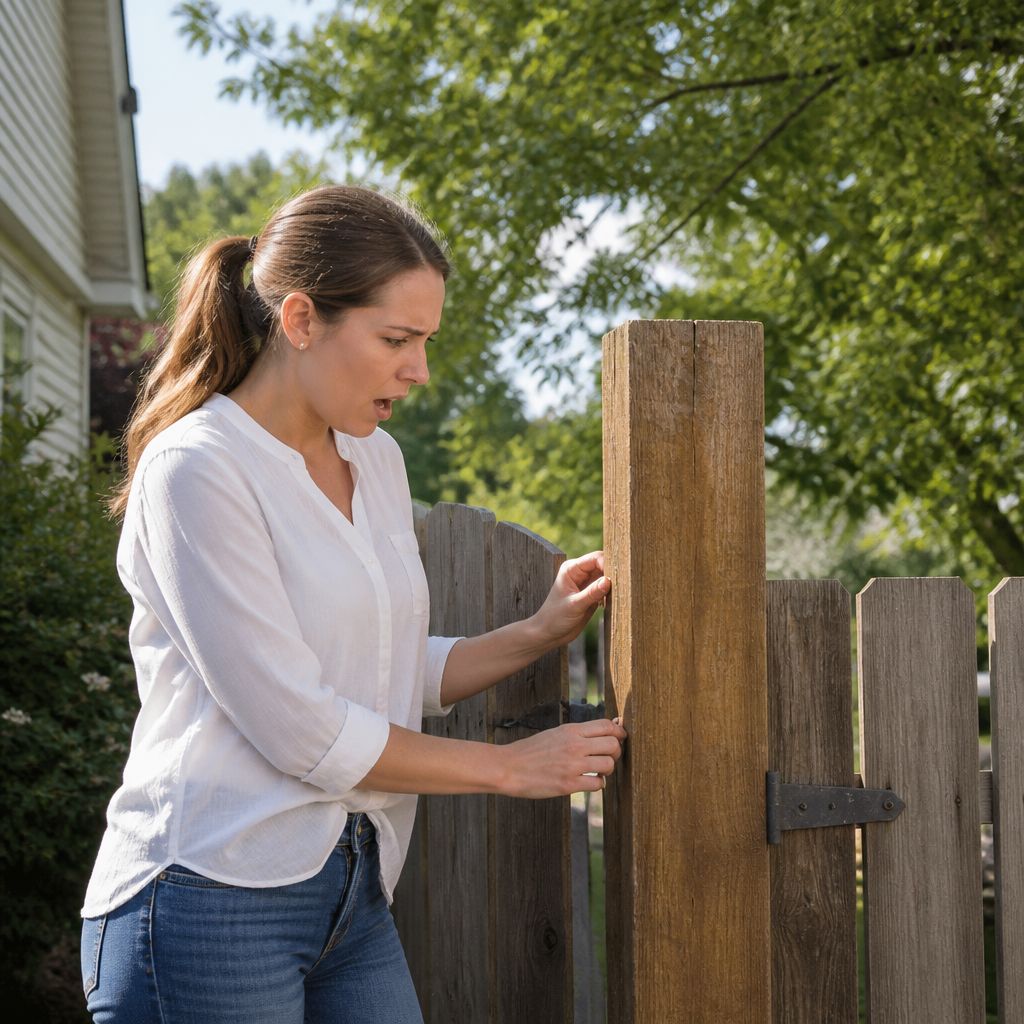
Jenna, my partner, decided to act. She printed a clear NO TRESPASSING / CALL FIRST notice on a sturdy piece of cardboard and affixed it firmly to the side gate with weatherproof tape. The sign was bold but polite, a straightforward request to respect our property rights. I watched as she pressed the corners to ensure it wouldn't flap in the wind. She wore a casual white blouse and blue jeans, her brown hair pulled back in a ponytail. The late afternoon breeze stirred the leaves on the nearby trees.
The next morning, I walked outside and saw the sign was gone. No cardboard, no tape remnants—nothing. It looked like someone had removed it carefully, testing how much they could push. The gate was once again unlatched. I scanned the yard nervously, wondering who had taken it down and why. The clean wooden post was bare, like an erased warning.
The neighborhood was quiet except for a distant lawn mower humming down the street. But the missing sign spoke louder than any noise—the message was clear: someone was ignoring our boundary and challenging our requests.
HOAManager’s Tepid Response

After we noticed the no trespassing sign was gone, I figured the HOA might back us up. Jenna called the community manager, expecting some support or at least official acknowledgment. Instead, the manager was careful—he said there wasn’t much they could do about neighbor disputes unless property rules were blatantly violated, which wasn’t quite the case here. He reminded Jenna that fences should maintain certain standards and not be altered without approval, subtly putting the burden on her to keep the line intact.
Jenna left the call feeling more exposed than protected. She’d hoped the HOA’s involvement would deter Mark or at least pressure him to respect property lines and boundaries. Instead, the message was clear: the HOA would stay out unless something broke their strict guidelines. That just left Jenna alone to handle this escalating tension with Mark and his contractor.
The air smelled faintly of cut grass as Jenna stood by the fence that afternoon, uneasily eyeing the empty spot where the sign used to be. With no official backing, how would she stop Rick from coming onto her property next Tuesday?
Mark’s New Permit Display
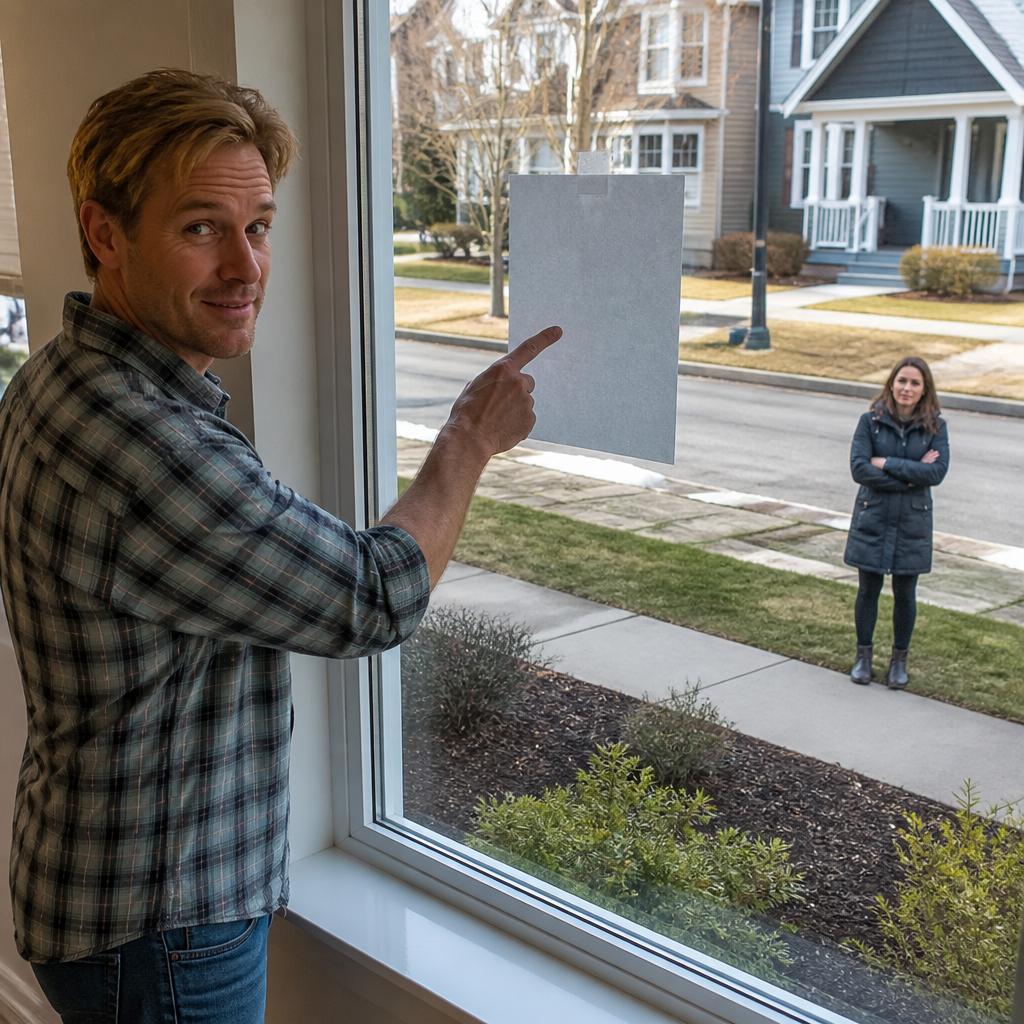
Days after the HOA call, Mark’s actions escalated again. Jenna noticed a large, official-looking permit posted in Mark’s front window, right where it caught the most street traffic. It was for an expanded siding project, far beyond what he’d originally mentioned. He showed it off to neighbors like a badge of authority, suggesting the city’s approval gave him the right to enter wherever needed.
Jenna watched from her porch, the permit’s bright orange and white paper fluttering in the light breeze. It wasn’t just a notice; it was a power move. Mark never asked for her permission or mentioned the new scope to her. If anything, this implied he felt the law backed his access, not hers.
This time the stakes felt higher. If Mark saw the permit as his green light for access, how would Jenna keep her yard private? What if Rick ignored the gate altogether, knowing Mark had city backing?
Rick’s New Entry Route
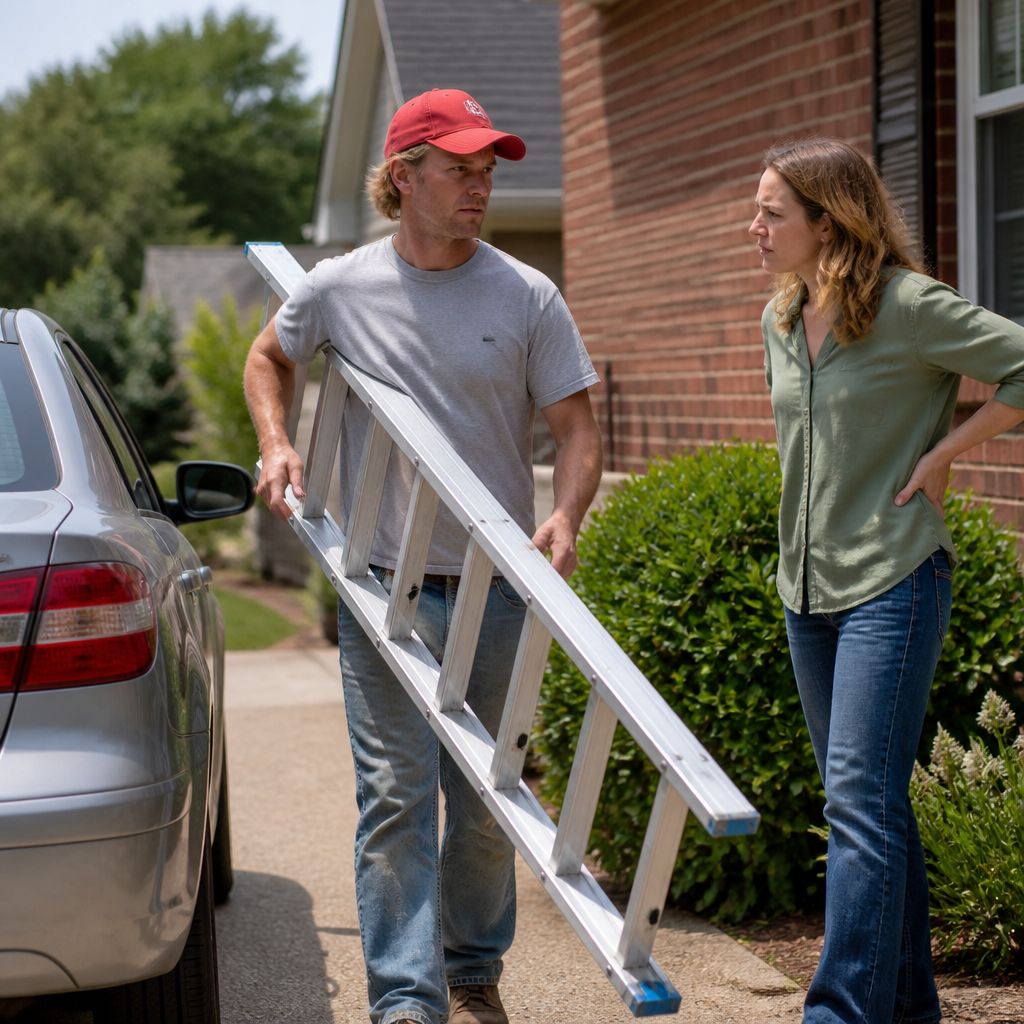
Within a week, Rick changed his approach. Instead of slipping in through the back gate, he started approaching from the front, walking down Jenna’s driveway. This detour let him avoid the gate issue and gave him direct access to the side yard. Jenna spotted him one morning, wearing a red baseball cap, faded jeans, and a t-shirt, carrying a ladder awkwardly down her driveway with no invitation.
It was disorienting to see Rick walking past her car, stepping on her flower bed, and casually trimming the shrubs near the house wall. He didn’t stop when she asked what he was doing, just said Mark told him to fix the siding. The smell of freshly cut greenery mixed with the faint scent of asphalt from the driveway as Jenna stood frozen.
This new tactic meant the gate being open or closed didn’t matter. Rick was already inside the property line, and Jenna’s yard felt less like a private space and more like a public corridor. How could she block this kind of access without sparking an even bigger conflict?
Camera Sabotage Upstairs
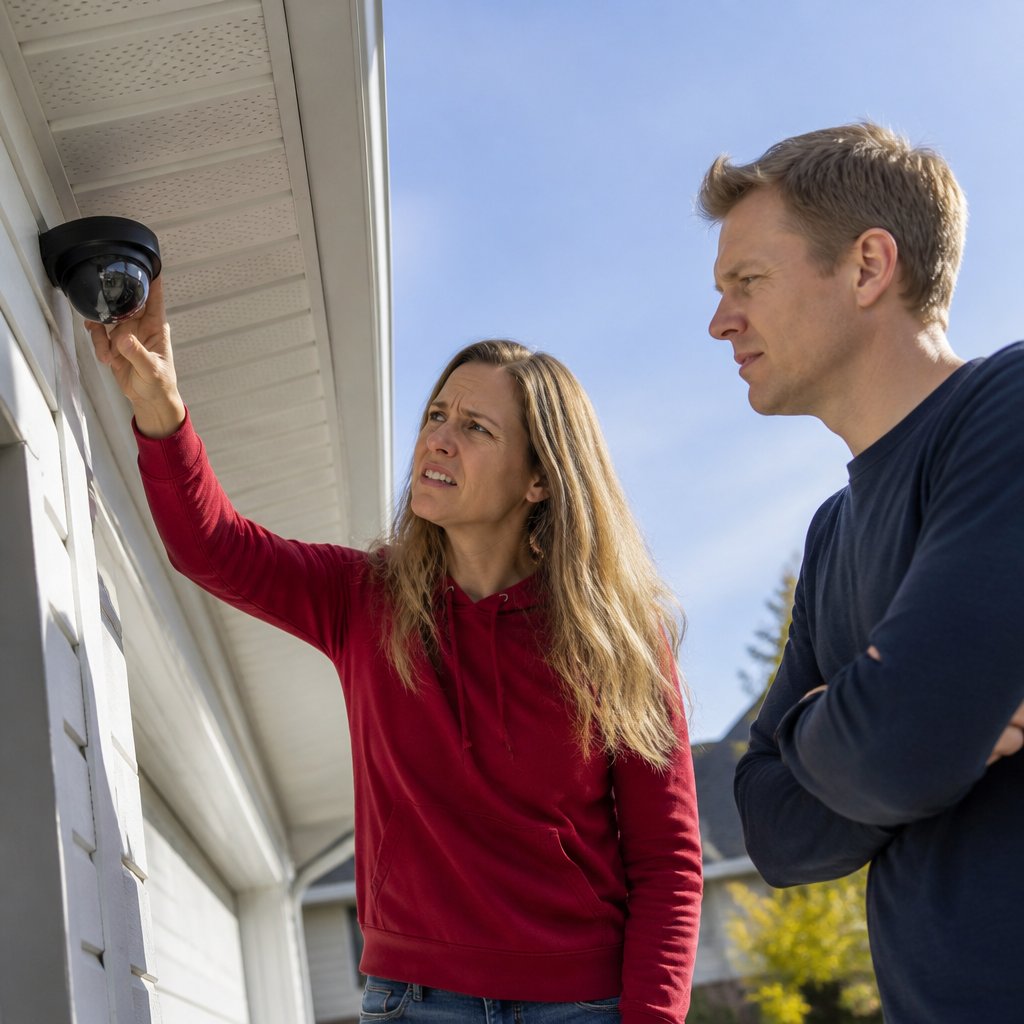
After Rick’s new route became obvious, Jenna installed a second security camera aimed at the side yard entrance from the driveway. It was a small, black dome camera mounted just above the garage door, wired discreetly along the eaves. She hoped it would catch any unauthorized entry when the gate wasn’t a factor.
But the following Tuesday, she checked the footage and saw something strange. The camera was pointed at the sky—90 degrees off where it should be—completely useless. It looked like someone had tampered with the mount, turning it upward. Jenna ran her fingers over the cold metal housing, a bitter taste in her mouth as she realized this “accident” was too convenient.
With the camera disabled, Jenna lost her one clear line of evidence. Who could have done this? And what would happen next Tuesday when Rick showed up again, possibly more brazen than before?
Survey Reveals Fence Misalignment
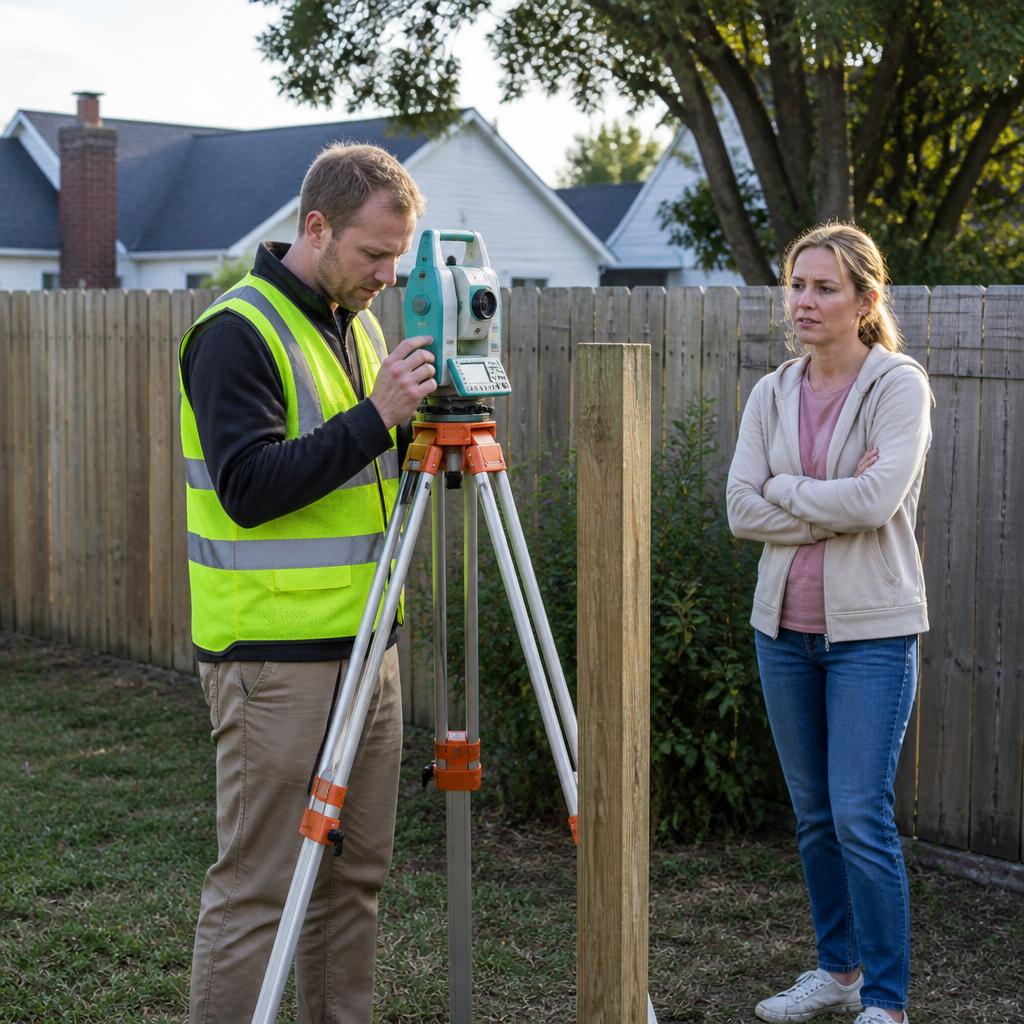
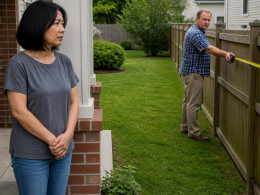
Worried about disputed boundaries, Jenna hired a professional surveyor to measure the property lines. The surveyor arrived wearing a yellow safety vest, using a theodolite to take precise angles and distances along the fence. As he mapped the lines, some measurements didn’t add up.
Near the back corner of the lot, the surveyor found a widening gap between the fence boards and the official property line. The fence, it seemed, wasn’t perfectly aligned with the boundary markers. The gap grew wider back there, enough that Jenna started to wonder if the entire dispute was based on a faulty assumption.
Standing in the backyard, Jenna touched the rough wood fence post, hearing birds chirp in the distance. What if Mark was right—that the fence wasn’t exactly on her property? Could that give him a legitimate claim to cross the land? The possibility unsettled her deeply.
Mark’s Boundary Claim Shift
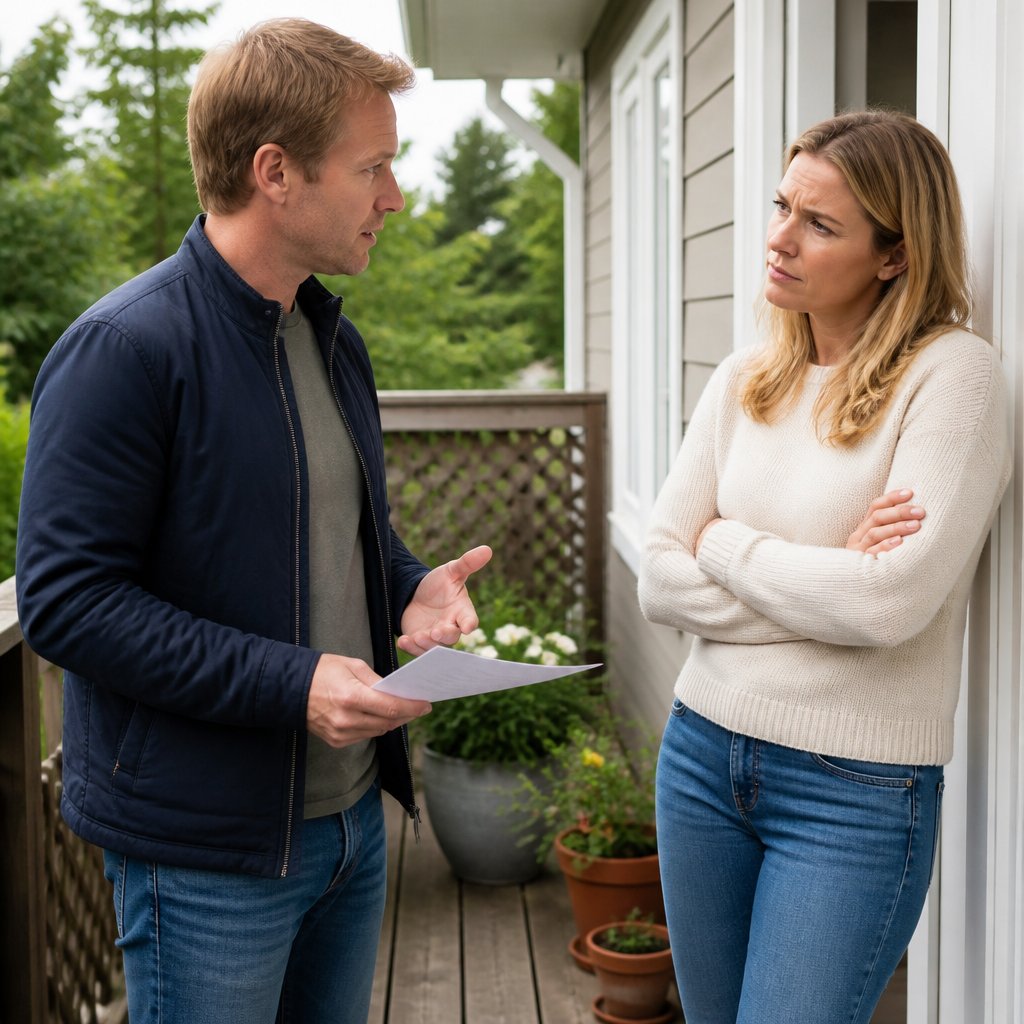
Not long after the survey findings, Mark made his move. He suggested that Jenna’s fence might actually sit partially on his property. If so, he argued, that would give his contractor, Rick, the right to step over and access the siding for repairs.
Mark approached Jenna’s porch wearing a navy jacket and jeans, holding a printed copy of the survey results. His tone was firm but calm, as if trying to reason through the dispute. But Jenna couldn’t shake the feeling he was seizing on this as a way to tip the scales in his favor.
Inside, Jenna clutched the old no trespassing sign, the scent of damp wood lingering in the air. This boundary claim wasn’t just a property line debate anymore. It was becoming a full-fledged confrontation over land rights and control.
Survey Stakes Confirm Fence Line

Refusing to leave anything to chance, Jenna hired another surveyor to place stakes marking the official fence line. The stakes were simple wooden posts, painted bright orange at the tips. When they went into the ground along the edge of her yard, it became obvious: the fence sat entirely within Jenna’s property. Rick had been crossing that line repeatedly.
Jenna knelt near one stake wearing a flannel shirt and jeans, brushing dirt off the post. The fresh earth smelled sharp in the spring air, mixing with the faint scent of pine from nearby trees. This was proof she needed—evidence backed by clear, physical markers.
But with proof came a new escalation. Mark’s reaction wasn’t concession—it was confrontation. The maps and stakes only fueled the fight over who controlled access and property rights.
Denied Access Agreement

Jenna tried to find a middle ground. She requested a written access agreement from Mark that would outline when and how Rick could enter her yard, plus a current certificate of insurance to cover any damages. This was the simplest way to formalize boundaries and protect her property.
Mark responded curtly, saying he wasn’t signing anything. He wore a dark green jacket and cargo pants when he relayed this message through a terse phone call. His refusal left Jenna frustrated, wondering why he rejected the one tool that would make his access legal and controlled.
Jenna listened to the phone ringing in the silent kitchen, the faint aroma of brewing coffee filling the room. Without a written agreement, any access remained a gray area, ringing with legal risk and personal mistrust.
Cease-And-Desist Ignored

When verbal requests failed, Jenna sent a certified cease-and-desist letter demanding Mark stop unauthorized entry onto her property. The letter was delivered to the post office for Mark to pick up. But he refused to accept it, avoiding the post office clerk and leaving the envelope unopened.
The official paper trail began with this deliberate avoidance. Jenna stood behind the glass window of the post office, watching the man in a grey hoodie and jeans turn his back and walk away, hands shoved into pockets. The cold metal counter separated them, filled with the faint scent of laminated forms and ink.
This refusal to engage formalized the conflict. Jenna had proof that Mark deliberately ignored legal warnings. But what would happen next—would Mark escalate further or back off entirely?
Ladder On Pavers, Threats Follow
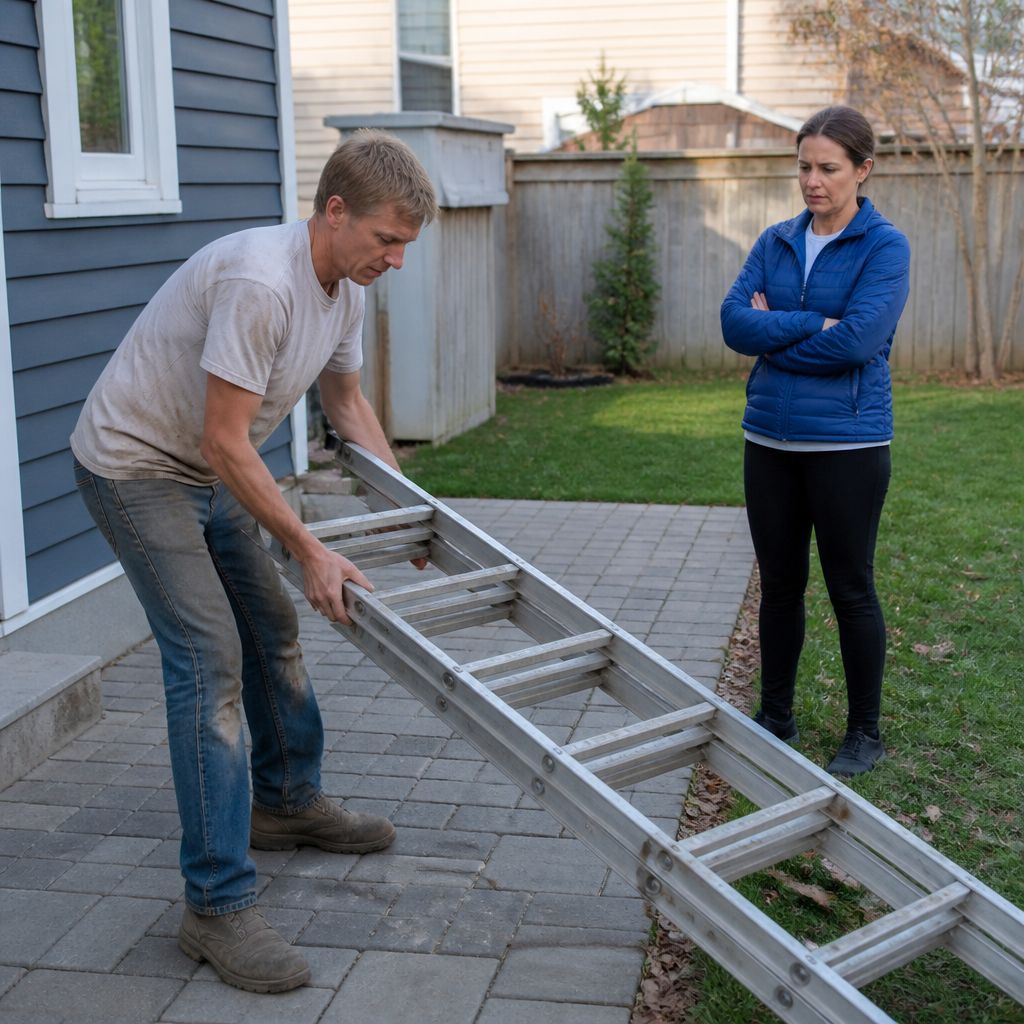
Despite all the warnings and letters, Rick showed up again the next week. This time he carried a ladder and set it down squarely on Jenna’s pavers, right near the gate. She wore a blue jacket and black pants, standing with her arms crossed, watching him carefully. Rick, in his work boots and a dirty shirt, looked unbothered.
When Jenna told him to move the ladder and leave her property, Rick threatened to call the police for "blocking repairs," flipping the roles of victim and aggressor. His voice was loud enough to carry across the yard, the scent of wet concrete from the pavers mixing with the smell of paint fumes from the siding work.
Jenna was left stunned. How could she defend herself when the person trespassing claimed she was the one interfering? The situation had flipped entirely, and the next move was unclear.
Police Called But Saw No Crime
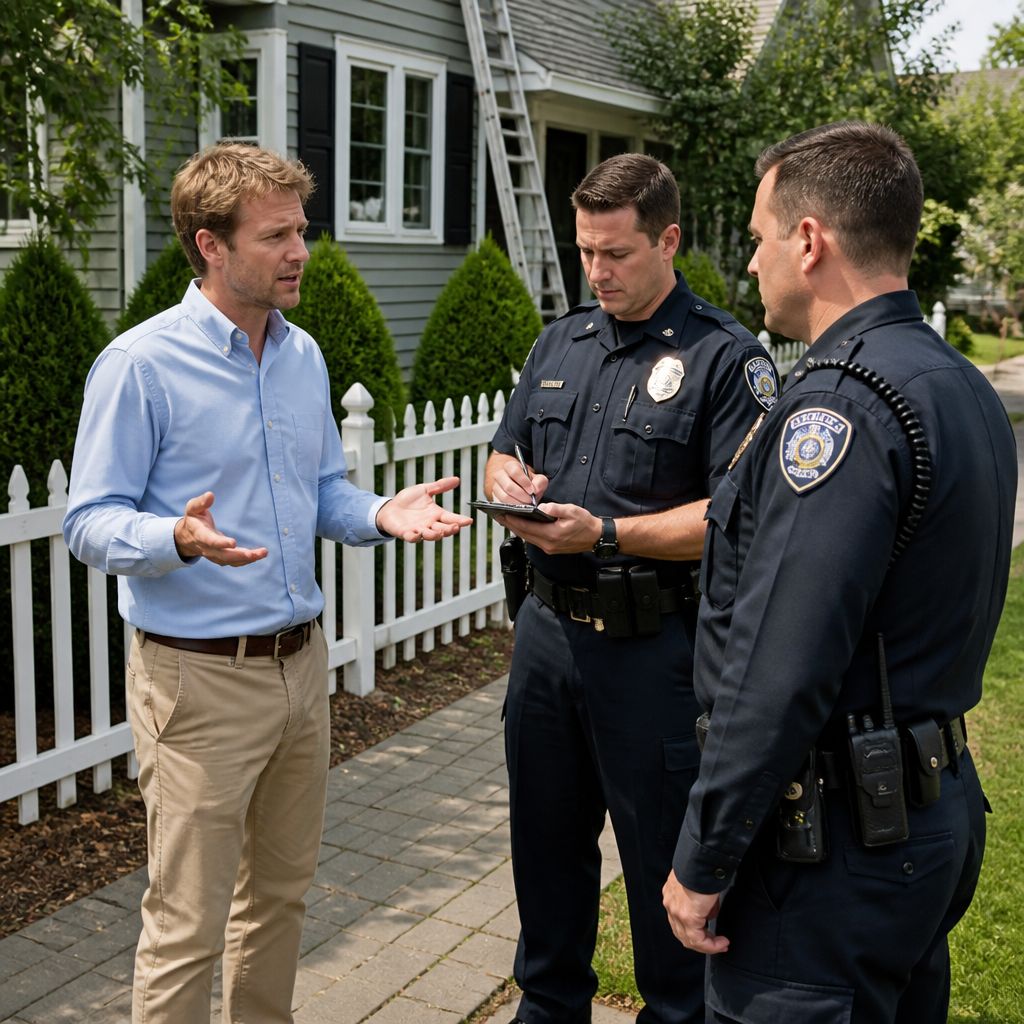
When I called the police non-emergency line again about Rick entering my yard, the officers arrived and listened to both sides. Rick explained he needed to get to the siding to do the repairs; I told them I never gave permission for him to come in or trim my shrubs. The officers took down our names and details but said it was a civil dispute, not a criminal matter. They asked Rick to leave the yard for the day, and he packed up his ladder and tools reluctantly.
The officers didn’t enforce any trespass order and made it clear that such property boundary disagreements needed resolution through the courts. Rick’s presence was only paused, not stopped. I felt uneasy as I watched him leave my garden gate still standing open. The smell of fresh mulch in my flower bed contrasted sharply with the tension in the air.
It seemed like this back-and-forth pattern was set to repeat unless something changed. The police had drawn a line but hadn’t stopped the underlying conflict between me and Mark’s contractor. How long would it take before the situation escalated further?
Demand Letter Accuses Me Harassment

Days after the police visit, I noticed that some of my shrubs had been clipped back more than before, and the mulch around the pavers was flattened in uneven patches. It was a subtle but unwelcome sign that Rick had been on my property again.
Then, an official-looking envelope arrived from Mark’s attorney. The letter accused me of "harassing" the contractor and "interfering with lawful repairs." It demanded I stop obstructing the work and threatened legal action if I didn’t cooperate. The letter also claimed Mark had a "right to repair" the siding and that my objections were delaying necessary maintenance.
I read the letter twice, feeling a mix of frustration and worry. Was my insistence on clear boundaries making me look like the bad guy? The scent of the clipped shrubs wafted through my open window, a reminder of the work being done without my consent. I knew I couldn’t just back down, but the legal threats made me realize this was no longer just a neighborhood spat.
Would standing my ground only provoke more aggressive tactics?
Small Claims Filed With Evidence
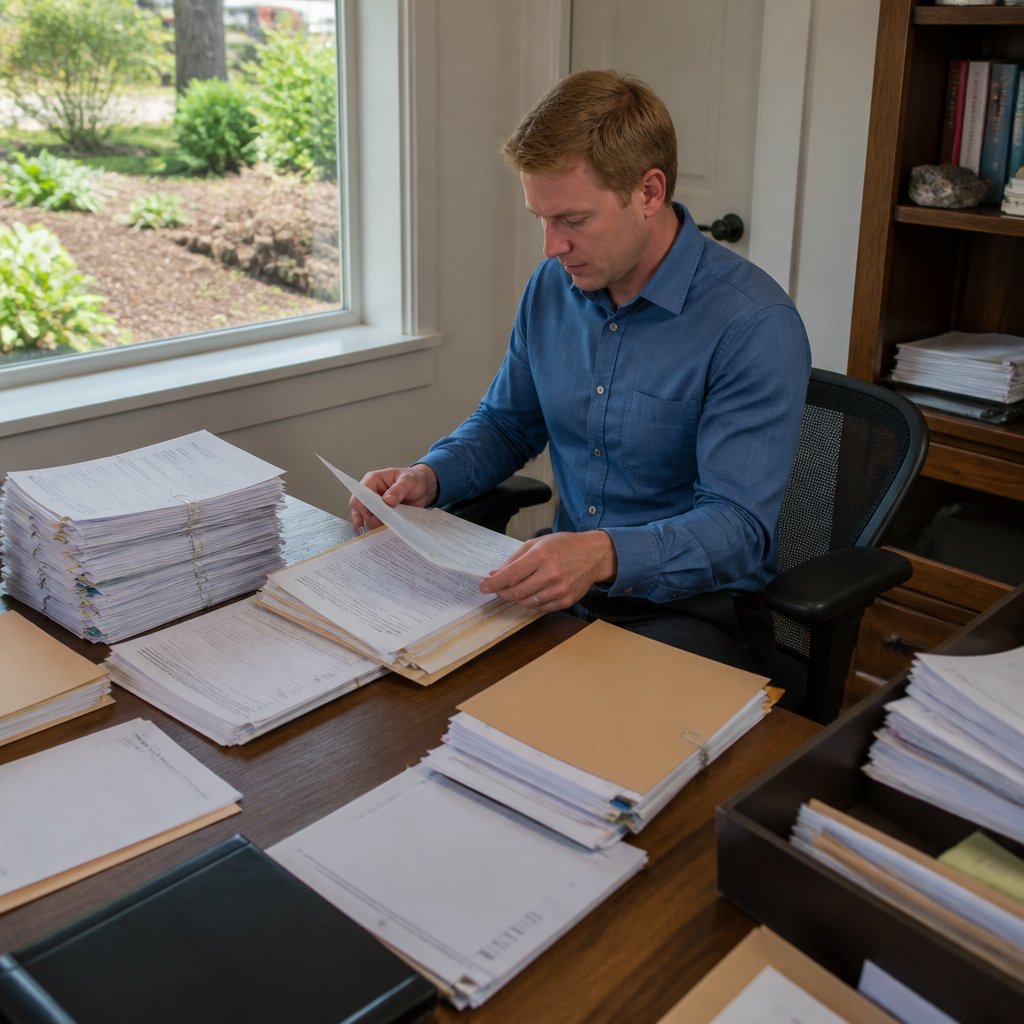
Frustrated by the escalating conflict, I gathered all the evidence: video footage of Rick entering my yard, photos of the damaged plants and unset mulch, and the recent property survey showing the clear boundary lines. I filed a small claims lawsuit alleging trespass and requested compensation for the disturbed landscaping.
Mark didn’t stay quiet. He counter-sued, citing delays caused by my objections and claiming water intrusion was damaging the siding, which allegedly required immediate repairs. The legal papers demanded I pay for costs supposedly resulting from my interference.
The smell of fresh paper mingled with the faint scent of the mulch outside as I organized my files at the kitchen desk. The paperwork made it clear that what had started as a simple property disagreement had grown into a formal legal battle. I felt the weight of the fight ahead pressing down on me.
Would the courts recognize my right to protect my yard, or side with Mark’s claim of repair rights?
Locked Gate Rattled Before Hearing
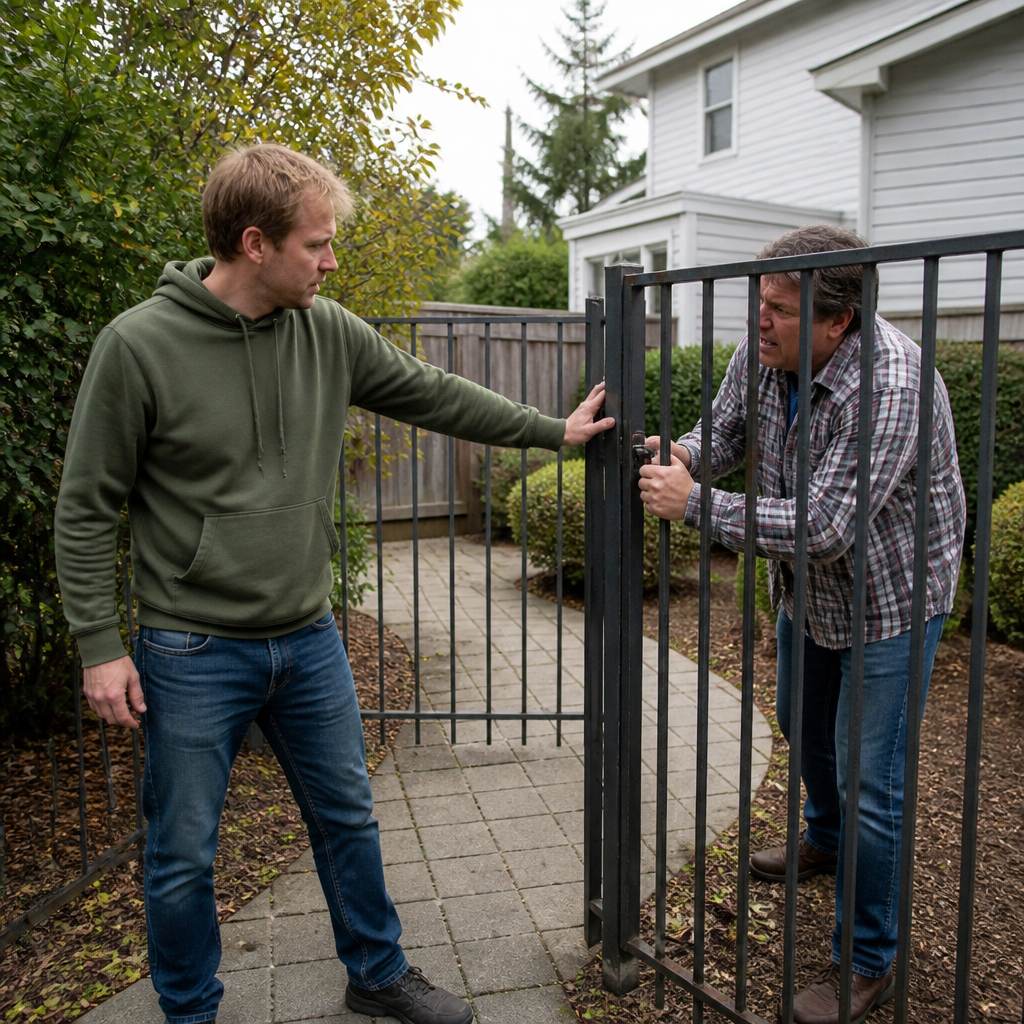
Approaching the scheduled pretrial mediation, I insisted on a fixed schedule for access to my property—one that respected my rights and allowed me to monitor the work. Mark refused, demanding I pay his claimed "delay costs" first before any access agreement would be considered.
Feeling cornered, I filed for a temporary restraining order (TRO) to prevent unauthorized access during the dispute. On the morning of the hearing, I set up my phone to record the locked gate as usual. Suddenly, the gate rattled violently — Rick was trying to open it. I caught the whole thing on video, his hand shaking the latch repeatedly, clearly attempting entry without permission.
The cool metal of the gate pressed against my palm as I held it shut from inside. The sound of the rattling echoed sharply through the quiet morning air. It was an unmistakable message — the conflict hadn’t ended, and the hearing would be just the next chapter.
How would the judge respond to footage showing my locked gate being rattled on the very day a restraining order was sought?
Was the footage enough to uphold the restraining order?