

Mark’s Speech Suddenly Slurred
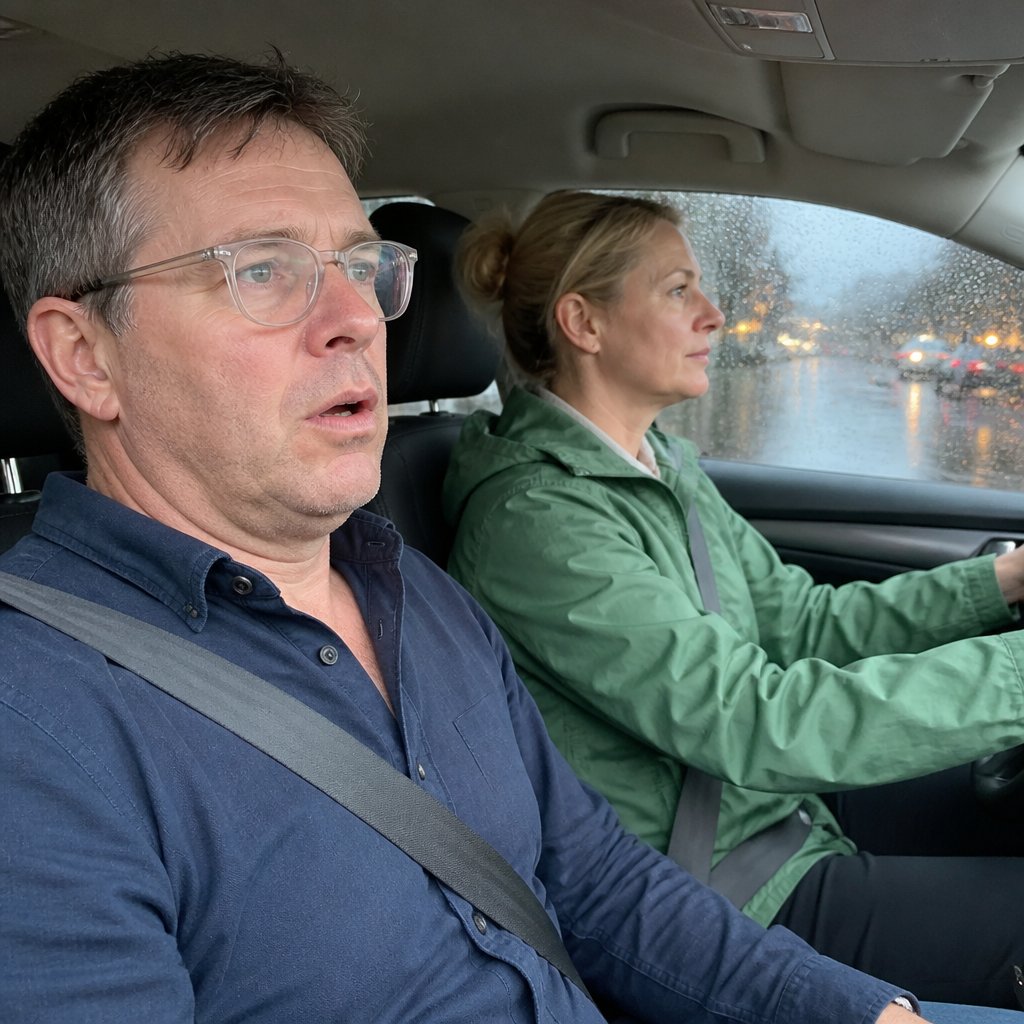
Mark’s speech started to slur in the middle of dinner. His right arm felt heavy and weak. I grabbed my phone and tapped in the timestamp: 6:17 p.m. I knew we needed emergency help immediately. I called 911, but the storm had knocked out power and slowed response times. When EMS finally said they couldn’t make it soon, I didn’t wait. I got Mark into the car and drove to the hospital myself, watching the clock tick in the dash as I fumbled to keep him awake and alert.
Stroke Suspected But NIHSS Was Late
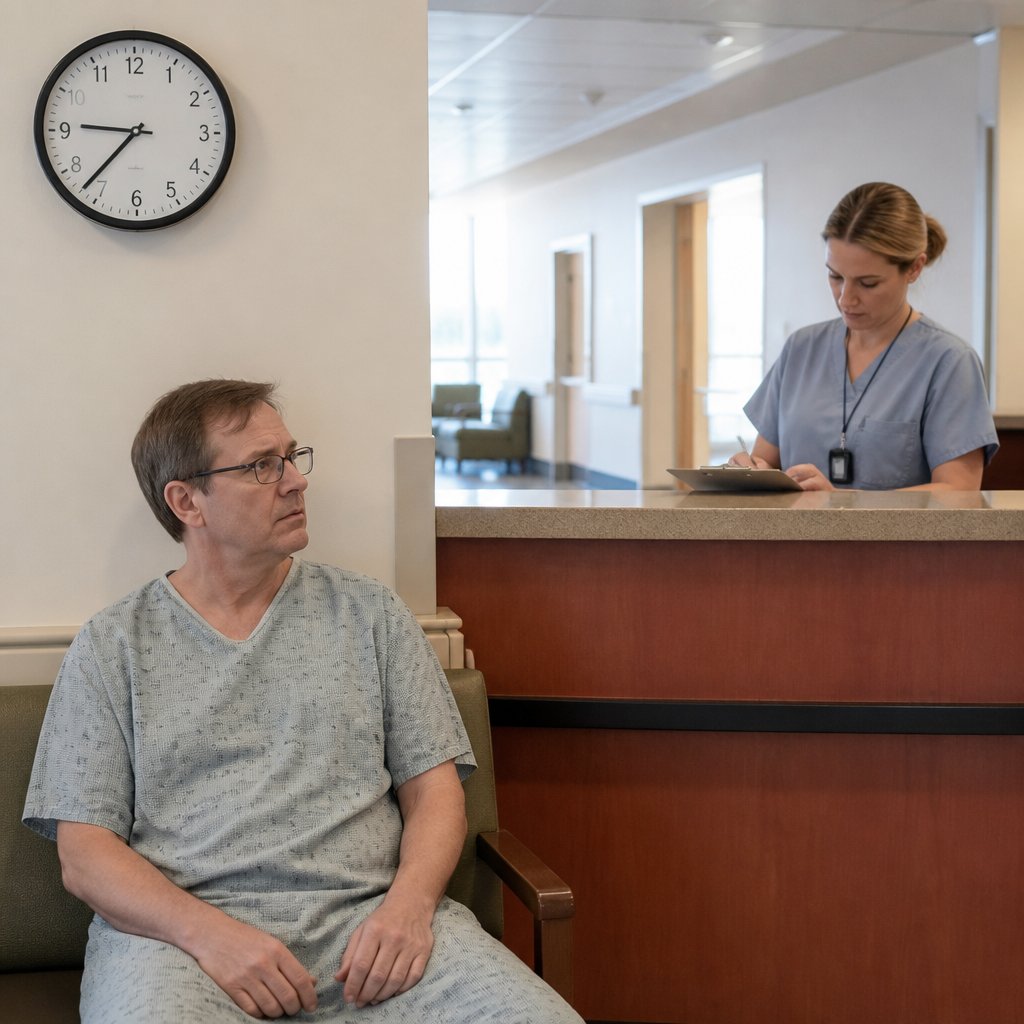
At the ER triage desk, the nurse jotted "possible stroke" in Mark’s chart. But when I later looked at the medical records, the first National Institutes of Health Stroke Scale (NIHSS) assessment showed a time nearly 20 minutes after Mark arrived. That delay suggested the official timeline was drifting from what I witnessed. The triage time was 6:45 p.m., but NIHSS was recorded at 7:05 p.m. That gap didn’t make sense when minutes mattered for tPA eligibility.
Photographing The ER Wall Clock
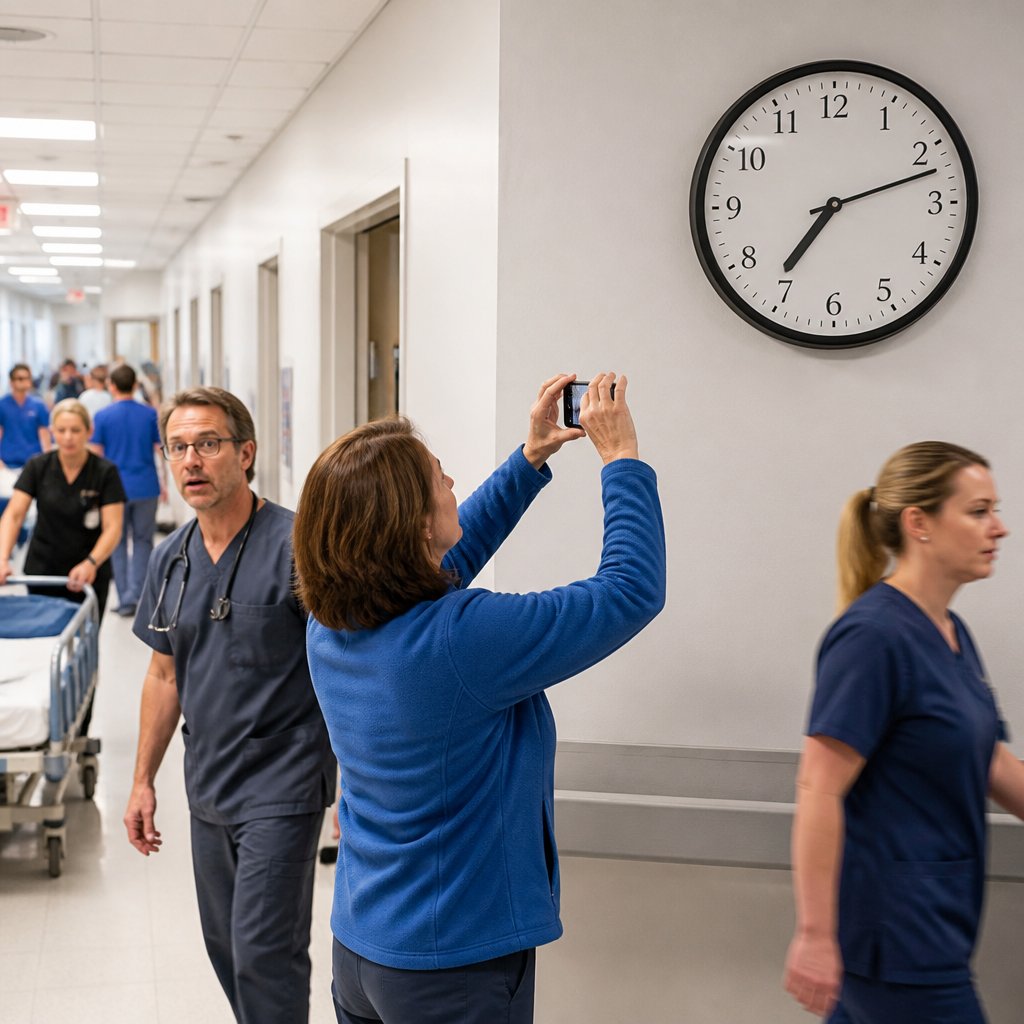
Things felt off. The staff times didn’t line up with what I saw. I started discreetly photographing the large wall clock in the ER waiting room and my own call log timestamps. I hoped it might help later. But I had no way to prove the hospital clock was wrong. My unease grew as I watched the busy nurses glance at the clock and mark times on charts. I wasn’t sure if my doubts would hold any weight without solid evidence.
Tele-Stroke Tablet App Glitched

The ER doctor ordered a non-contrast CT scan and launched the tele-stroke consult tablet app. The neurologist was supposed to join remotely. But the hospital Wi-Fi stuttered amid the storm. The video froze on the tablet screen, replaced by a spinning wheel. I could hear staff mutter about dropped connections. The consult turned into waiting for a technical fix instead of urgent medical assessment, wasting precious minutes.
Conflicting Statements On Consult Timing

A nurse told me the neurologist was "waiting to connect." The ER physician, however, insisted they were "documenting in real time" regardless. That raised my suspicion the consult note was being written before the neurologist actually joined. The medical record might claim timely documentation, but was it really backed by a live consult? I worried the chart could be misleading, but I had no proof yet.
Rushed Consents Amid Confusion

After the initial emergency, Mark was transferred to a tertiary ICU. The room was sterile, smelling faintly of antiseptic. Nurses and doctors moved quickly, shuffling papers and speaking in clipped tones. I was handed consent forms that I didn’t understand but had to sign immediately. A young resident hovered nearby, whispering, “This shouldn’t have taken that long.” His eyes darted away each time I tried to meet his gaze. Despite his concern, he refused to document his remark. The weight of urgency left little room for questions or clarity on what was happening to Mark’s treatment timeline.
Risk Manager’s Vague Explanation

Back at home, the antiseptic and beeping machines were replaced by the cold quiet of my living room. The risk manager from the hospital called, speaking calmly but evasively. She said they wanted “feedback” on Mark’s care, but when I pressed her for the complete tele-stroke screen recording, her answers grew vague. She mentioned the system might not store video. I could hear the hum of the storm outside as rain tapped against the window. Her reluctance hinted something was being withheld, but I couldn’t be sure why. The missing recording was the one piece that could verify the timeline, yet no one seemed willing to confirm whether it still existed or had disappeared entirely.
Consult Times Don’t Align Properly

I scrutinized the medical chart again, focusing on the documented consult time for the tele-stroke assessment. According to the record, the consult began at 2:15 PM. But the CT scan completion time was logged at 2:20 PM. That meant the consult supposedly started before the CT images were even finished. It was impossible — the consult depended on reviewing those images.
This discrepancy suggested either retroactive documentation or manipulation of clock synchronization. I pulled out the hospital’s technical notes on time settings. There was evidence the internal clocks between the CT scanner and the tablet used for consults weren’t properly synced. If someone adjusted these logs after the fact, it could make the consult appear more timely than it was.
The official chart couldn’t be trusted as an accurate timeline. But what did that mean for the overall case? If the documented consult time was falsified, the hospital’s entire defense hinged on unreliable records. I felt the weight of needing proof beyond the paper trail.
The faint hum of the building’s HVAC system filled the quiet conference room as I stared at the discrepancy, wondering how deep the inconsistencies went.
Hospital Refuses To Share Critical Logs
My legal team requested access to the hospital’s NTP (Network Time Protocol) clock-sync logs and router outage records. These logs could confirm whether the internal clocks were indeed misaligned during the tele-stroke consult, and if network failures might have caused recording issues.
The hospital’s counsel objected, labeling the requests “unduly burdensome” and “security sensitive.” They refused to provide these technical logs, citing privacy and system integrity concerns. Without these records, proving the precise timing of events would be nearly impossible.
We filed a motion to compel production and added a request for spoliation sanctions, arguing the missing screen recording wasn’t an accident. If the hospital withheld or destroyed relevant digital evidence, it would suggest bad faith. The court now faced the question of whether this missing video and related logs truly mattered.
I sat in the sterile conference room, the smell of freshly cleaned linoleum sharp in my nostrils, as I awaited the judge’s ruling on whether the hospital would be forced to comply or shield the logs forever.
Forensic Review Uncovers Deleted Files
The court allowed a limited forensic examination of the hospital tablet used for the tele-stroke consult. An independent digital forensics examiner reported that the tablet had undergone a factory reset, supposedly as a “routine update.”
Despite that, fragments of video file headers consistent with a screen recording were recovered from the device’s flash memory. The metadata indicated the file had been created shortly after the consult and then manually deleted.
This discovery contradicted the hospital’s claim that no recording had existed. The evidence pointed to someone creating and then intentionally removing the crucial video file after risk management got involved.
I held the forensic report in my hands, the smooth paper cool beneath my fingers, realizing the implications this had on proving the hospital’s concealment.
Vendor Logs Contradict Hospital Timeline

The tele-stroke app’s vendor provided backend server logs during discovery. These showed multiple failed connection attempts from the hospital tablet, followed by a final successful consult connection well after the patient’s arrival time.
This contradicted the hospital’s medical record note claiming a “timely consult” was completed shortly after arrival. Meanwhile, depositions of hospital staff locked them into conflicting accounts of exactly when the consult occurred.
The stark contradictions increased the risk that the hospital’s documentation was inaccurate or misleading. The trial date loomed, and I prepared to present this evidence to challenge their narrative.
The sterile scent of disinfectant lingered in the courthouse hallway as I read the log printouts, knowing these technical details exposed a larger story of potential negligence.
Whistleblower Email Reveals Recording Fate

At trial, the judge gave a spoliation instruction to the jury, highlighting the importance of the missing video evidence. Under cross-examination, a hospital IT witness admitted a recording had been generated but was not retained after risk management intervened.
Then, unexpectedly, a whistleblower email chain surfaced. The messages ordered IT staff to permanently remove the corrupted recording and detailed how the file had disappeared from the hospital system.
This email chain named specific individuals and outlined deliberate steps to erase evidence, intensifying questions about the hospital’s conduct and setting the stage for dramatic legal consequences.
I sat in the courtroom, the faint rustle of paper and murmur of attorneys around me, as the weight of the new evidence shifted the case dramatically.
Should the hospital face legal consequences for erasing evidence?