



Why Dana Was Tagged Stroke
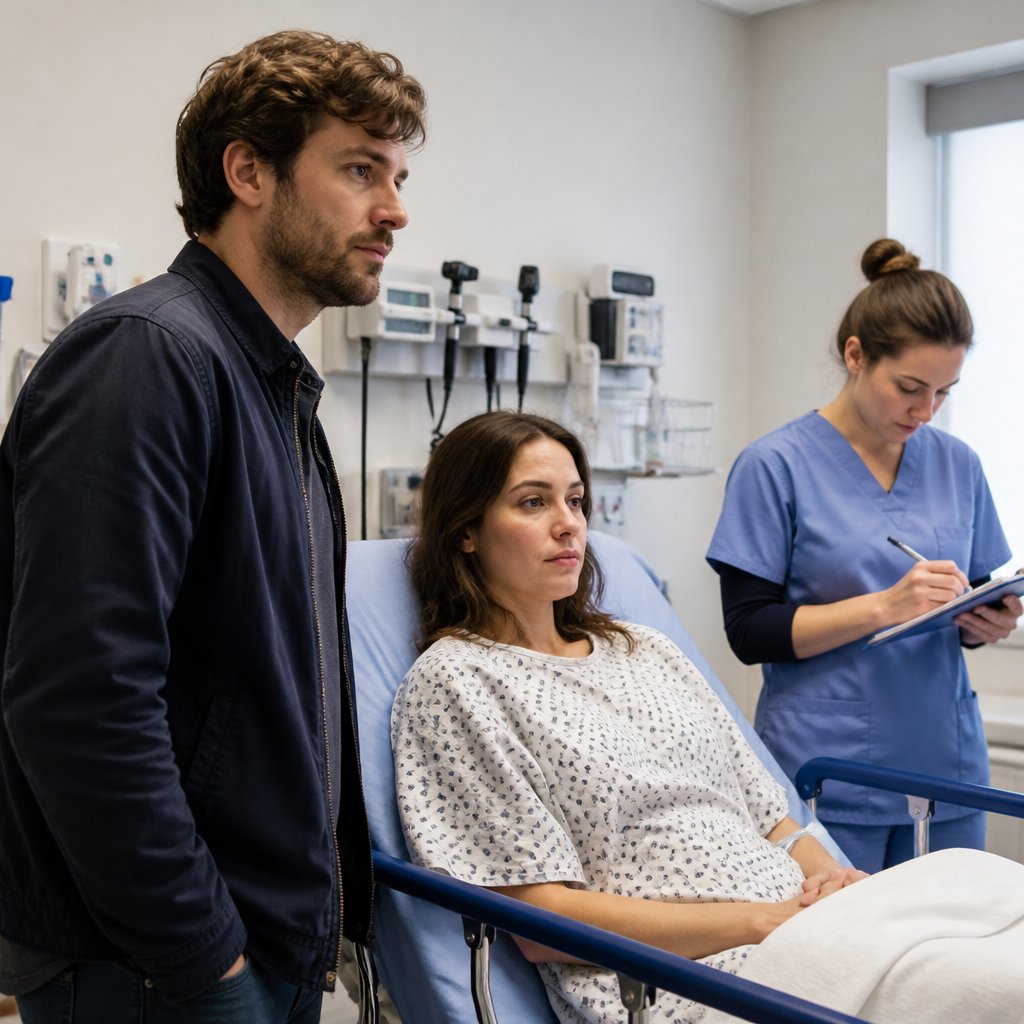
When Dana arrived at the emergency department, the triage nurse immediately labeled her as a “possible stroke” case. That tag triggered a cascade of actions that pushed her onto a clinical fast track designed to move fast but left no room for clarifying details. The nurse's notes mentioned sudden onset headache and confusion, but no trauma or previous bleeding history was recorded at that point. Her chart was marked with high priority, and a call was made for urgent evaluation. I could hear the brisk footsteps and hushed conversations overhead while Dana sat quietly in the stretcher. This early classification predetermined much of the care she would receive, before the doctors even examined her thoroughly.
CT Scan Ordered Overnight Rush

During an overnight surge in the emergency department, a STAT non-contrast head CT was ordered for Dana. The radiology technician was juggling multiple cases, and speed was prioritized over the usual protocol of double-checking patient history and symptoms. The CT scanner's mechanical hum filled the dim room as Dana lay still, the cold gantry pressing lightly against her forehead. Radiology staff prepared to process the scans as fast as possible. The urgency meant there was less opportunity for verifying exact clinical details before the scan was taken, heightening the risk of errors if assumptions were wrong. The technician recorded patient ID and study type but did not flag any inconsistencies for radiologists to consider alongside the images.
Report Arrives: The Word “Hemorrhage”

Minutes after the scan, the radiology report appeared in the electronic chart. The emergency doctor pulled me aside and pointed to one word: “hemorrhage.” It was typed in the impression section, clear and unambiguous. No qualifiers. The doctor’s voice was tense as he explained the implications. The word changed everything immediately—no further questioning, no hesitations. The nurse prepared medications for blood pressure control. I could see the doctor’s eyes scanning the report again, his hands clutching the chart. The cold beep of monitors in the background underscored the urgency. This single term set a treatment course that affected every decision from that moment forward.
Dana’s Doubt Meets Closed Doors

Dana insisted she hadn’t experienced any trauma, and she questioned the hemorrhage diagnosis. But the emergency team treated the typed report as definitive. When she said, "I don’t think this is right," her concerns were met with polite dismissal. No one reviewed the actual images or re-examined her symptoms in depth. The neurologist said the radiologist’s reading was standard and authoritative. The team moved forward without rechecking the basis of the diagnosis. I watched as Dana’s face tightened, frustration growing. Her voice was calm but firm, echoing in the sterile room. The disconnect between her account and the report’s certainty created tension that the staff seemed unwilling to address.
Treatment Locked By One Word

The team began nicardipine to lower Dana’s blood pressure and stopped her aspirin, citing the risk of bleeding. These decisions hinged solely on the presence of the word “hemorrhage” in the report. The nurse administered the first IV dose while explaining side effects. I reviewed the medication chart with her—nicardipine infusion rate, blood pressure targets, scheduled neuro checks every hour. The treatment plan was irreversible in practice, driving a clinical pathway that assumed the report was accurate without question. Dana’s aspirin was removed from her medication list, closing the door on her prior regimen. The cold, clinical sound of the infusion pump ticking echoed in the room as the team prepared for neurosurgical evaluation.
Signing Consent Amid Uncertainty

I sat in the hospital room, the nurse handing me the consent form. I read through it, my question still lingering: "Do I actually have a bleed?" I asked aloud. The neurologist and the attending nurse both avoided a direct answer, instead repeating the phrase from the CT report: "There is hemorrhage." Every clinician seemed to rely on those exact words. The phrase stuck in my mind as I signed the form, the pen heavy in my hand despite the weight of uncertainty pressing down on me.
The room smelled faintly of antiseptic, and the steady beep of the heart monitor filled the silence. I glanced at the chart on the bedside table—the scanned report was there, marked clearly: "Hemorrhage present." It felt like everyone was reciting from the same script, but I wondered if that script was accurate.
Even as I signed, the question haunted me: was this diagnosis real, or had something gone wrong in the transcription or interpretation? The unease grew with each nod of agreement from the medical team, all pointing to a diagnosis I wasn’t sure was correct.
Pre-Op Measures Trigger Crisis

Before surgery, the team decided to place an arterial line and start mannitol to reduce brain swelling. The nurse inserted the catheter into my wrist while I tried to keep calm. The room smelled sharply of alcohol and antiseptic. I could feel the cold gel as they applied it to my skin to secure the line.
Soon after, I began feeling worse. My head throbbed violently, and nausea hit hard. I vomited onto the white hospital sheets, the bitter taste lingering in my mouth. The monitors beeped rapidly as my blood pressure dropped unpredictably. The pre-op measures that were supposed to stabilize me seemed to push me over the edge.
The anesthesiologist furrowed his brow, consulting the chart repeatedly. The phrase "hemorrhage" was cited as justification for the aggressive approach, but I couldn’t shake the feeling that the treatment itself might be causing harm. The team scrambled to manage the sudden deterioration, but the line between diagnosis and treatment complication was blurring fast.
Post-Op Neurological Decline

After surgery, I woke in the ICU, but something was wrong. My speech slurred when I tried to talk, and my right hand felt weak, barely responsive. The nurse noticed immediately and called the team. The room smelled faintly of antiseptic and the buzzing of machines filled the sterile air.
A CT scan was ordered urgently. The radiologist’s report came back with bleak news: a new hemorrhage had appeared. This was different from the original diagnosis—it was on the opposite side of the brain and likely caused by the surgical intervention. My chart now documented this new complication explicitly.
The neurologist looked at me with a tight expression. "This is a known risk," she said. But I struggled to understand how the treatment designed to fix the initial hemorrhage might have caused a second, worsening bleed. My family gathered around, faces pale with worry. The original diagnosis that justified surgery was now clouded by a new, more serious complication.
Surgeon Defends Complication As Risk
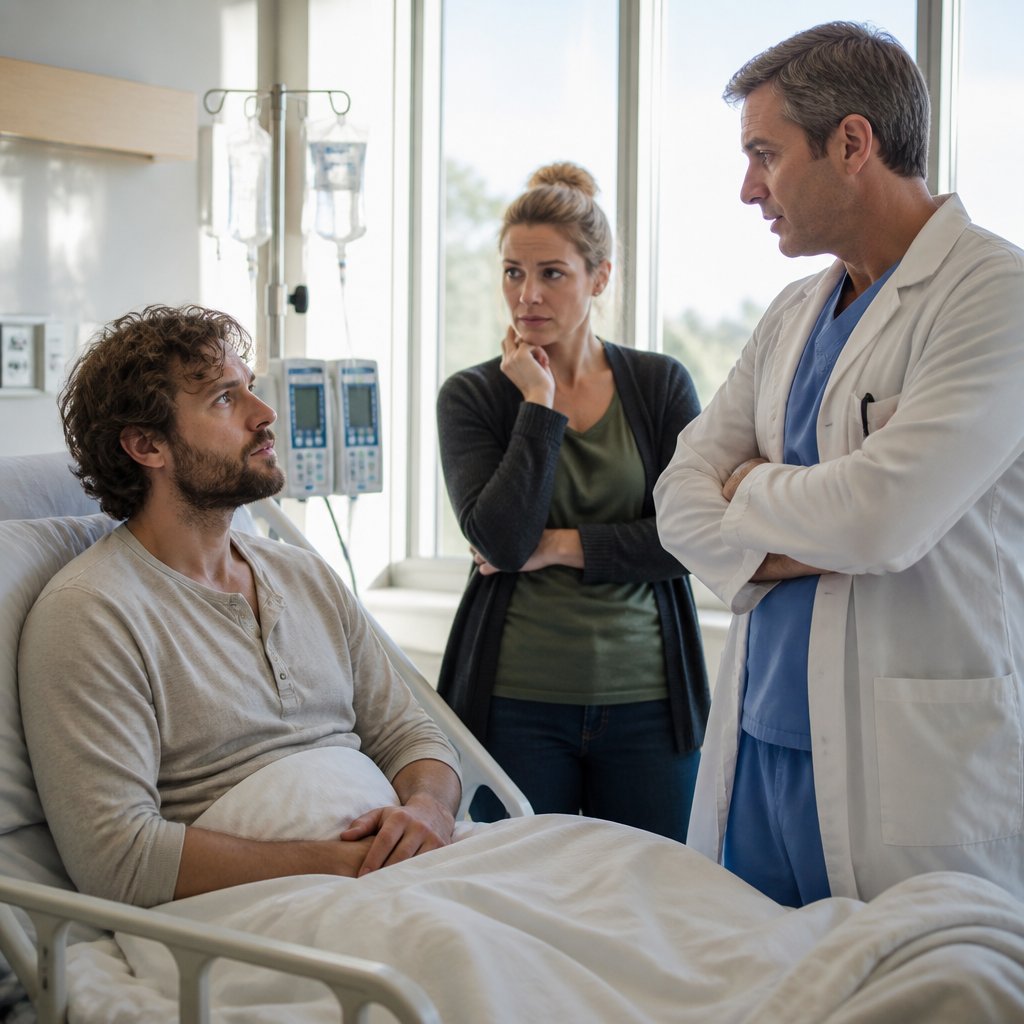
The surgeon visited my room, dressed in blue scrubs and a lab coat, his expression calm but firm. He explained that the new hemorrhage was a "known risk" of the procedure and insisted that it was necessary because of the "original bleed." His words sealed the false premise into my medical record, reinforcing the diagnosis that had triggered the surgery in the first place.
He referenced the operative notes and the radiology report, both stating the presence of hemorrhage. The hospital charts showed no corrections or amendments. The phrase "hemorrhage" was repeated multiple times across the documentation, forming a narrative no one seemed willing to question.
My family listened quietly, faces a mixture of confusion and frustration. The surgeon’s tone left no room for doubt or further discussion. The basis for the aggressive treatment was now entrenched and accepted, even as I struggled to reconcile it with my own experience.
Rushed Workflow Blamed At Deposition

During the depositions, the defense attorneys leaned heavily on the argument that the second CT scan was the real issue, suggesting its interpretation caused the confusion. Medical staff confirmed the workflow was hurried, admitting policies about audio verification were loosely followed. The vendor responsible for the voice-recognition software was also called to account, their representative explaining a known flaw but denying responsibility for misinterpretation in this case.
Then mediation began. Tensions rose when we played the original audio recording from the initial CT scan. It revealed that the hospital had deliberately disabled a verification feature that flagged critical terms like "hemorrhage." The justification was saving time in a high-volume environment. This admission shocked everyone and shifted the entire negotiation.
Settlement discussions moved forward, with the hospital offering monetary compensation and promises to implement stricter safety protocols. However, the battle over public correction and formal admission of fault remained unresolved. The question lingered: would the hospital acknowledge this failure transparently, or keep it buried?
Confidential Settlement With A Condition

The night before trial, the hospital finally agreed to a structured compensation package. They also committed to system-wide correction of the patient records and to implementing safety measures to prevent future errors of this kind. But there was a catch: the settlement demanded strict confidentiality language to prevent public disclosure.
My wife Dana hesitated over the confidentiality section, unwilling to accept silence over such a grave mistake. After several revisions and delays, the addendum finally arrived. It explicitly included the phrase from the original CT scan: “Initial CT: no acute intracranial hemorrhage.” With this acknowledgment in writing, Dana signed the agreement.
The last unresolved question hung heavy: how many other patients had their audio verification erased or disabled, their scans altered without awareness? This systemic issue remained unaddressed beyond our case, leaving the door open to further investigation and possible reform.
Was altering the CT report after consent ethically justified?